

10 Delicious Fusion Food Styles To Try Beyond Tex-Mex
One of the best things about traveling to new countries is immersing yourself in different culinary cultures and sampling the array of traditional dishes on offer. Understandably, certain cooking methods and ingredients have found themselves crossing borders, blending with local flavors, and evolving into something entirely unique. This natural exchange has given rise to fusion food, a cooking style that's characterized by creativity and cultural crossover.
Tex-Mex might be the first branch of fusion food that comes to mind, but there's far more than fajitas and nachos in this corner of the culinary realm. Across the globe, we see plenty of bold experimentation with unlikely ingredient pairings, and inspiration can come from just about anywhere. Many fusion dishes have now become firm favorites worldwide, so much so that their blended origins often go unnoticed.
From street food classics to gourmet-style restaurant creations, fusion cuisine is incredibly diverse. So, if you're keen to discover some exciting new flavor combinations, these 10 popular styles are well worth exploring.
Indo-Chinese
A beloved fusion food style in various parts of the world, Indo-Chinese cuisine is an excellent example of how two very different takes on cooking can be combined into something unique and incredibly delicious. The origins of this culinary mashup can be attributed to Chinese migrants in India, who began adapting dishes from home to better suit Indian taste preferences. The Indian approach typically features more heat, with plenty of bold spices. And, combining these fiery, aromatic flavors with Chinese staples like soy sauce and rice vinegar gave rise to a whole new style of cooking.
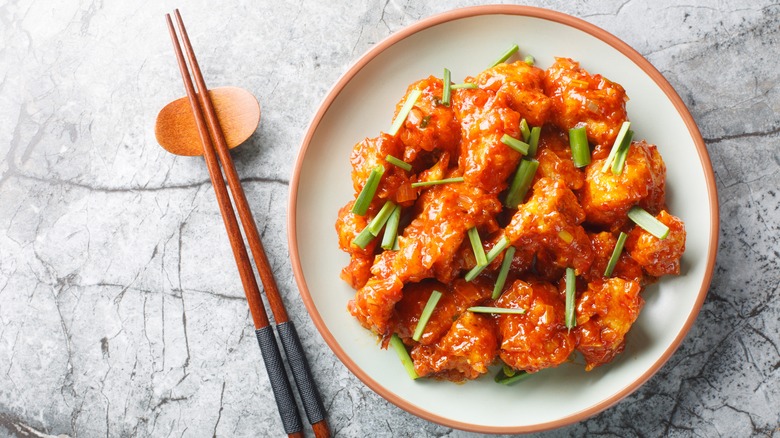
One of the most popular Indo-Chinese dishes is Manchurian, which can be made with chicken, fish, or vegetables (often cauliflower). Here, the protein or veg is battered and deep-fried before it's tossed in a sweet, tangy, and spicy sauce. This typically features ingredients like ketchup, chili sauce, and soy sauce.
Hakka noodles are another favorite. This flavor-packed dish sees the noodles paired with vibrant, crunchy veggies and bold seasonings such as ginger, garlic, and fresh chili peppers. Chilli paneer is also a notable example, which again brings together that familiar Indian warmth and Chinese tangy sweetness in the form of a sticky sauce, which coats the crispy cubes of fried cheese.
Despite being big on flavor, these Indo-Chinese dishes are generally quick to prepare, often cooked in a wok over high heat in less than 30 minutes. So, this cooking style is wonderfully approachable for any home cook looking to try something new.
Asian fusion
Asian fusion might sound like a broad term, but this style has carved out its own unique identity in the culinary landscape. It's a cuisine that blends ingredients and techniques from across Asia with Western cooking styles, yielding creative yet familiar dishes packed with punchy flavors and comforting vibes.
Asian fusion often draws on staples like miso, soy sauce, or lemongrass, though these ingredients are often paired with others from outside the continent or prepared in unconventional ways. Chefs might combine classic stir-frying or steaming methods with Western grilling or plating methods, or add spicy, umami-rich sauces to Western staples like pizza and roasted meats to craft innovative new flavor profiles. Over time, the growth of Asian fusion has naturally been fueled by immigration from Asian countries, and while it's especially popular in the U.S. and the U.K., it certainly doesn't belong to one country or culture. Because it takes inspiration from a wide array of flavors, this approach to fusion food is inherently adaptable and continues to evolve alongside global tastes.
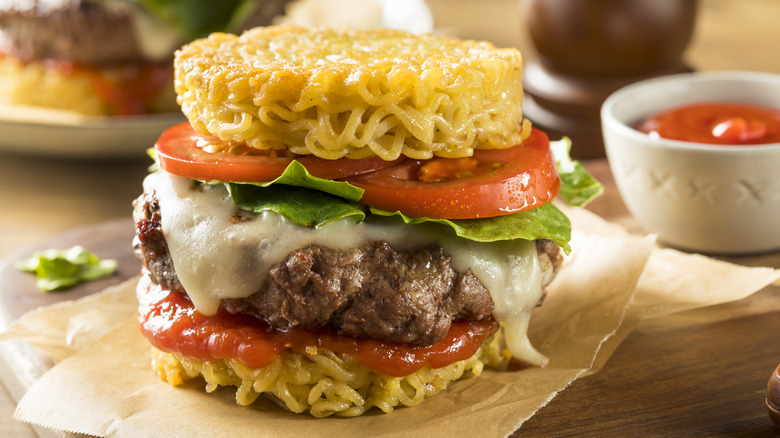
It's impossible to shed light on the full spectrum of Asian fusion dishes, but there are a few delicious examples we couldn't resist mentioning. First is the magnificent sushi burrito, which is essentially an oversized, burrito-esque sushi roll, offering ample room for stuffing with rice and other Japanese-inspired fillings. Ramen burgers have also proved a hit, where the traditional burger bun halves are switched out for crispy fried rounds of ramen noodles. And, Asian fusion can even be as simple as spooning kimchi into a Mexican-style taco.
Italian-American
Another widely recognized mashup of foodie traditions, Italian-American cuisine is all about satisfying flavors and hearty textures. Using trusty Mediterranean foundations like garlic, tomatoes, mozzarella, and herbs, this style amps up the comfort factor. In comparison to traditional Italian dishes, which typically keep things lighter and fresher, Americanized versions are generally heavier, with more focus on building rich, savory flavors, and no qualms about piling in the cheese, meat, and sauce.
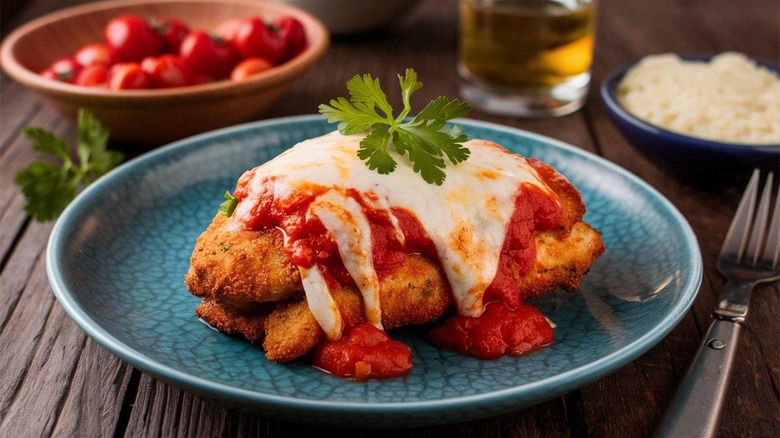
You may well already have some classic Italian-American dishes in your meal rotation. Baked ziti is a go-to, known for its delightfully saucy texture and the inclusion of multiple cheeses such as ricotta, mozzarella, and Parmesan, for the ultimate indulgent finish. Chicken Parmesan is another comfort food classic, with its mouth-watering crispy coating, rich tomato sauce, and lashings of melty cheese. Pizza has, of course, been adapted to American tastes, too. Traditional Italian versions generally comprise a thin and crispy base, with a handful of simple, quality topping ingredients. However, American-style creations are often made with thicker, doughier crusts (think Chicago deep-dish) and a more generous assortment of toppings. Pepperoni, for example, is the most popular choice in the States, but it's rarely found on true Italian-style pizzas.
Japanese-Peruvian
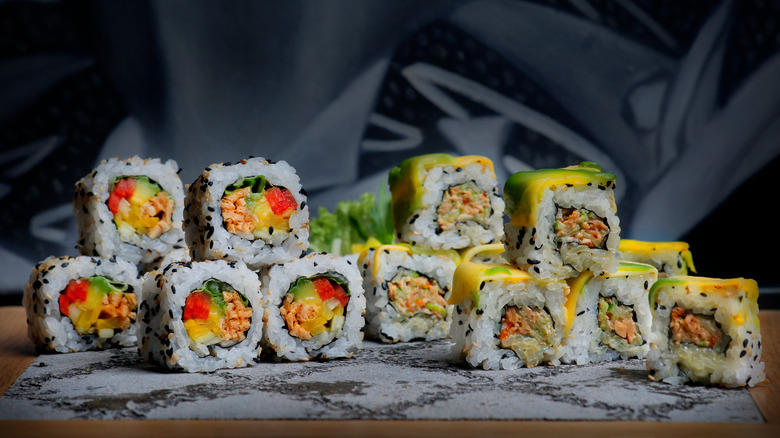
Japanese-Peruvian fusion food, often referred to as Nikkei, began as Japanese immigrants began settling in Peru; they used familiar cooking methods to prepare local ingredients and soon realized how delicious this unique blend of cultures could be. Nikkei food tends to be light and fresh, but full of vibrant flavors, with an elegant presentation that helps it fit right in at upscale restaurants.
One iconic Nikkei dishes is tiradito, where slices of raw fish are prepared in a spicy, zesty sauce, often with Peruvian aji amarillo chiles. The nod to Japanese-style sashimi is clear, and there are also similarities to Peruvian ceviche. However, tiradito does not contain onion, and the sauce generally has a consistency that's a bit more creamy.
Another dish with origins in Peru, anticuchos, has also had a Japanese makeover. Traditionally made with beef hearts that have been marinated in a spicy paste and cooked on wooden skewers, anticuchos is also seen prepared with umami-forward, Japanese-inspired marinades. Miso and teriyaki are popular add-ins to Nikkei-style versions, and sides like rice or seaweed are commonplace. Nikkei sushi is a must-try, too. Here, the beloved, seaweed-wrapped rolls get an injection of Peruvian flair, with ingredients like sweet potato sauce, chilis, and leche de tigre adding excitement to every bite.
Korean-Mexican
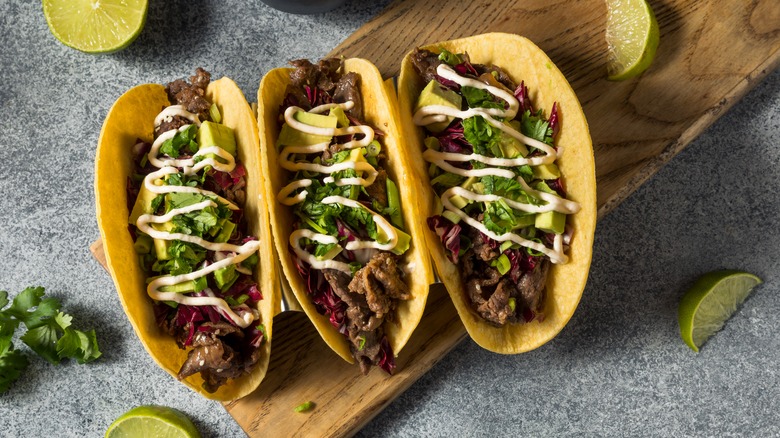
One of the most exciting cultural blends in the world of fusion food, Korean-Mexican cuisine combines the bold, spicy flavors of Korea with the vibrant, comforting elements of Mexican cooking. A prominent dish within this fusion style is Korean BBQ tacos, made with umami-packed bulgogi beef stuffed into soft tortillas with an array of fresh toppings. These became a hit and inspired countless other Korean-Mexican creations.
The hearty Mexican breakfast dish, chilaquiles, can also benefit from a kick of Korean heat. A popular fusion technique is to switch out the usual salsa for a gochujang-forward sauce, making everything a little spicier and sweeter. Including creamy Mexican-style toppings like crumbled queso fresco or sour cream is a great way to balance out the heat. If you fancy giving Mexican street corn a Korean twist, try whipping up a garlic-gochujang aioli to smother atop the juicy grilled cobs. Or, consider topping Korean kimchi fried rice with Mexican-inspired toppings, such as sliced avocado or chorizo.
Asian-Latin
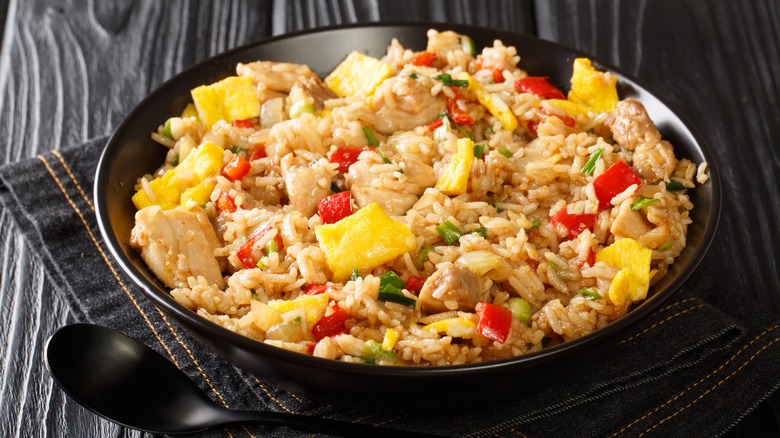
Asian-Latin fusion highlights the smoky, tangy, and vibrant flavors of Latin American cuisine, and the spicy, umami-focused elements of Asian food; together, it feels like a natural collision of cooking styles. Both cuisines share a love of street food and deem rice an integral part of many dishes. And neither are strangers to a good dose of heat, with warming spices and fiery chili peppers being as central to Latino food as they are to many Southeast Asian creations.
So, with this much crossover, what defines a true Asian-Latin mashup? Well, from Latin America, we have ingredients like cilantro, lime, and fresh herbs, which bring a welcome dose of brightness to fusion dishes. On the Asian side, condiments like soy sauce and sesame oil, and aromatics such as ginger and garlic, add plenty of complexity. The resulting dishes are beautifully balanced and full of personality.
Asian-style pork tacos are a shining example of this bold cuisine. These might call for ground or pulled pork, perhaps flavored with garlic, ginger, and soy, and paired with fresh, zesty toppings like shredded cabbage and lime wedges. Arroz chaufa is another top pick, where Chinese-style chicken fried rice gets a Peruvian twist with the addition of ingredients like aji amarillo peppers and cilantro. Fluffy Chinese bao are also excellent candidates for filling with Latin-style spicy pork or crispy plantains.
French-Vietnamese
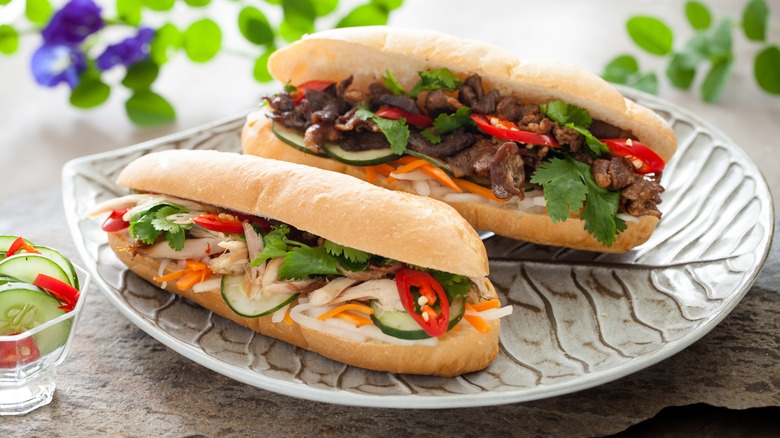
Ever tucked into a crusty bánh mì sandwich? That means you've sampled one of the many delights that French-Vietnamese fusion food has to offer. These two cuisines might seem worlds apart, but combining popular styles from both countries has led to some remarkably tasty creations. When the French colonized Vietnam in the late 1800s, they brought with them different ingredients and techniques. And, many of these influences are still shaping Vietnamese food today.
Bánh mi, for example, starts with a French bakery icon — the baguette. But, this isn't filled with ham and cheese. Instead, there's a medley of Vietnamese staples piled between the crusty slices. Think hoisin-marinated chicken or pork, fresh herbs, and vibrant pickled veggies. While it's widely thought of as an entirely Vietnamese dish, pho also has French influence. The idea to add beef to the aromatic broth allegedly came from the French dish pot-au-feu. This extra boost of savory depth enhanced the fragrant elements of the broth, like ginger and cilantro, helping pho become the beloved dish it is today.
Other French-Vietnamese classics include bánh xèo and bánh flan. The former consists of French crepe-style pancakes, filled with savory ingredients like bean sprouts, pork, shrimp, and fresh mint. These are often served with a sweet and tangy nước chấm dipping sauce. Bánh flan is Vietnam's take on the French crème caramel, made with whole eggs and condensed or evaporated milk for an ultra-rich, creamy texture and sweet finish.
Afro-Caribbean
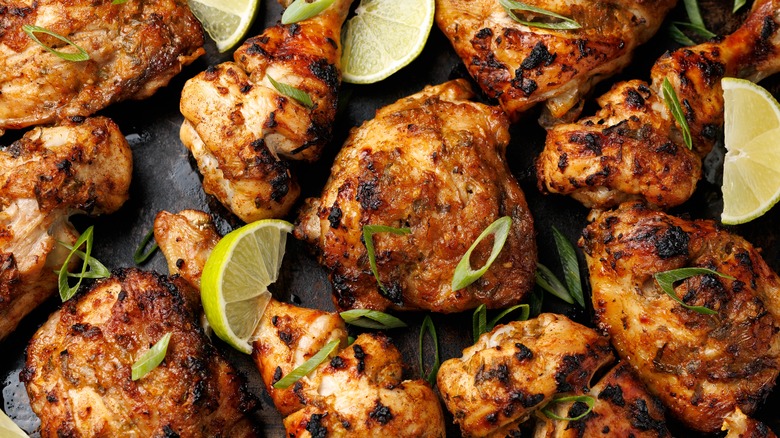
Irresistibly soulful and bursting with vibrant flavors, Afro-Caribbean cuisine takes inspiration from African food traditions, which were brought to the islands predominantly through the transatlantic slave trade. The African style is undeniably spice-driven and blends seamlessly with local Caribbean ingredients and cooking methods, creating layered dishes full of depth and heat.
Afro-Caribbean recipes certainly aren't shy about using bold seasonings, and ingredients like scotch bonnet chili peppers, garlic, and thyme feature heavily. Rice, beans, and root vegetables like yams and cassava also play a key role, serving as hearty bases for an array of dishes. African-style cooking methods like grilling and smoking are popular, and these are often used to prepare what's perhaps the most recognizable Afro-Caribbean dish of all — jerk chicken. Here, the meat gets marinated in a wonderfully fiery, aromatic blend of spices, chiles, and condiments, yielding an exceptionally complex, punchy flavor that's loved by foodies around the world.
Rice and peas are another well-known recipe that highlights the heartier side of Afro-Caribbean cooking. Based on African-style rice dishes, it's enhanced with Caribbean flavors like coconut milk and thyme, which yield a creamy, fluffy texture and fragrant taste. This is often served alongside staples like curry goat, plantains, and jerk dishes.
Hawaiian fusion
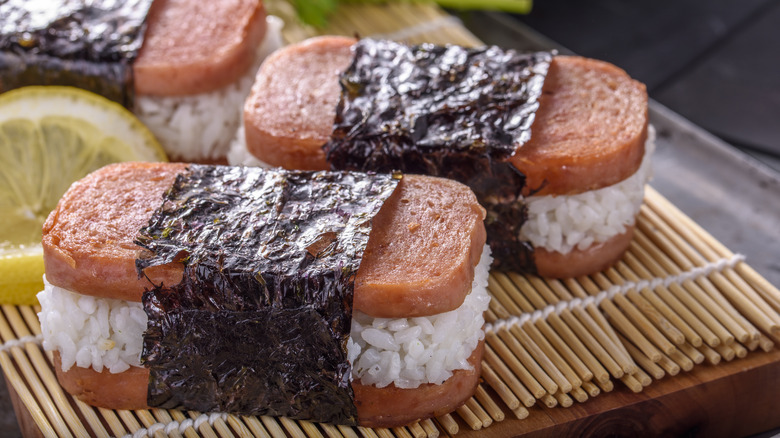
Hawaiian fusion food is one of the most varied styles in this lineup. Thanks to centuries of immigration and cultural exchange, food on the islands has been shaped by the traditions of multiple other countries, including China, Japan, Portugal, and the Philippines. In particular, the collision of Japanese technique and American ingredients has shaped many of Hawaii's best-loved dishes, and the results are often unexpectedly delicious and approachable.
Of course, we have to mention good old Spam musubi. This simple snack combines the Japanese concept of seaweed-wrapped rice and throws in grilled slices of soy-marinated Spam, making for a portable bite that's wildly popular across the islands. Then, there's loco moco, which pairs a base of fluffy white rice with a hearty hamburger patty, rich mushroom gravy, and sunny-side up fried egg.
The comforting Hawaiian soup, saimin, is also very much a fusion dish. This brings together elements of Chinese, Japanese, and Filipino cuisine, among others. The simple dashi- or shrimp-based broth is enhanced with noodles, meat, and veggies, with Spam, cabbage, and pork dumplings all being popular add-ins. And, nothing highlights Hawaiian fusion's diverse influences quite like the famous plate lunch. The idea is to enjoy generous scoops of complementary foods together on one plate. There's often white rice, macaroni salad, and some kind of meat or fish, such as teriyaki chicken or fried fish.
Japanese-Italian
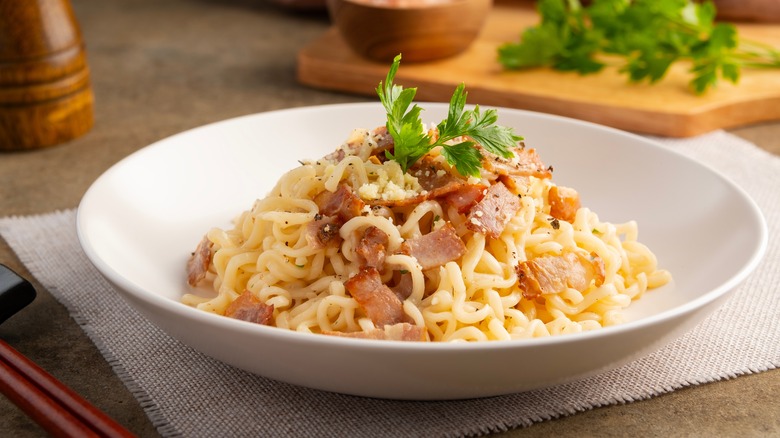
In this East-meets-West fusion, fresh flavors and precise presentation come together to create a whole host of inventive, mouth-watering dishes. Japanese-Italian food, also known as itameshi, focuses on simple, quality ingredients while embracing the satisfying heartiness of Italian cooking. Western cuisine began influencing Japan in the early 20th century, and the introduction of spaghetti to the country was the catalyst for an explosion of Japanese-Italian creations.
A standout in the world of itameshi is ramen carbonara. As the name would suggest, this is an amalgamation of the classic Italian carbonara pasta and Japanese instant noodles. Instead of spaghetti, springy ramen noodles get tossed in the creamy egg and cheese sauce. And, many versions also throw in the contents of the seasoning packets that come with the noodles, for a spicier twist. Tarako spaghetti is another itameshi favorite, where buttery spaghetti meets garlicky, salty cod roe, for a dish that feels indulgent yet delicate.
However, there's more to itameshi than pasta. You'll find everything from elegant prosciutto salads to miso-marinated seafood and baked rice dishes in this fusion style. Even desserts can benefit from a dose of Japanese inspiration. Take matcha tiramisu, for example, which elevates the Italian dessert with the earthy vibrance of green tea.