

This Vintage Cheese Dish Used To Be A Jiggly Favorite — Now It's Practically Vanished
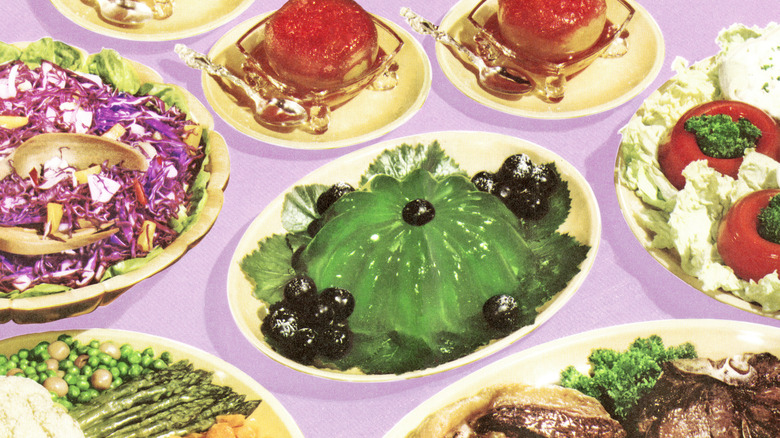
For much of the mid-20th century, cheese-based Jell-O salads were a familiar presence across the United States. The fluorescent salads wobbled proudly in decorative molds and Bundt pans, studded with edible chunks that could be stuck in, leading to creative combinations like pineapple and olives with nuts and maraschino cherries.
These extravagant dishes typically utilized cottage cheese or cream cheese, folded into or layered with artificially fruit-flavored gelatin. Lime Jell-O with cottage cheese and crushed pineapple was especially popular. So was orange gelatin enriched with cream cheese and ambiguous "whipped topping", an amalgamation of oils, sugars, and sometimes dairy. Savory versions played with vegetables and aspic, sometimes incorporating shredded cheese, pimentos, or even seafood. What unified all these sundry versions was their three-dimensional, sculptural value.
The jiggly appeal made sense in its moment. Beyond aesthetics or gestures at cultural sophistication (because of its French roots), gelatin dishes offered translucent height and control. In an era that prized meticulous domestic planning and composure, they could be prepped ahead of time, stored safely in the new-fangled (at the time) kitchen appliance, the refrigerator. Cheese (in all forms) added richness and protein, giving a nutritional backbone to an otherwise superfluous dish. The dishes could be served cold, individually, in ramekins, or batched to feed a crowd. Cheese Jell-O salads were the crown jewel of midcentury entertaining. Today, though, they've all but disappeared, remembered more as punchlines than as a viable menu item.
Not so cool anymore
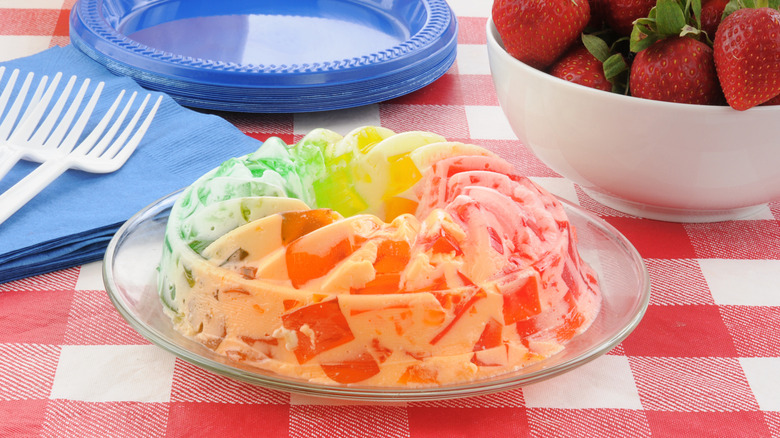
The decline of cheese-based Jell-O salads tracks closely with the collapse of the cultural conditions that made them legible. By the late 1960s and early '70s, Jell-O began to be associated with industry rather than elegance, a neon symbol of processed food at the exact moment Americans started to re-train their palates to value natural freshness and regional specificity. The refrigerator, once a marvel that made molded gelatin salads possible, stopped being a novelty. Convenience lost its glamour. Jell-O salads and sculptures, which had once looked so futuristic now seemed corny and synthetic. As American tastes became more refined, cheese trends moved in the direction of sharper cheddars, soft-ripened wheels, and imported European styles. Cottage cheese set in lime Jell-O with shrimp or pimentos gradually fell out of fashion and off the menu.
These salads also suffered from association. They're not really foods people reached for out of craving; they were expected to fill space at a party's buffet table because they looked celebratory and special. When entertaining norms loosened, those obligations dissolved. We're left with the visual memory of their wobble and color, divorced from the pleasure of appetite. Today, cheese-based Jell-O salads survive as retro curiosities, shorthand for a period obsessed with order and presentation. Their disappearance is explained by a cultural evolution in aesthetics and values. But, stick around long enough, and they'll probably come back around and be cool again.