

The Medieval Layering Technique That We Still Use When Cooking Today
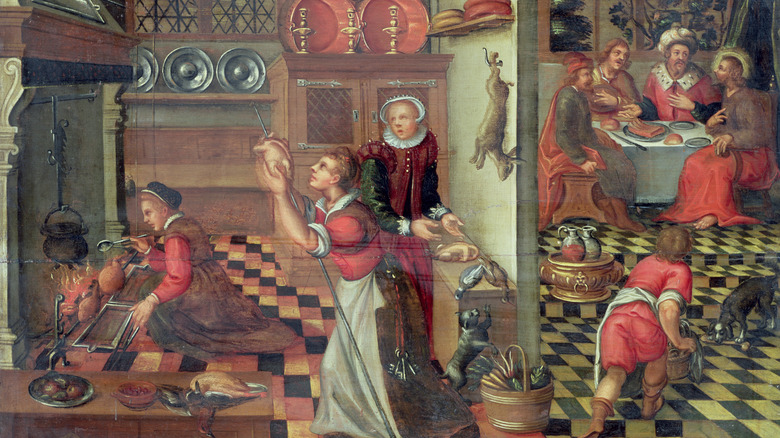
Stuffing one food with another food is an age old tradition that has given us plenty of delicious results. Everything from a calzone to a burrito could be considered a type of stuffed dish. But not all kinds of stuffing are made equally, and the techniques involved can vary considerably. There's a big difference between stuffed French toast and the medieval technique of engastration, for instance. One produces a sweet but simple treat, while the other results in a complex dish like a turducken.
Engastration means "inside the stomach." Recipes date back to the 13th century and include birds stuffed inside lamb. Some Inuit communities also eat kiviak, a dish made from stuffing sea birds in a seal carcass. The Romans even had a dish called the Trojan Pig: A whole cooked pig stuffed with other animals and sausages, arranged to resemble intestines when carved. That one dates to the 5th century, so humans have been playing with this idea for a long time.
Engastration is as much about flavors as it is about presentation. It's making a spectacle of a meal. Think of your initial reaction to learning about the mythical turducken, a chicken stuffed in a duck stuffed in a turkey. It's over the top, a conversation starter, and surely a centerpiece of any dinner. The same was true back in medieval times. Of course, back then a chef might go to the next level and sew the top of a chicken to the back end of a pig to make a whole new animal, at least on the plate.
Fascination with engastration
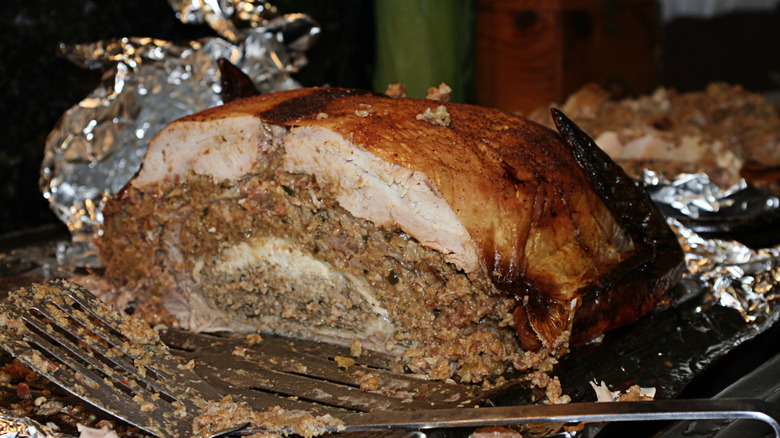
Turducken is clearly the most well-known and popular modern version of the engastration technique. The birds must be deboned to make them usable, and the layers are usually separated by a stuffing or forcemeat to add flavor, moisture, and structure. That way, when the dish is carved, the layers are clearly distinct and a variety of tastes and textures is presented.
Pandora's Cushion is a variation on the technique and features a quail stuffed in a chicken stuffed in a goose. Some versions even fit a pheasant in there for a fourth layer. In the United Arab Emirates, there are legendary tales that a stuffed camel is sometimes served as part of a wedding feast and it takes engastration to new heights. Chickens are stuffed with rice and boiled eggs, and then stuffed inside a lamb, which is then stuffed inside a whole camel. The whole roast is then spit-roasted over a fire. No one has ever confirmed this dish as being real, however, there are anecdotal tales.
The practice of engastration requires skill and patience. It's one of the hardest cooking skills to master. It already takes longer to cook a turkey that is just stuffed with bread. So a turkey stuffed with a duck and then a chicken requires even more time to ensure it is fully cooked and safe to eat. Rôti sans pareil, the roast without equal, dates back to the 1800s and features 17 different birds stuffed together like a carnivore king's nesting doll. The whole process takes over a day to accomplish. No one ever said engastration was easy, but for sheer spectacle and uniqueness, it's unrivaled.