

How To Store Garlic Bulbs So They Don't Sprout
We may receive a commission on purchases made from links.
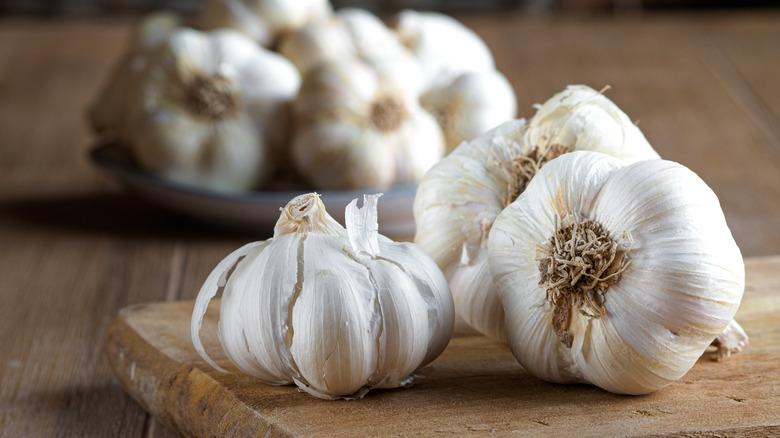
If you've ever had garlic for a few weeks or so, you may have noticed it begin to sprout. While it's still safe to eat, sprouting garlic develops a different flavor and texture; it can lose its prized pungence and taste bitter or woody. We looked at various ways to store garlic to keep it fresh, and there's a particular solution that's especially effective for preventing those sprouts.
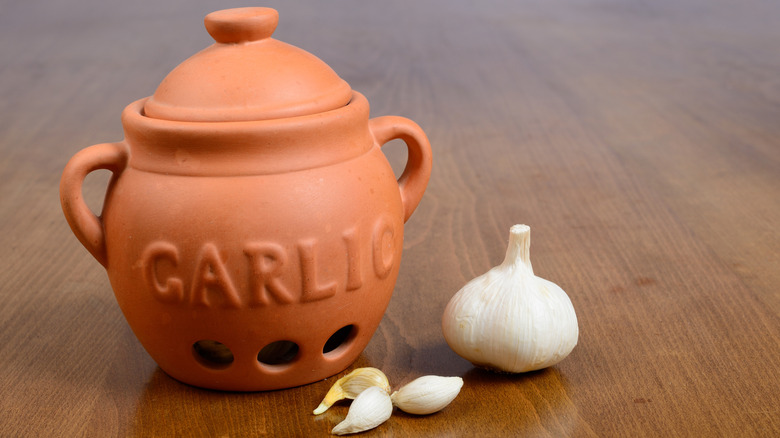
The best, most foolproof approach is to use a garlic keeper or something similar. Whole bulbs in a garlic keeper can last more than six months when used properly. Essentially, this means avoiding the conditions that signal to garlic that it's time to grow, which is when those sprouts appear. To grow, garlic likes light and moisture, as well as cold temperatures. That's why you shouldn't refrigerate garlic. Instead, a garlic keeper helps garlic remain darker, drier, and not too cold but not warm, either. It's important to actually place this keeper at room temperature in as dark and dry of a spot as possible, too, to help it really do its job well.
A garlic keeper is handy because it protects garlic heads but allows air flow — without some air, conditions could become too moist and warm. While cold can trigger sprouting, warmth can begin to cause decay. Garlic keepers make it easy to ensure the garlic's environment remains regulated. Models like this Dayyet ceramic garlic cellar are as affordable as $14, and are a game-changer for your garlic long-term.
Helping your garlic last as long as possible
With the virtually infinite number of dishes garlic improves, any method to keep it at its best and freshest for as long as possible is well worthwhile. If you don't cook a lot or don't want to get a garlic keeper for any reason, though, any container that is covered but allows some airflow will do the trick, even a bowl or Tupperware vessel with a few holes poked in its lid. You could even leave garlic heads on a dish on your counter as long as it's in a dry spot; something as simple as a paper towel could add some coverage from light.
Make sure, too, that your garlic is kept away from produce that emits a lot of ethylene gas. Fruits and vegetables that should be distanced from fresh garlic include apples, bananas, grapes, tomatoes, potatoes, and green onions. These create an especially high amount of the hormone ethylene as they ripen, while other items like garlic are particularly sensitive and will spoil faster when in close contact with that gas.
While garlic in a garlic keeper can last a significantly long time, it's a good idea to keep an eye on it for any signs it's going bad. Again, sprouts don't signal spoiled garlic, but do mean that garlic will be less pleasant to eat. Full spoilage red flags include an acrid odor, a yellowing hue, mold, or mushy spots.