

How A 17th-Century Marketing Scheme Changed The Color Of Cheese Forever
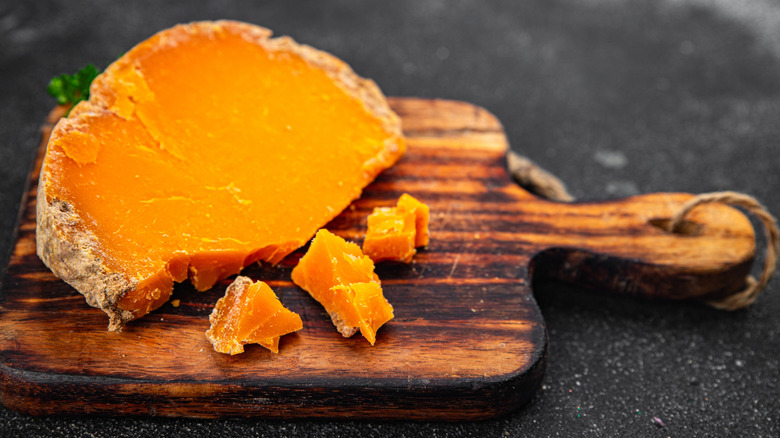
It isn't just cheddar that you'll find in orange hues in your grocery store's cheese section. French Mimolette, Red Leicester, and sometimes Gouda also carry the color that many have come to associate with cheese. Nowadays, plenty of cheese is dyed for aesthetic reasons to please consumers who may only have a dim understanding of the hundreds of years of tradition that have colored their tastes. Turns out that the orange found in some of the cheddar you buy at the store may have its roots in a marketing scheme from a region in southern England known for cheesemaking. (Not coincidentally, there's a town there named Cheddar).
According to a theory proposed by a cheese expert at the University of Vermont, English cheese fraudsters in the 17th century wanted to disguise low-fat or skim milk. As you skim off cream or fat from milk, it gets much paler and even translucent. But that cream could be sold or used to make butter for more profit than whole milk. So the cheesemakers in southern England used carrot juice, marigold, or saffron to return a yellowish tint to their milk. Later, they used annatto when that substance from the achiote tree became available from South America. People who bought their product expected a superior flavor from cheese made with cow's milk that was high in beta carotene, the red-orange pigment found in carrots, sweet potatoes, cantaloupe, apricots, and, you guessed it, oranges.
Cheese colors to dye for
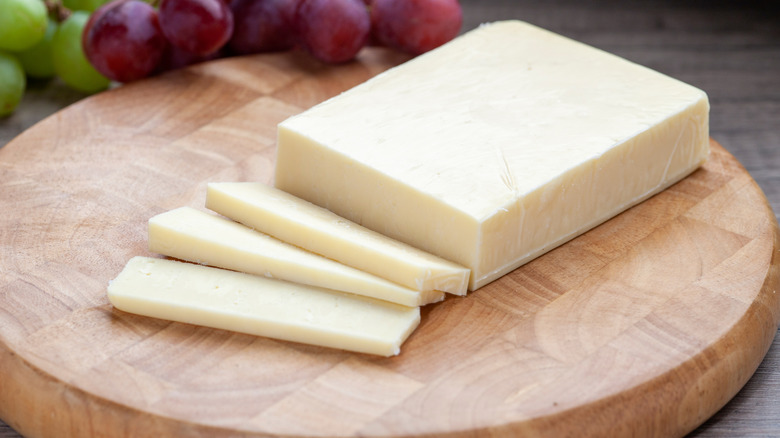
Grass in southern England in the spring had high levels of beta carotene and imparted both color and deliciousness, something the cheese wizzes wanted their customers to think they were getting, even if much of the fat had been taken for other purposes. But there was another problem. In the winter, when cows ate hay and other food that didn't have the nutritional characteristics of spring grass, even full-fat milk lost that yellowish tint. So another, less sinister, theory as to why some cheese is orange is that cheesemakers wanted to make their product more consistent year-round. That's why producers use dye today.
A third theory suggests that Leicester cheesemakers started dyeing their cheeses in the 17th century to differentiate them from competitors. It may also be that Mimolette gets its color from French cheesemakers, who reportedly added carrot juice as a slight to the Dutch royal House of Orange during a war between the two European nations in the 1600s.
Regardless of origins, some consumers have come to expect some cheeses to be colored. To keep them happy, modern cheesemakers still use annatto, which doesn't affect the flavor of cheese because it is used in small quantities. Even though white and yellow cheddars taste the same, there's nothing wrong with adding a visual kick if you're trying to create the ultimate cheese board or substituting one for the other in, surprise, desserts that call for cheddar.