

10 Common Rice Cooker Mistakes To Avoid
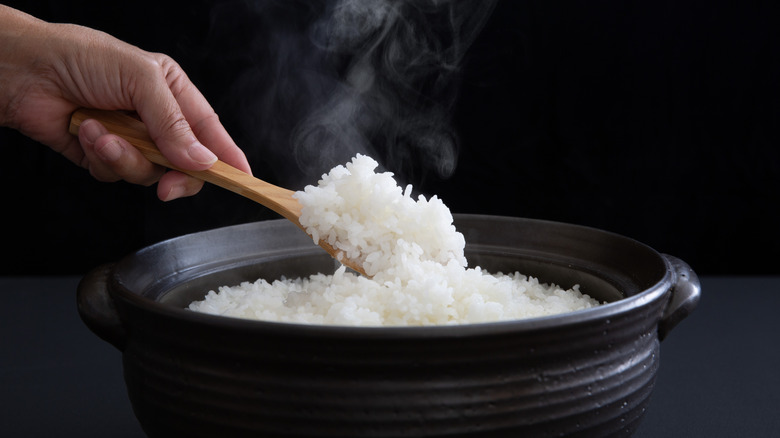
Can you make rice in a standard pot on the stove? Sure. However, if you want to make the rice-cooking experience even simpler, it makes sense to invest in a rice cooker. These machines really allow you to just set cooking instructions and forget. Fill the pot of your rice cooker with rice and water, turn it to "cook," and before you know it, you will have a pot of fluffy, perfectly cooked rice. Sounds super simple, right?
Using a rice cooker may be simple, but that doesn't mean it's impossible to make mistakes with one. Learning about some of the most common rice cooker mistakes can help you avoid them, ensuring that your rice turns out perfectly every time. Let's take a closer look at these mistakes so you can see if you commit any of these rice cooker sins. Luckily, the fixes are easier than you might think.
Not rinsing your rice before cooking
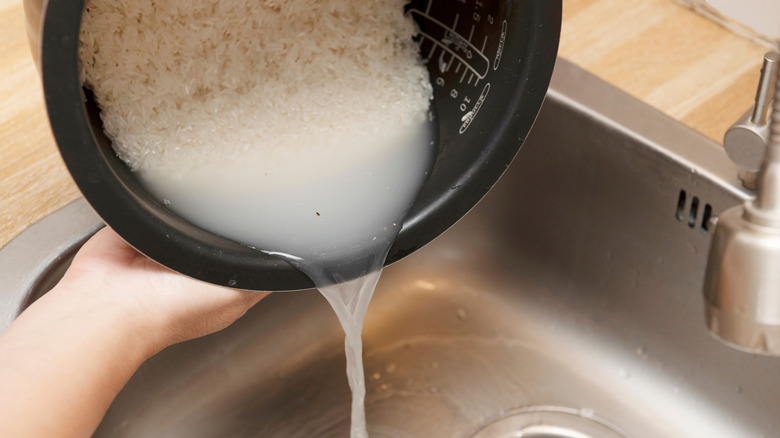
Are you going to make yourself sick or end up with a heap of inedible rice if you choose not to rinse it before cooking it in your rice cooker? Technically, no. But rinsing your rice is an important step if you want it to taste as good as it can possibly be, which is why skipping this step is a mistake. The rationale behind rinsing your rice is a simple one: Rice is a very starchy food, and when you add hot water, those starches are released. Without rinsing those starches away, however, they have nowhere to go and ultimately settle back into the rice as it cooks. This can leave you with rice that's too clumpy, offering a less-than-ideal texture.
Therefore, you should remember to rinse your rice until the water runs pretty clear. Generally speaking, this should take about three to four rinses. Yes, it requires taking an extra step, but the results are well worth it in our books.
Serving your rice as soon as it's done
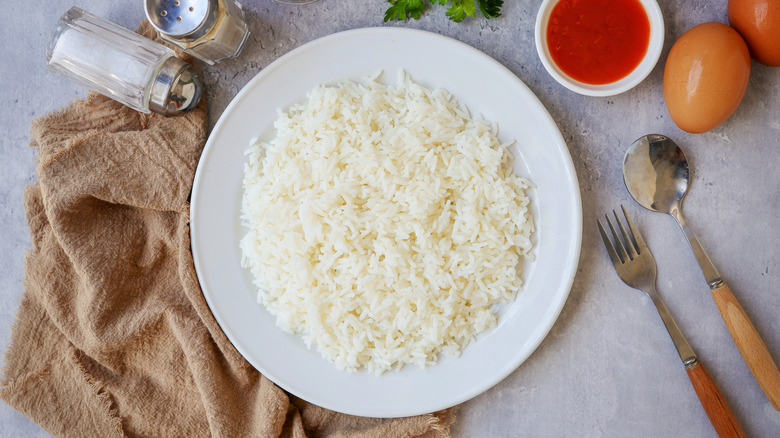
You're feeling super hungry, and you hear the switch flip on your rice cooker from "cook" to "warm." Finally, it's time to eat! But digging into your just-cooked rice right away is a big mistake if you want to enjoy rice at its ideal texture. If you have ever eaten rice immediately after cooking, you know it can be wet and watery, which is not ideal for most dishes. That's why it's important to let the rice sit and settle for a few minutes before finally serving it. This resting period allows moisture to redistribute in the pot after the active cooking phase ends. We recommend waiting 10 to 15 minutes to allow the rice to properly absorb all that extra moisture.
No one enjoys waiting longer than expected for rice to finish cooking, but understanding this rest period helps ensure better results. This extra step is essential for top-notch rice.
Neglecting to use the correct rice-to-water ratio
Perhaps the most important thing to consider when you're making rice in a rice cooker is the rice-to-water ratio. After all, these are the two main ingredients that go into making a pot of rice, so you want to make sure that you're not using too little or too much water. Too little water will result in overly sticky or even hard, undercooked kernels, while too much water can result in a sloppy, overly wet mess in your rice cooker.
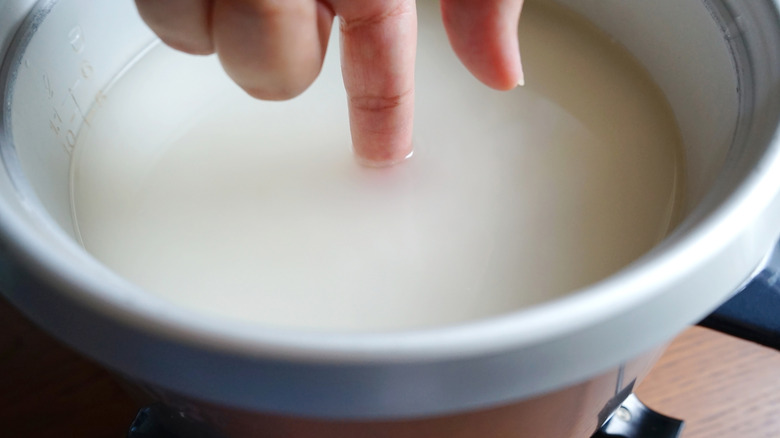
So, what's the right rice-to-water ratio? For short-grain white rice, use about one part rice to one part water. One method we especially like is filling the rice cooker pot with rice, rinsing it, and then adding enough water so that when you place your middle fingertip on top of the rice, the water reaches the first joint of your finger. However, different types of rice require different rice-to-water ratios. For brown rice, for instance, you'll want to use more water — about two parts water to one part rice.
Using the same settings for all types of rice
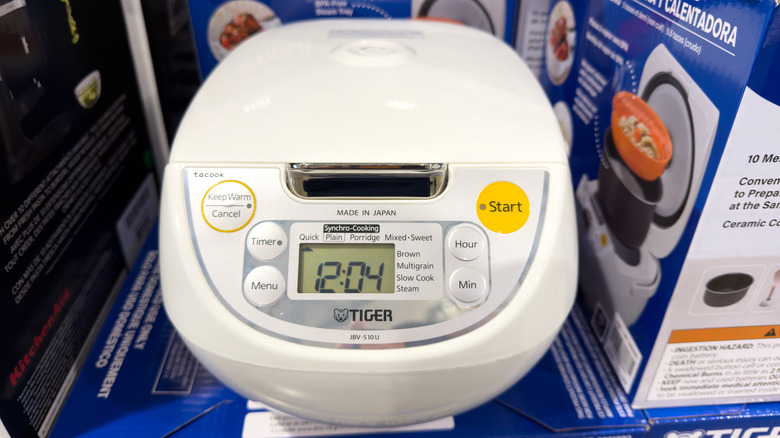
Some cheaper rice cookers only come with one setting — when you're ready to prepare your rice, you just toggle the switch to "cook." These machines are simple to use, but they may not cook every type of rice perfectly. However, higher-end rice cookers generally have several settings to choose from, ensuring that rice comes out perfectly every time, regardless of the variety being used. If you have one of these nicer rice cookers, then it's a mistake to use the same setting for every kind of rice you make.
These types of machines often include different settings for white and brown rice, specifically, and some may even have settings for congee, sushi rice, and jasmine rice. Make sure you know what type of rice you are cooking so you can select the correct setting and ensure it comes out perfectly cooked every time.
Not fluffing your rice after it's done cooking
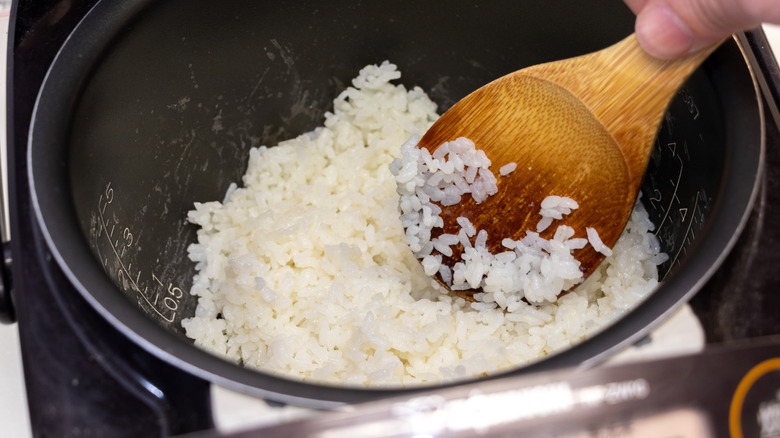
We've already discussed the importance of letting your rice sit for a while before serving it, but another step that a lot of home cooks skip when they're using a rice cooker is fluffing the rice. They assume that they can just scoop out a serving of rice and that it will have the texture they're looking for. However, fluffing is an important step when using a rice cooker, as it helps separate the grains and redistribute moisture throughout the cooked rice. That way, you won't have drier or wetter clumps in your serving of rice.
You'll just want to be mindful about the kind of tool you're using to fluff your rice. A rice paddle works well, but avoid using a plain spoon, as this can smush the rice and ruin its texture. We like using a fork to fluff our rice, since it doesn't break the grains and create clumps.
Lifting the rice cooker lid too often
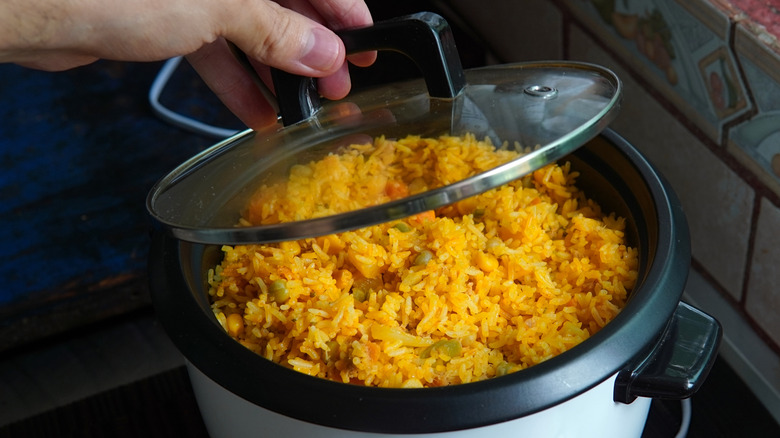
When you're hungry and ready for your rice to finish cooking, you may be tempted to keep checking on it to ensure that it's coming along without any issues. But when it comes to making rice in your rice cooker, lifting the lid too often can be a mistake. You can check it once or even twice during the cooking process, but continually lifting the lid can result in textural issues in the finished rice.
That's because you're releasing the steam that rice needs to cook from the rice cooker. Do this too often, and you may notice that your rice turns out a bit undercooked. Most people are not looking for rice with a crunch, so keep the lid on the rice cooker for the entire cooking time and avoid peeking too frequently. Luckily, many rice cookers come with transparent lids, so you can see how your rice is coming along.
Only cooking rice in your appliance

Some home cooks are hesitant to get a rice cooker for their kitchens because they can't imagine using an appliance that really only cooks one ingredient. After all, a rice cooker can take up a decent amount of space on kitchen countertops or in a pantry, so it may not seem worth buying one if you do not eat much rice. However, it's a mistake to think that you can only make rice in your rice cooker. In reality, there are actually a ton of different ingredients that you can cook in this simple appliance.
It should come as no surprise that a rice cooker can also make pasta. After all, pasta and rice are both starchy foods that are boiled in water. But your rice cooker is even more versatile than that. Try making steamed veggies in your rice cooker, or try using it to make soup. You can also combine ingredients with rice in a rice cooker for a quick, easy meal that comes together even when time — and clean dishes — are limited. For more ideas, read about the best ways to use your rice cooker.
Overfilling your rice cooker
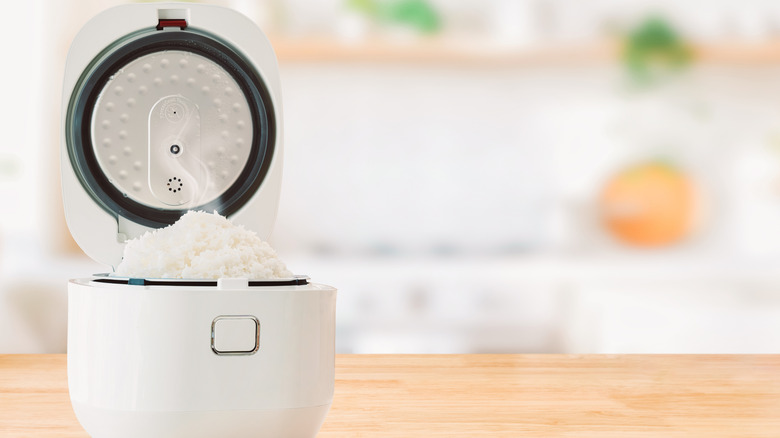
Have you ever relied on a rice cooker to keep your cooking routine quick and easy, only for it to boil over and leave you with a bigger mess than if you had made rice in a pan? Most rice cooker users have been there before, and it's a huge bummer when this happens. Chances are, though, if this has happened to you, it's because you've overfilled your rice cooker. Many rice cooker pots include a fill line indicating how much rice and water they can safely hold. Go over this fill line, and you may find yourself with a mess.
There are really only two solutions here: Either cook less rice at a time, or invest in a larger rice cooker that can handle the serving size of rice you want to prepare. But overfilling your rice cooker is generally never going to end well.
Leaving your rice on warm for too long
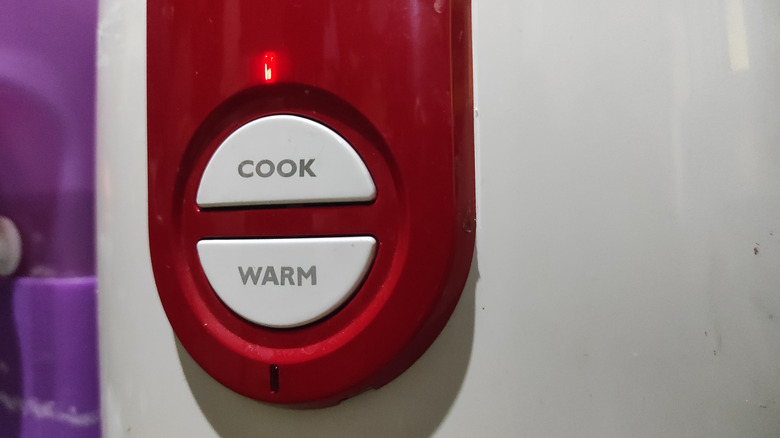
Many rice cookers have a "warm" feature. This means even after the rice finishes cooking, it can sit in the cooker for a while. As the name suggests, this setting keeps rice warm without the temperature being so high that it continues cooking the rice. Although it's okay to leave rice on the "warm" setting for a while, you don't want to keep it there too long. Over time, the rice can begin to dry out, becoming hard or even scorched on the bottom.
Additionally, leaving your rice cooker on warm for too long can be a safety hazard, especially if you're not closely monitoring it. Plus, it's simply a waste of electricity. If you know you're not going to eat the rice for several hours, just put it in a container in the fridge so you can reheat it later. Just make sure you know all about how to safely reheat leftover rice to avoid food poisoning.
Using metal utensils

You may have noticed that your rice cooker came with a plastic rice paddle to help you fluff and scoop your rice out of the machine. If you are like many home cooks, however, you may wonder why you cannot simply use a metal serving spoon meant for other dishes. Well, we're here to deliver the news that this really isn't a good idea. That's because most rice cookers have a non-stick coating on them, and when you scrape that coating with a metal utensil, it can damage the coating. This can lead to peeling that can eventually make your rice cooker lose its non-stick quality.
Don't want to use plastic for the hot rice in your rice cooker? We can't really blame you for that. For an alternative, seek out a bamboo rice paddle, which is also effective in keeping your rice cooker pot safe and scratch-free.