

Avoid This Ordering Mistake When Dining At A Greek Restaurant

We may receive a commission on purchases made from links.
Have you ever ordered something a certain way at an international restaurant, only to see a raised eyebrow from the waiter? Sometimes we subconsciously bring ideas from our own culture into other cuisines, without even noticing that the country of origin does things differently. Knowing this, Tasting Table reached out to Gus Constantellis, comedian and author of the "My Greek Mom's Recipes" cookbook, to pick his brain about one of the core mistakes people make at a Greek restaurant. According to him, "Greeks are not a big sauce people."
"It's typically a mistake to cover Greek dishes with extra sauce because it's culturally looked down upon," Constantellis told us. Meanwhile, American culture is big on pouring sauce over nearly everything — something Constantellis has experienced himself. "I was raised Greek-American, which means I like a little ketchup with my keftedakia (meatballs) every once in a while," he admitted. His Greek heritage was not super receptive of this culinary choice, though. "Anytime I went to Greece as a kid, I was ridiculed for my excessive ketchup use. Now as an adult, I get it," he said.
When it comes to sauces, Greeks follow the 'less is more' principle
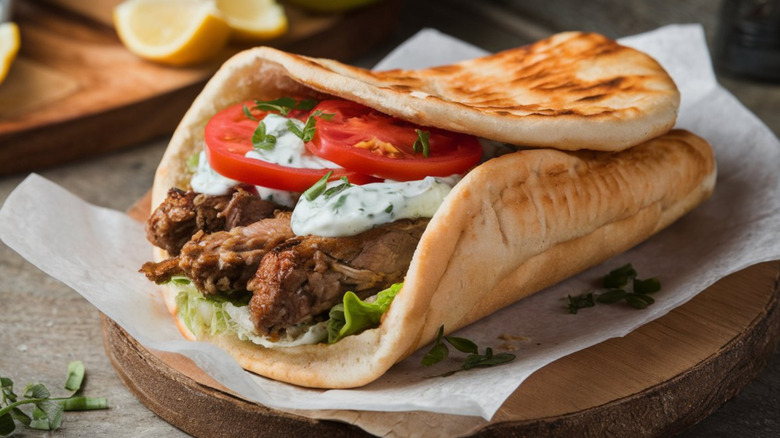
If Greeks are not that big on sauce, then what about all of the dips they're known for? From classic tzatziki to tyrokafteri and skordalia to melitzanosalata, there are many sauces that are a staple of this Mediterranean country's cuisine. Tasting Table asked Gus Constantellis about it and he clarified that, "While sauces/dips are very popular in Greek cuisine, they should never overpower a dish." American sandwiches and wraps might be dripping with sauce, but in a typical Greek pita sandwich, "there is a modest amount of tzatziki," Constantellis said. But, just because there's less sauce than you're likely used to doesn't mean Greek dishes are bland or dry — far from it.
"Meats and veggies should always be well-seasoned enough that extra sauce simply isn't needed," Constantellis explained. Two of the most essential ingredients in Greek cuisine are olive oil and lemon, which together create the simple yet flavorful ladolemono, which is used as a salad dressing, marinade, or a finishing touch on many Greek dishes. Along with fresh herbs like oregano, parsley, and basil, olive oil and lemon bring out the authentic flavor of the main ingredients. It's that unique taste that the Greeks appreciate and don't want to drown in sauce. "Please, if you go to Greece, don't ask for extra ketchup," said Constantellis — you probably won't need it, anyway.