

The Old-Fashioned Pasta Pudding Dish Nobody Remembers Anymore
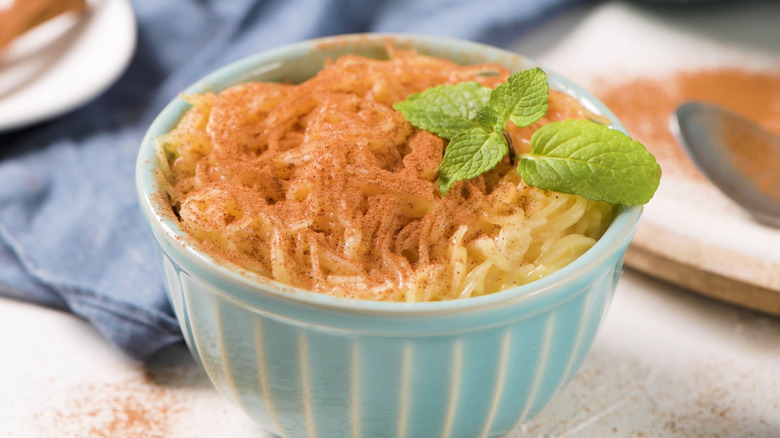
From baked rice pudding to maple-cinnamon candied bacon, humankind's desire to appease a sweet tooth knows no bounds. There are few foods in the world that we can't add sugar to if we're desperate enough — some start with what seems like a savory base and build sweet dessert notes on top of it. Not every dessert that comes from atypical ingredients has staying power, however. Take, for instance, sweet macaroni pudding.
Deep in the obscure annals of Victorian dessert cookbooks, you may find a sweet macaroni pudding recipe that reads much like a modern rice pudding recipe, but with macaroni pasta as the star. The recipe was not complicated, calling for only just, eggs, sugar, and nutmeg in addition to the macaroni. To give it a punch, there are also variations on the recipe that call for brandy which, essentially, make up the ingredients for homemade eggnog and pasta.
The method of preparation involved seriously cooking that macaroni down. Not only did it require breaking the pasta into smaller pieces and boiling it in water to start, but it also had to simmer in milk before the egg was added and the whole casserole went into the oven. The end result was not dissimilar from a noodle kugel, but not nearly as eminent in its longevity.
Putting off the pudding
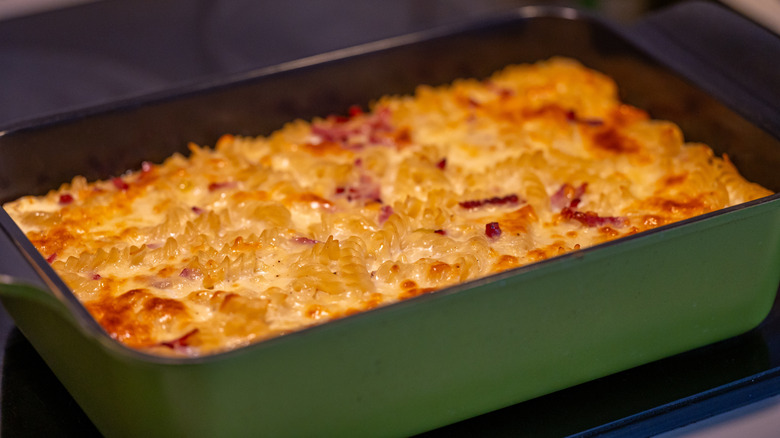
If the idea of a sweet macaroni casserole seems unusual to you, you're not alone. In the modern world, pasta is almost exclusively savory. As a result, you may see this dish as off-putting simply because the flavors are not what you expect. That alone is a reason why it might not be so popular right now. It's hard to shake off the strong associations and expectations people have for pasta. Especially in a dish that, at first glance, looks like a creamy mac and cheese but has sweet, warming spice notes like eggnog or rice pudding.
From spotted dick pudding to classic Christmas pudding, the Victorian era was famous for a variety of puddings that differed from the custard-like American version of the dessert. By the 1920s and 1930s, however, these began falling out of favor in Britain as refrigeration allowed for the proliferation of more exotic desserts such as ice cream. The puddings were also time consuming to make. Macaroni pudding, for instance, required 35 minutes of boiling and simmering followed by a 30 minutes of baking.