

What Actually Happens To Viruses And Bacteria When Food Is Frozen
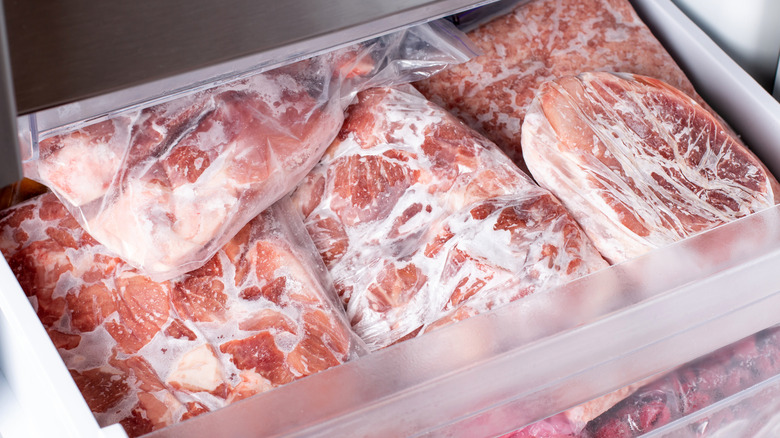
If you've spent any time in a kitchen, you've probably heard that you need to be careful about food safety, whether that's by washing your hands, switching out dirty knives, or keeping an eye on a perishable food's internal temperature. It doesn't take much for bacteria and viruses to fester in the right conditions, which means it's up to you to stay vigilant. While you might think that popping that lukewarm pack of chicken breasts that you forgot on the counter into the freezer will save them from being a total waste, Chris Mohr, a registered dietitian and fitness and nutrition advisor at Garage Gym Reviews, says otherwise.
"Freezing does not reliably kill viruses or bacteria; it mostly puts them on pause," Mohr says. He warns consumers, "Food that was unsafe before freezing is still unsafe afterward." So, that meat that you accidentally left out for multiple hours was likely already unsafe before you put it in the freezer, so freezing isn't going to help make it suitable for consumption again. Freezing foods at zero degrees Fahrenheit will indeed inactivate bacteria, viruses, yeasts, and molds, but all that's doing is essentially putting them to sleep. "Many organisms survive freezing just fine and become active again once the food thaws," Mohr warns, noting that if these organisms multiply after thawing, that's when you run the risk of foodborne illnesses such as E. coli, C. botulinum, and salmonella (here are six of the worst salmonella outbreaks in U.S. history, in case you need a reminder).
Freezers won't kill bacteria — so what will?
Freezing food won't kill existing viruses or bacteria, but it can prevent them from growing to unsafe levels if you follow food safety guidelines from the very start. "Freezing helps preserve quality and prevent new bacterial growth, but it cannot reverse spoilage or contamination," Mohr reminds us. The U.S. Food and Drug Administration recommends following the two-hour rule (one hour if the air temperature is above 90 degrees Fahrenheit) for meat, poultry, seafood, eggs, or produce. If you stick a pack of beef filets in a freezer set to at least zero degrees Fahrenheit the moment you get home from the supermarket, the likelihood of it growing bacteria or viruses is much lower (here's how long beef can safely be frozen in its different forms).
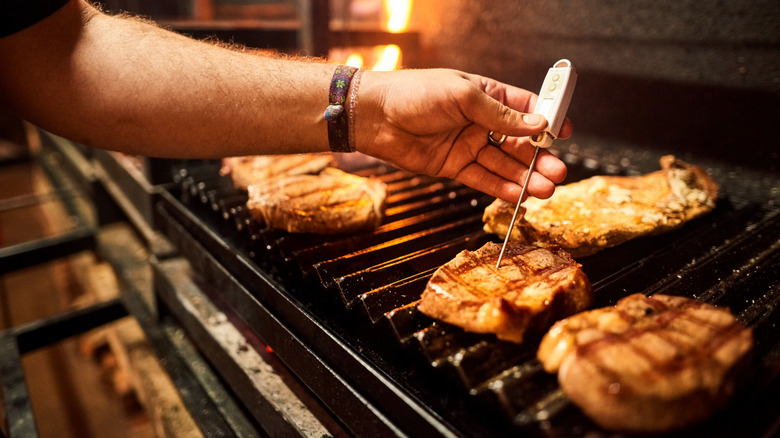
So, if freezing doesn't get rid of bacteria and viruses, what's the best way to ensure food is safe? "The only reliable way to kill most harmful bacteria and viruses is heat," Mohr says. He reminds us, "Cooking your food to a high enough internal temperature is what destroys pathogens." When it comes to warming leftovers, he recommends reheating them "thoroughly before eating" — just remember that you can't kill all contaminants by reheating in the microwave.
Some of Mohr's other food safety tips include "keeping your refrigerator at or below 40 degrees Fahrenheit and your freezer at zero degrees Fahrenheit," as well as "wash[ing] your hands before and after touching raw foods," and "keep[ing] raw meats separate from ready-to-eat items." Mohr ends his advice by noting, "These simple steps do more for food safety than freezing ever could."