

How US Military MRE Pizza Stays Shelf-Stable For Years Without Mold
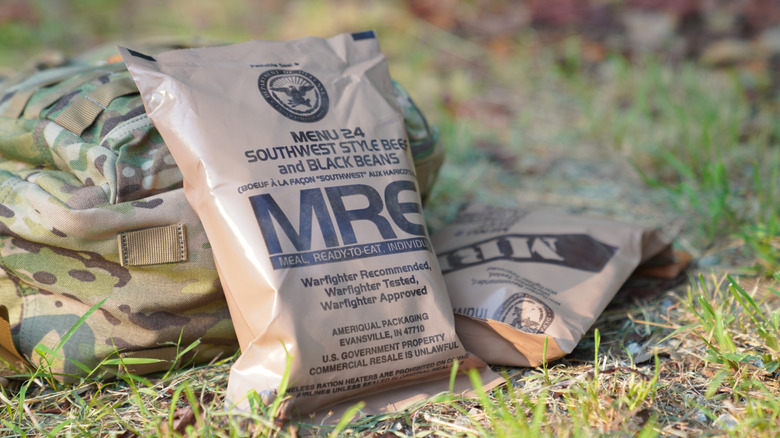
One of the many tasks the military undertakes is ensuring soldiers have healthy food to eat. They also try, within reason, to give them meals they enjoy — which is easier said than done on a battlefield. But, that's where the MRE, or Meal Ready-to-Eat, comes in. MREs are made to last a really long time under harsh conditions. They've never been known as gourmet delicacies, but they do seem to have gotten better over the years, and the MRE Menu 23 pizza slice is one of the more recent innovations. It's a packaged piece of pizza that can stay shelf-stable for three years.
The military's MRE pizza is not going to win any awards for the best looking slice — but the fact that you can eat it three years after it was made has to count for something. The pizza slice innovation was years in the making and has apparently been on soldiers' wish lists since 1981, when MREs were first introduced. In 2014, military food scientists finally cracked the code of how to get a slice of dough covered in sauce, cheese, and pepperoni to stay edible and free of mold without any refrigeration.
Although there is a scientific reason why cold pizza tastes so good, the process behind the MRE Menu 23 pizza slice is much more methodical than pizza has a right to be. First, humectants, or anything that can bind moisture, were added. In the case of pizza this is done with sugar, salt, and syrup. However, those alone couldn't make the pizza last so many years without refrigeration — changes to the acidity in the sauce, cheese, and dough and the moisture-absorbing elements in the package itself were also needed.
Have a piece of three-year-old pizza
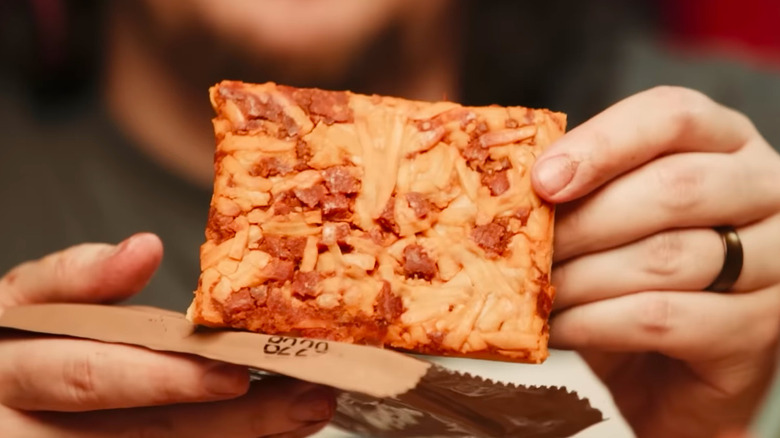
The MRE Menu 23 pizza has been compared to a Lunchable. But remember that Lunchables come as separate ingredients. You assemble them yourself, while the MRE pizza slice is pre-assembled, and that's why it was such a challenge to create. Making all of these components work as one cohesive dish without it going bad required some creative culinary science. For instance, the team behind the pizza used basil and tomato to create a natural, nano-thin barrier between the layers of ingredients and added air-absorbing iron to the packaging to prevent the growth of bacteria.
There are more issues with making MRE pizza than you might think. Yes, it has to resist mold for years — but it also may have to sit in a desert warehouse for years at temperatures exceeding 80 degrees Fahrenheit. Common in combat zones and areas where kitchens otherwise can't be set up, the slices may be dropped, stored upside down, fall off a truck, and more — and they still need to come out of the packaging looking like a slice of pizza, with all of the toppings in place. Let's see if your normal leftover pizza do that.
The goal of MRE pizza is to taste like a leftocer slice from the night before. It's not actually meant to be heated up — nor is it meant to fool you into thinking it's delivery or Digiorno. More than one reviewer mentions the lack of sauce, and feedback runs the gamut from actually tasting good to being a "gastrointestinal war crime" per one Redditor's feedback. It may not be as popular as other highly rated MRE, but at least some soldiers like it.