

Grilling Anything In A Cream-Based Marinade Is A Recipe For Disaster. Here's Why
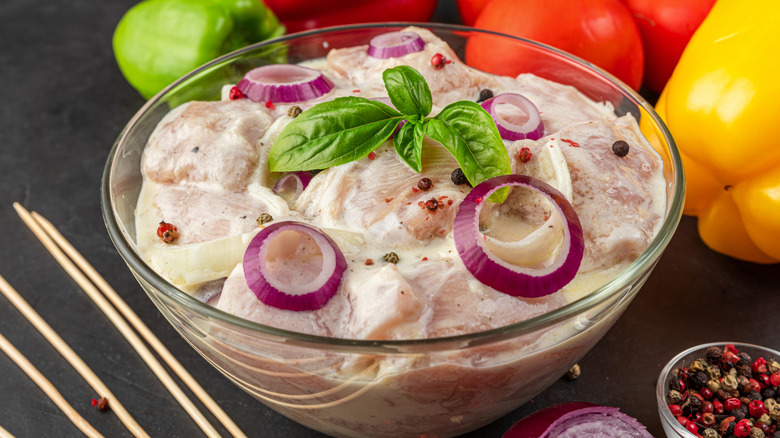
When it comes to grilling, a good marinade can make all the difference. Tossing your meat straight onto the grate means that all of the liquids drip off, and it's not the easiest place to set the skillet, so whipping up a sauce to accompany the protein isn't a simple task. For grilled foods, the best practice is to make sure that your meats are flavored from the inside out. But for Matt Abdoo, executive chef and co-founder of Pig Beach BBQ, a restaurant with locations in New York, Boston, and Florida, there's one particular marinade base that just doesn't mix with grilling: cream.
"Using a cream-based marinade may sound romantic, but it's actually not a good thing to marinate your meat with," Abdoo explains, breaking the issue down into three main points. For starters, the chef says that milk- and cream-based marinades are not acidic enough to really permeate the meat, instead just coating the outside. This leads to the second issue, which is that the creamy coating is likely to burn when exposed to the intense direct heat of a grill. "You're not getting the effect of tenderizing due to acid or any real flavor enhancements," Abdoo explains, "just the risk of the cream scorching, curdling, burning, or turning bitter."
It doesn't end there, however. There's a third issue with that creamy coating, this time resulting in the loss of one of the most prized effects of grilling. As Abdoo explains, that cream also gets in the way of the Maillard reaction. The Maillard reaction works by caramelizing sugars and proteins and adds a lot of flavor to seared foods. But if you choose dairy for your marinade, Abdoo says, "You end up with burnt cream instead of delicious roasted meat."
There may be some dairy-based marinades worth using, however
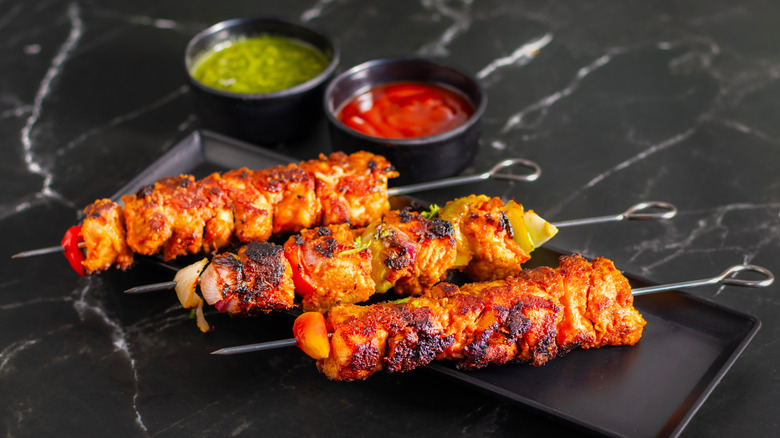
While cream and milk might not make the cut for Abdoo, there is one dairy-based marinade that he thinks is worth keeping in your culinary docket. "Marinating with yogurt has a very different effect," he explains. "Yogurt is more acidic than milk or cream and offers the tenderizing effects similar to traditional marinades and also enhances the seasoning to the meat." If you've ever bitten into a skewer of chicken tikka or perhaps a forkful of this baked tandoori cod recipe, you know just how wonderful a yogurt marinade can be. The layer of yogurt still prevents that treasured Maillard reaction, but its ability to tenderize and imbue the protein with layers of flavor makes up for the loss.
The trick really lies in the extra acidity of yogurt, an effect that can be brought to other creamy or dairy-based marinades with the right ingredients. "If you do want to use cream as a marinade," Abdoo says, "it's best to use things like buttermilk or full-fat yogurt, or even use a mayonnaise with additional herbs and spices to enhance the flavors." Both buttermilk and yogurt inherently have a higher level of acidity than milk or cream, and with a mayonnaise-based marinade you can easily add a bit of vinegar or citrus juice to bring a tenderizing zing into the mix.
So, if you want to bring rich creaminess to your marinade, consider marinating your meat with yogurt. You might have heard that marinating your pork chops in cream or milk is the ticket to tenderness, but for Abdoo, something with the acidity of this yogurt marinade for grilled pork is going to deliver you a final product worthy of your next big cookout.