

9 Tips For Finding The Best Food While Traveling In Japan
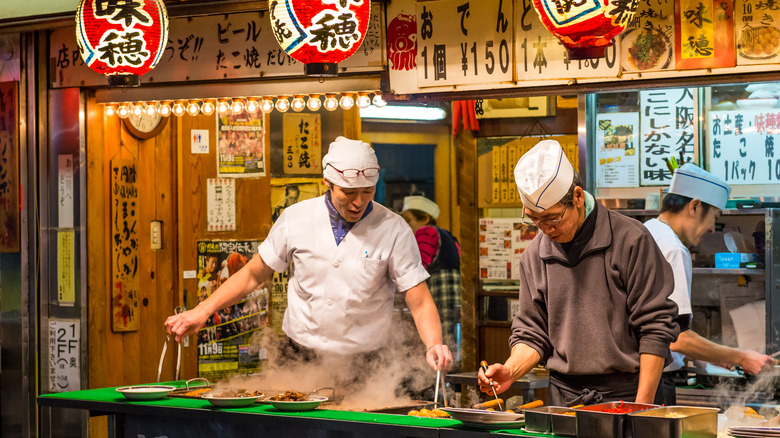
While Japan has some of the most vibrant cities, beautiful landscapes, and immersive cultural experiences in the world, it's also an incredible country for food. If you are used to eating a standard American diet, Japan has a ton of different dishes that are unlike anything you've tasted before. From classic dishes like ramen, sushi, and sashimi to lesser-known dishes like okonomiyaki and onigiri, Japan is a foodie's true wonderland.
I've had the opportunity to live and travel throughout Japan two separate times in my life. I'm a Broadway performer, and I was lucky enough to perform in many areas of the country. Tokyo was my main home city, where I've lived for a total of four months. I also traveled to Kyoto, Osaka, Okinawa, and other smaller cities. While I was technically there to perform, I had a side quest as a self-proclaimed foodie to taste the absolute best food in Japan while I was there.
With a lot of trial and error, I think I've got my food-eating adventures down to a science by my second time living in Japan. I have nine main tips to share with you, and I think if you follow these, you'll definitely find the best food while traveling in Japan.
Don't ignore places with long lines, especially if it seems to be locals
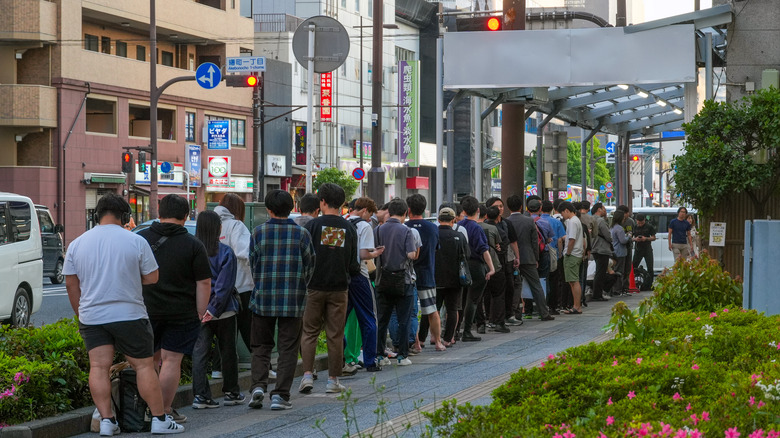
For many places around the world, like New York City or Rome, for example, seeing long lines outside of a food establishment is usually a sign of a tourist trap. Places tend to go viral on social media, and people flock to try the food. Many times, there are much better, cheaper places to enjoy. Surprisingly enough, this travel tip doesn't hold true for Japan.
In Japan, long lines aren't completely uncommon, especially in a big city like Tokyo. Don't be discouraged by these lines, however, because they tend to move extremely fast. Pay attention to who is in these lines. If it looks like a line of American tourists, then it's probably not the best choice for an authentic, quality meal. However, if you notice that most people in line seem to be locals, that's a sure sign that it's a great spot to grab a bite. I noticed that locals tend to eat out a lot more in Japan than in other countries I've been to, especially if it's during a busy time like lunch or dinner. Take note of where you see them flocking to, as there must be a good reason for it.
Look for small, specialized menus
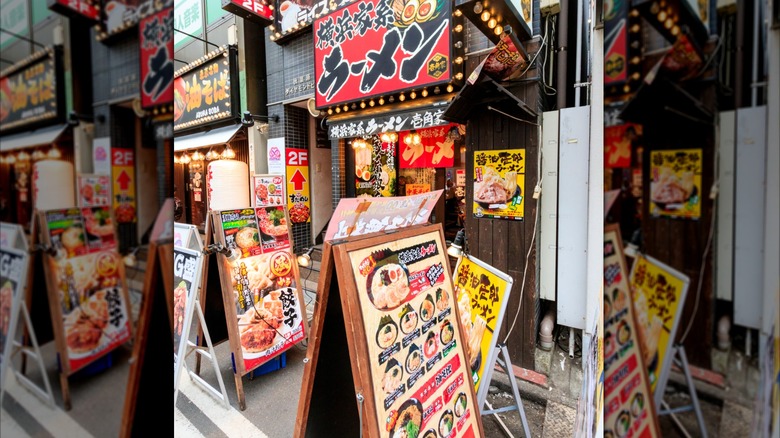
One key tip to trying a quality serving of a specific dish is to not go to a place that offers every type of Japanese food under the sun. Instead, scope out places that offer just a handful of items. For example, if you're looking for a great bowl of ramen, you will most likely get the best dish from a restaurant that specifically only serves ramen. This means that they specialize in that dish, and you'll be able to choose from a better variety of ramen bowls than you would at a place that just has one or two ramen options on the menu.
Finding these types of restaurants or food spots in Japan isn't hard to achieve. As you wander the streets, pay attention to places that look like a hole-in-the-wall. In the heart of Tokyo, I came across a small, skinny restaurant that had a menu of just donburi (Japanese rice bowls with meat on top). It ended up being a dish that I hadn't even had on my list to try, and when I had it, I was completely overwhelmed with how delicious it was. That quickly became one of my favorite spots to go to in the city; if I hadn't given the small, unassuming menu list a chance, I wouldn't have found one of my favorite meals that I've ever had to this day.
Look to see where office workers go to eat after work
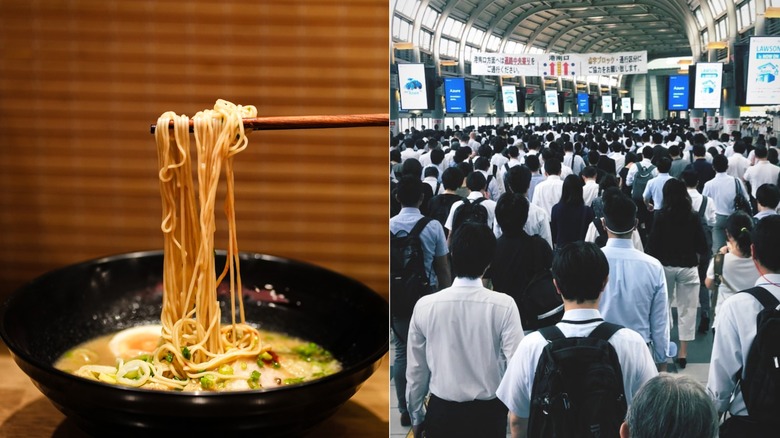
In Japan, you can clearly spot the office workers commuting in the mornings or the evenings. They all tend to wear the same uniform of black and white outfits, usually paired with a plain black backpack. On my walks home after a matinee performance, I always noticed that many office workers would stop at certain eateries around my neighborhood.
One evening, I saw a group heading towards the back of the train station, where, to my knowledge, there wasn't much to see. A friend and I decided to follow, and we saw that many of the office workers were heading to a hidden street called "ramen street." Down a staircase to an alley below regular street level, there was a line of about seven to 10 ramen spots in a row. The office workers all dispersed evenly amongst them, and we figured that if they're stopping there after work, it must be good. It turned out to be the best ramen that I had eaten on the trip, and I ended up going back multiple times to try the different restaurants on the row. So, a lesson was learned — follow the office workers!
Use Google Maps as a tool
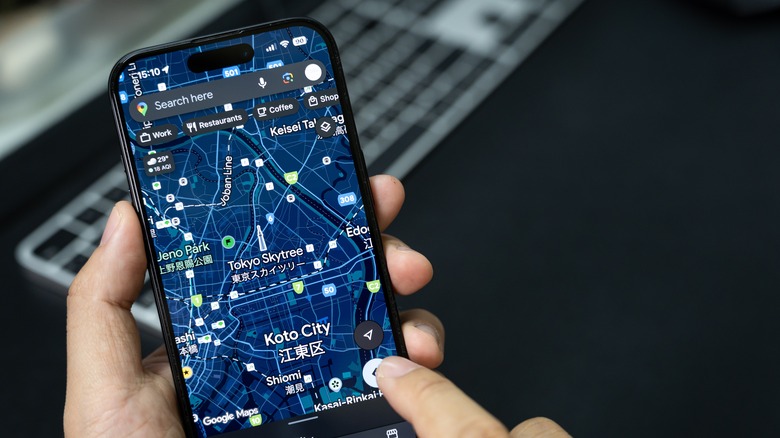
Google Maps is a tool that I love to use, no matter where I travel. I constantly write my own reviews of the places that I go, and I utilize others as a way to gain information as well. When it comes to Japan specifically, I like to use Google Maps if I'm in a new area and looking for something to eat quickly. If you want a specific dish, you can type that right in the search bar of Google Maps. This will bring up locations with reviews that mention that dish, as well as restaurants with the name of the dish in the description.
For situations where you're not entirely sure what to eat, or you just want a good restaurant, I find Google Maps helpful as well. I always look for places that have 4.6 stars and above, and have at least 250 reviews in total. Some places will have 5 stars, but only about 15 reviews, so that makes the ranking a bit less meaningful. If it has hundreds of mostly positive reviews, that's a good sign. Another thing to look out for is reviews with photos. This can help you get a better idea of the food that's served at the restaurant, which is key to gauging whether it's something you'd enjoy or not.
Try the local convenience stores
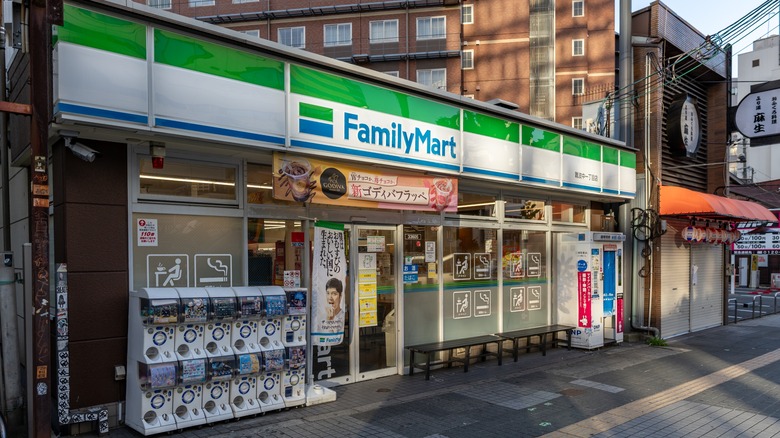
I know it sounds silly to travel all the way to Japan and to make 7-Eleven one of your must-see spots. However, the 7-Eleven in Japan is absolutely nothing like it is in the United States. Many locals in Japan use 7-Eleven as a place to pick up breakfast on the go or grab lunch to bring with them to work. Other than 7-Eleven, convenience stores like FamilyMart and Lawson are great places to check out as well.
It was at a FamilyMart near my apartment in Tokyo where I came across one of my all-time favorite foods — onigiri. Onigiri are triangle rice balls that usually have some sort of meat on the inside, and are wrapped in a crunchy layer of seaweed. There are many flavors to choose from, like ground meat and egg yolk, salted cod, or my favorite, grilled salmon flakes. They are affordable, come in convenient packaging, and are a filling snack or meal.
There are tons of other delicious things that you can grab from most local convenience stores in Japan as well. Things like packaged pancakes with maple syrup and butter in the middle, whipped cream fruit sandwiches, packaged teas and coffees, and even breaded chicken cutlets are must-tries. The local convenience stores are the places to go for something tasty, unique, and cheap.
Research the types of dishes that the city you're in is known for
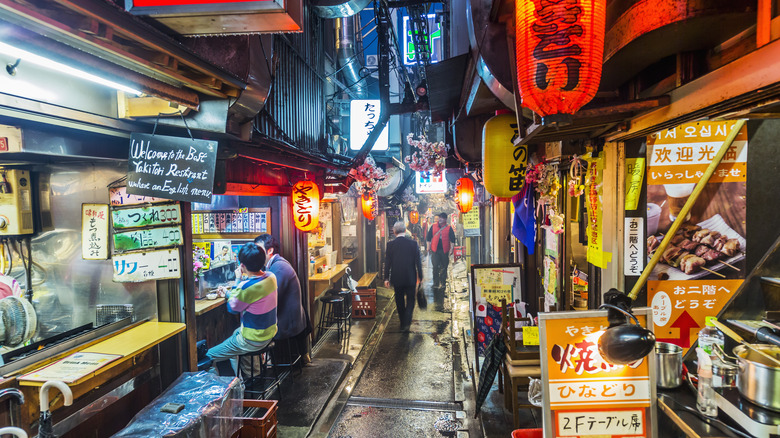
No matter where you are, eating regionally is important if you want to try the absolute best food while traveling. For Japan specifically, certain regions excel in one particular type of food over another. Take Osaka, for example. Osaka (specifically the district of Dotonbori) is known to be the best city in Japan for street food, and within that, foods like okonomiyaki (savory pancakes) and takoyaki (octopus dumplings) are a must-try. I had my very first okonomiyaki in Tokyo, and I thought it was delicious. However, I went to Osaka and had it at a proper street market and was blown away by how much more the flavors and textures burst on my tongue compared to the one in Tokyo.
If you're a sushi lover, Tokyo is a great place to splurge on a high-end sushi meal, specifically in the Ginza area of town. If you want to try great conveyor-belt sushi, heading to neighborhoods in Tokyo like Shinagawa and Meguro could be a great choice. They're more residential and slightly relaxed, perfect for getting the top-tier sushi that locals eat.
Speak to hotel staff to learn about the best local spots

Whether you've narrowed down the type of food you're looking to eat or you're truly up for anything, the staff at the hotel you're staying at will be of incredible help. Something that I always do is ask the staff what their favorite restaurants in the area are. They themselves are locals, and they're going to know the best, non-touristy places to get a great meal. Many of the best meals that I've had were recommended to me by hotel staff.
To take it a step further, you can also ask the staff what their favorite dishes are in particular. There are so many different types of Japanese dishes out there, and hearing a favorite dish from someone who was born and raised there speaks volumes. Find out what you absolutely need to try, and then ask them for a list of places that would have that food.
Lunch is the prime time for a great meal
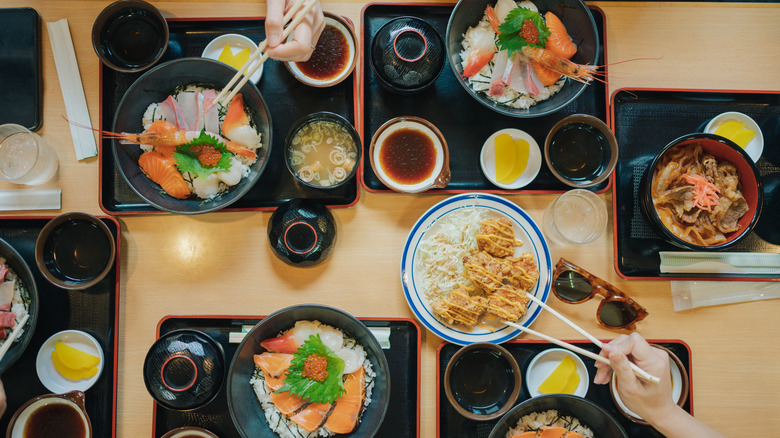
If you're looking for a nicer, sit-down meal experience, many places in the larger cities have lunch deals that will get you more food at a lower price. When I was in Kyoto, there was one specific restaurant that was recommended to me by the hotel concierge. When I looked up the menu online, it seemed like the prices were a little steep. I ended up walking by the restaurant at lunch time, and saw that there was a lunch special. I was ultimately able to get multiple dishes at the restaurant for about half of what I'd pay for them if I went at dinner time. The dishes were slightly smaller for lunch, but I was able to taste more varieties of food, making it totally worth it.
After that experience, I started to pay closer attention to lunch specials as I traveled. I soon discovered that it was incredibly common for restaurants in the major cities in Japan to have some sort of discount at lunch. It was mostly geared towards the business workers in the area, and I took great advantage of it. I definitely recommend saving your nicer, sit-down meals for lunch if you want to taste more food at one time while also saving a buck or two.
Get familiar with Japanese dishes before you go
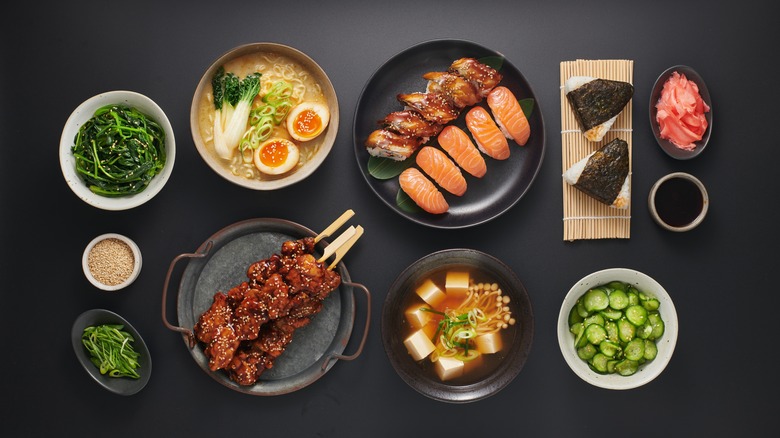
Deciphering menus in Japan is no easy feat. I would highly recommend getting familiar with not only the names of Japanese dishes, but also what they look like. Many places will have menus written in Japanese, but they will have a picture to accompany them. In other situations, restaurant staff will tell you what is available on the menu, and it's helpful to be familiar with certain dishes and their names.
I highly recommend making yourself a cheat sheet in the notes of your phone before your travels. Certain phrases and words definitely helped me navigate the food scene, and I was able to order a lot more confidently. For example, at a ramen shop, knowing that tonkotsu is pork broth, shoyu is a soy-based broth, and miso is a savory broth helped me choose my ramen dishes seamlessly.
In the seafood dish world, sashimi is raw fish without rice, while sushi is the rice and raw fish together. Don't make the mistake I did, and get confused when a singular raw piece of salmon is delivered to your table because you ordered the sashimi instead of sushi. With a little bit of preparation, you'll be good to go. Make sure you also brush up on the mistakes to avoid when you're ordering in Japan, and have a fantastic trip!