

You Can Put Plastic In The Dishwasher, But Not This Kind
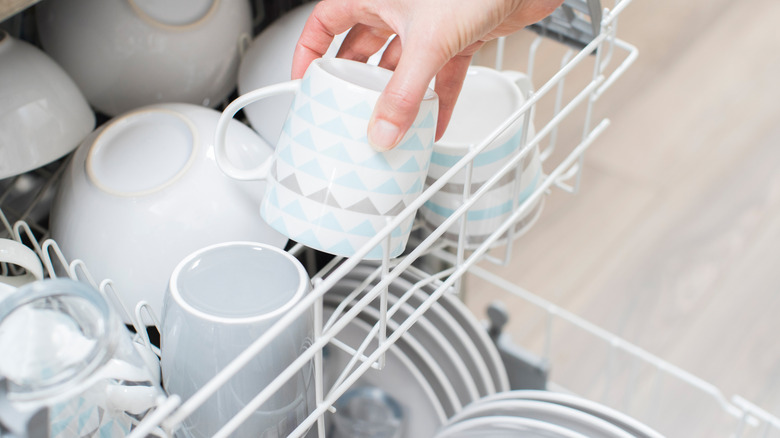
The dream of having all of your dishes cleaned at the touch of a button is a nice one — but despite the advances in technology, there are some items in the kitchen that your dishwasher can't handle. Plastics are fine for the most part, but thin plastics, acrylic, and melamine are three things you shouldn't put in the dishwasher. Soft or thin plastics like takeout containers or plastic water bottles are often designed to be single use, and their lightweight construction means they can melt easily. Even of more concern is that they can release harmful chemicals when heated.
Acrylic dishes won't melt as easily as thin plastics do, but they can still warp. The combination of heat and water pressure can also cause scratches and cracks in the surface which can then harbor bacteria. You might find that the heat also causes the acrylic to turn cloudy. Melamine dishes, on the other hand, are less black and white. Some melamine dinnerware will be labeled dishwasher safe, but there is often a temperature limit. Over time, cracks may begin to appear. After cleaning them in the dishwasher. you will notice the color and design fade rather quickly.
If you're not sure what type of plastic you're dealing with, checking for the dishwasher safe label is your best bet. This could be the words "dishwasher safe," an image of dishes or wine glasses with water droplets, or dishes or glasses with slanted lines. An image with an "X" through it means it's not designed for the dishwasher, and anything that's not labeled at all should be assumed not dishwasher safe.
The best way to wash different plastics
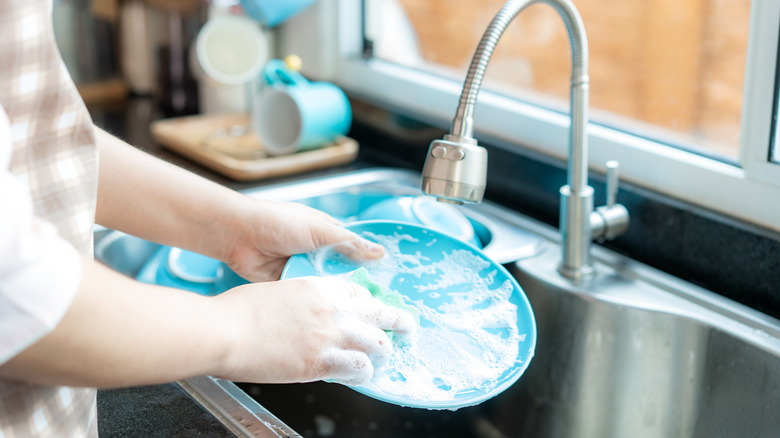
The best way to wash plastics that can't go in the dishwasher is by hand washing them with a mild detergent. For thin plastics you still want to avoid using very hot water, and reconsider using any single use plastics for food or drinks. Even with hand washing, some types of plastic food containers can still release BPAs and other chemicals with use.
Acrylics and melamine are prone to scratching, so you'll want to use a soft sponge or microfiber cloth. To remove stains, apply a paste of baking soda and water – but avoid using too much pressure when rubbing it in. But, even with plastics that are labeled as dishwasher safe, you still need to proceed with some caution and follow a few tips for cleaning plastics in the dishwasher.
Dishwasher safe plastic items should be placed one the top rack to keep them as far away from the heating element as possible — in fact, that's exactly what the top rack of the dishwasher is designed for. With any kind of plastic added to the load, you'll also want to avoid using the deep clean or sanitizing cycles, as these use hotter temperatures and higher water pressure.