

If You're Making Salsa For Tacos, Leave Out The Lime Juice. Here's Why
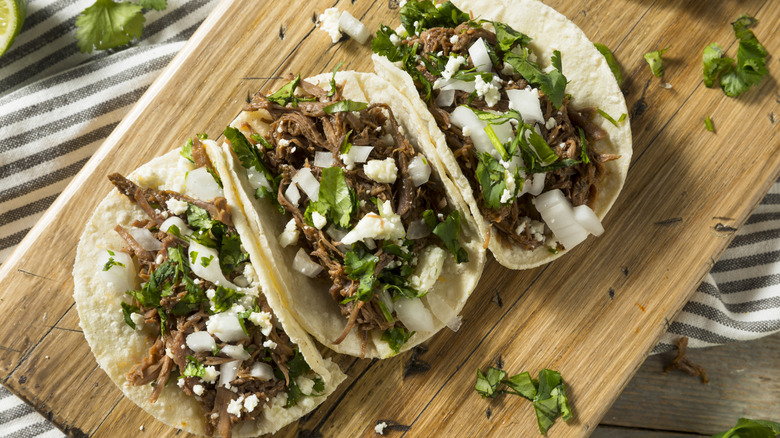
Salsa is the ultimate condiment, especially when you consider its range and versatility. Salsas can be spicy of course, but they can also be smoky, creamy, acidic, bright, and even a bit sweet. Salsas are easier to whip up at home than you might think, and they're essential for homemade taco nights — but there's one ingredient that might surprise you that should be left out of a salsa when pairing it with tacos: limes. In an exclusive interview with James Beard award winner Rick Martínez, the Mexican American chef told us exactly why it's best to leave the citrus fruit out of your homemade salsa for tacos.
Assembling tacos tends to follow a certain order of operations: First, you pile meat onto a warmed tortilla; followed by onions, cilantro, salsa, and any other fixings; then, everything is brought together by a generous squeeze of fresh lime over the top. The steps and ingredients can vary, but what's essential is that squeeze of lime over the taco fillings to really bring them to life. Martinez agreed, "You don't taste the food and then add lime, you just squeeze the lime, no matter what it is. It's just a part of the culture [in Mexico]."
Given that lime is a guaranteed addition to tacos, you can skip adding it to your salsas, as the meat and fillings are what really needs the burst of acidity. It's not that adding some lime juice will ruin your homemade salsa, per se, but it's better utilized on the taco fillings directly.
How seasonality impacts fresh salsa
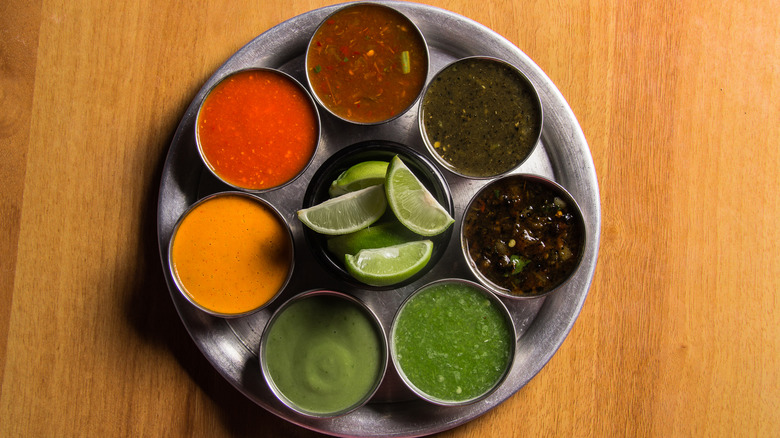
Some Americans are used to overly acidic salsas. But chef Rick Martínez said, "You just have to retrain yourself on what salsa's supposed to taste like. When you don't put in lime juice, the salsa will be less acidic and sweeter." When the acidity is tempered down by omitting the lime, you'll then be better able to taste the layers of flavor common in salsas — from the smoky peppers and charred tomatoes, to the fresh herbs. However, there is one exception to Martínez's rule.
According to Martinez, there's a time when adding lime juice to fresh salsa is prohibited, and it has to do with tomato seasonality. "If you try to make a tomato salsa in January or February, it's going to be gross, and the only way to compensate for that is you either have to cook it or add lime juice at the end to give you some kind of flavor," Martínez explained. In-season tomatoes provide enough acidity to make flavorful salsas, but using sad winter tomatoes will only lead to sad salsa.
Tomatoes are in season all year long in Mexico, so there's rarely ever a need to use lime juice to bump up the acidity. However, for the best homemade salsa, Martinez recommended you reach for grape or cherry tomatoes during the off-season. In this case, you can skip adding the limes. But, when limes are necessary, he also recommended you use key limes whenever possible. "They tend to be a little bit sharper and more floral," said Martinez. There's also no shame in doctoring up store-bought salsa.