

Frozen Vs Fresh Spinach: Which Is The Better Pick For Spanakopita?
We may receive a commission on purchases made from links.
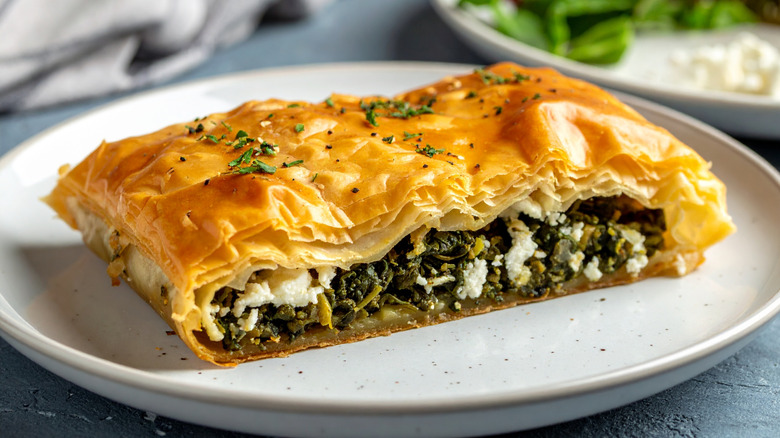
When preparing traditional spanakopita, picking the convenience of frozen ingredients or going for quality is always going to be a debate. Everybody wishes they could make everything from the freshest ingredients, but spanakopita is a dish that tests those desires. The most obvious is the phyllo dough, where the taxing hassle of making it homemade, and the relatively indistinguishable drop in quality, leads most to use the frozen shortcut. But is the quality difference with frozen spinach small enough to make it worthwhile? To find out, Tasting Table asked Gus Constantellis, comedian and author of "My Greek Mom's Recipes."
"My mom only used fresh spinach in her spanakopita. I don't think I ever saw her use frozen veggies her entire life," said Gus. He admitted that both frozen and fresh spinach have their advantages, but said "the pros of fresh spinach outweigh the cons." The biggest difference between the two as far as prep is moisture. "One of the cons for frozen spinach is that you have to make sure the spinach is not too wet when you start cooking. The spinach should be cleaned and dried," Constantellis explained. A nice and crispy spanakopita is all about the texture of all those phyllo layers, and he said, "Excess moisture will interact poorly with the phyllo sheets." Considering the main advantage of frozen spinach is convenience, the extra work of having to dry it more negates that.
Fresh spinach will be more flavorful in spanakopita and isn't much harder than using frozen
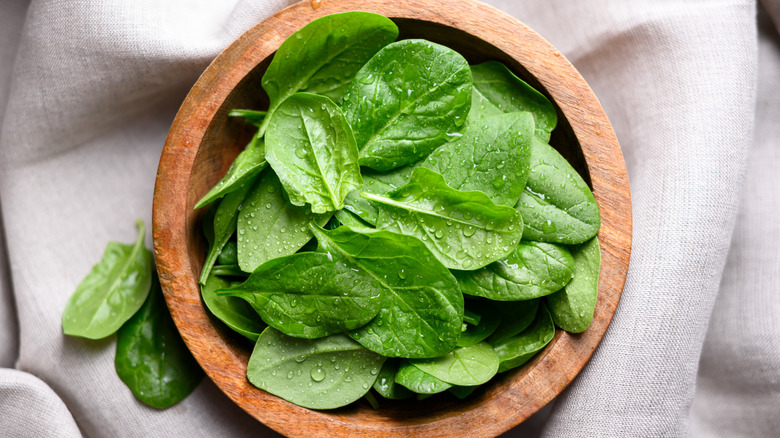
Gus Constantellis shared some tips for spanakopita that you can use with fresh and frozen spinach. He told Tasting Table, "You can remove any excess moisture by sprinkling the spinach with a bit of salt and letting it sit for 15 minutes." You can also put your spinach in a colander or mesh strainer while the salt draws out the moisture to let it drain. But that's just a first step. "After you wilt all the spinach in a large pan, you need to make sure to remove any excess moisture again and you can do this by squeeze drying," recommended Constantellis. You can do this using paper towels, or you can squeeze it in a wrapped up cheesecloth or cheesecloth alternative that can be washed and reused.
While there is no nutritional difference between frozen vegetables and fresh, frozen spinach does taste slightly different. Beyond the moisture content, fresh spinach will tend to have a sweeter more robust flavor than frozen. It also usually has a more distinguishable texture, as freezing spinach can make it more fibrous and less tender. In a filling with herbs and cheese it may not be very noticeable, so frozen is still fine — but it will make a difference in the flakiness of your phyllo sheets. Either way, Constantellis shared one last tip: "My mom's recipe for spanakopita calls for a ridiculous amount of dill, which is one of the best tips I can give you for spanakopita: The fresh dill is worth it!"