

The Best Meat To Start Your Sous Vide Journey
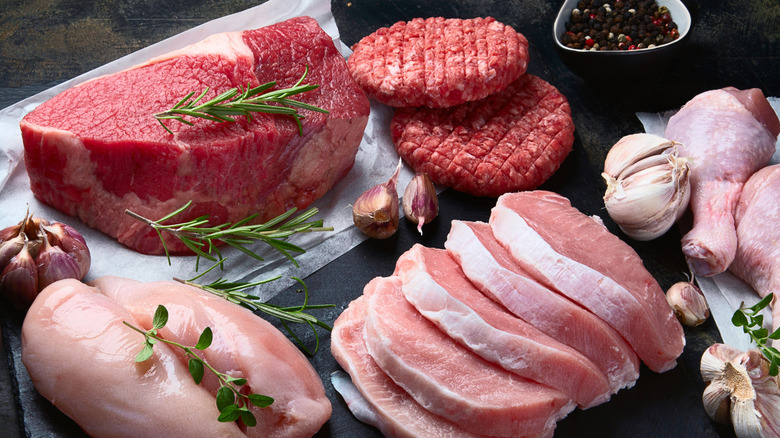
When you get your hands on a sous vide machine, you might feel overwhelmed by the sheer number of cooking possibilities it provides, not to mention all those buttons and settings. Before you rush into unexpected uses for sous vide, it's best to get familiar by using it for its most popular purpose: Cooking meats to perfection. According to Scott Thomas, owner of GrillinFools, the most forgiving cut to try first is a fatty piece of beef.
"I know this is going to sound crazy, but the best thing to start off with on a sous vide is steak," Thomas told Tasting Table in an interview. "Particularly a New York strip or ribeye ... I know it's an expensive cut to practice on, but it is also really quite simple." He explained that a well-marbled cut offers "a larger window to get it right." Gentle, precise sous vide is great for keeping leaner meats from drying out, but for beginners, fatty steaks are always less prone to overcooking than a chicken breast. They can also stay juicy and flavorful even when taken a few degrees past medium-rare, which is a big advantage for cooks who are still getting used to their machines.
It also doesn't hurt that steak is one of the best foods to cook sous vide based on flavor and texture alone. Thomas clued us in on his go-to cooking process to create a perfectly rosy cut of beef with a killer crust on the outside.
How to cook sous vide ribeye or strip steak like a pro
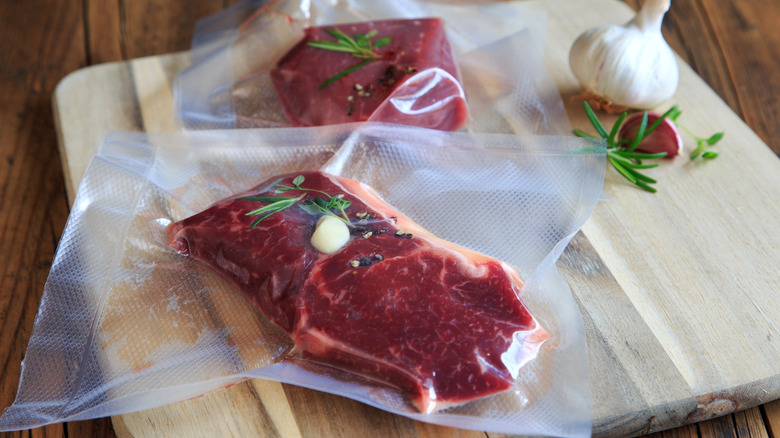
Cooking sous vide ribeye or strip steak starts with sealing the meat in a plastic bag before submerging it in a preheated water bath. A nifty thing to know about sous vide steak is that you can add herbs, spices, and aromatics to the bag, which will flavor the meat as it cooks. A sprig of rosemary, a few cloves of garlic, and black peppercorns form a great mix to start with.
Next, Scott Thomas told us to "use the immersion unit to get the steak to 10 to 15 degrees below your desired doneness." This is crucial because you have to sear the steak in a pan afterward, and it will overcook if it's already at the final temp. The temperature and time in our sous vide ribeye recipe should also work for medium-rare strip steaks, as well as porterhouses and T-bones, for that matter.
To create the best crust, Thomas instructed to preheat a cast-iron skillet close to 500 degrees Fahrenheit, then quickly sear the meat on both sides. Patting each side dry with paper towels to remove excess moisture is a must for proper browning, since meat juices tend to collect in sous vide bags. "When you have that beautiful flavor crust that only cast iron can make, the steak will have come up to the desired finished temperature," Thomas said. Congrats, sous vide champ — all you need now is a delectable steak topping to finish off your masterpiece.