

Why Vintage Cast Iron Is Smoother Than Its Modern Counterparts
We may receive a commission on purchases made from links.
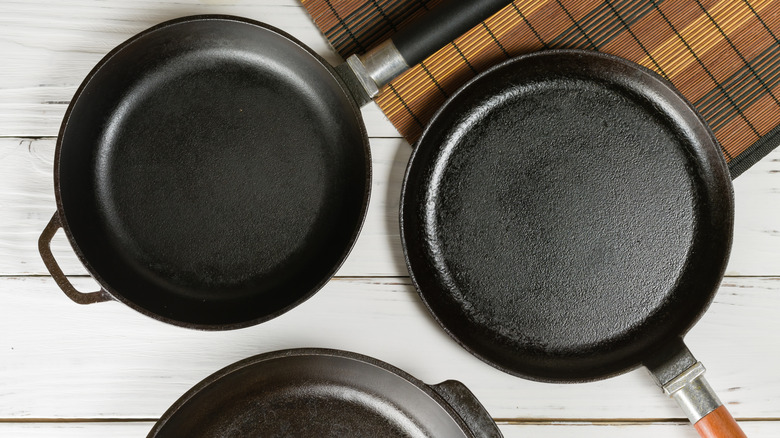
Picking up a vintage cast iron pan, you'll probably notice a few differences compared to a brand new one. Not only will the pan be lighter, but the surface is much smoother. While it's easy to imagine this is the result of years of use, it's all down to a change in the manufacturing process.
In the days before mass production, cast iron pans were hand polished until smooth with the idea of providing a non-stick surface from day one. This was the final step in a labor-intensive process that involved hand-pouring molten metal into sand molds, followed by tumbling to remove the rough surface – a process which alone could take 24 hours – followed by a hand polish. These pans would have been sold unseasoned.
Around the 1950s, manufacturers were forced to speed up the process to meet increasing demand. The hand pouring was replaced by an automatic molding process, but sand molds are still used, which is what creates the pitted surface. Although modern cast iron pans go through a finishing process to remove sharp edges and seams, the laborious polishing stage of days past has been dropped. The move from artisan to mass produced skillets also accounts for the difference in weight between vintage and modern pans. The hand casting process required more precision but allowed manufacturers to make pans with thinner walls, which were reduced further during the polishing process.
Are vintage cast iron pans better?
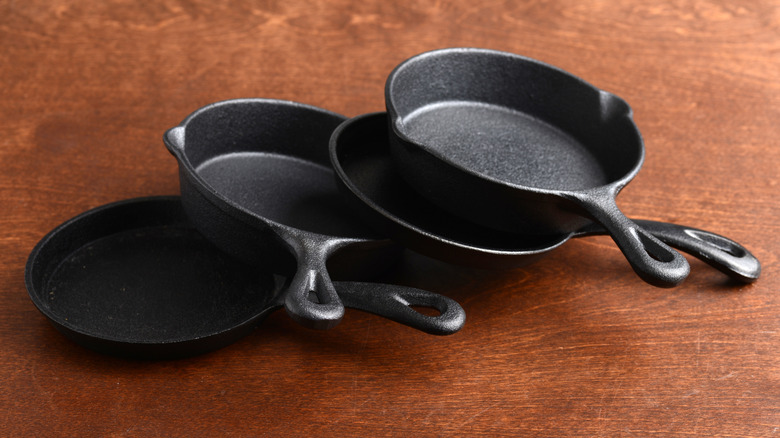
While names like Griswold and Wagner might be among the vintage cookware that's worth a fortune today, these old pans aren't necessarily better when it comes to cooking. The idea of a smoother, non-stick surface certainly sounds appealing, but modern pans can be just as easy to cook with when seasoned correctly. Some even prefer the rougher surface as they find it takes on seasoning more easily. The lighter weight of vintage cast iron pans does make them easier to lift and maneuver, but you'll find the heaviness of the modern versions useful whenever you want to get a good sear on a steak. We have this idea that vintage products were always made to last, but the thicker walls of modern cast iron pans actually makes them much more durable and less prone to warping or cracking.
If it's that smooth surface you want to enjoy, then there are modern manufacturers that produced polished cast iron pans, though this extra step does put the price up. Lancaster's No. 8 Skillet is both lightweight and polished and will set you back a not-so-lightweight $175, while you'll pay $150 for the Finex 8" Skillet, which has the heft of a modern pan with a highly polished surface.