

Why You Shouldn't Order More Than One Course When Dining In Italy
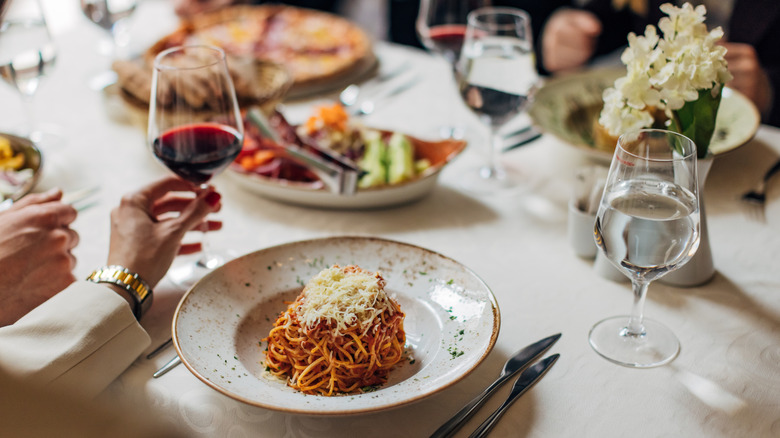
Traveling overseas opens up numerous possibilities for sampling diverse cuisines and discovering new favorites. There are plenty of Italian dishes you need to try at least once, and when dining in Italy, it can be tempting to want to order one of every course on the menu. This, however, is neither expected nor advised. Although American sensibilities tend towards quantity over quality when eating, the generally à la carte style of menus in Italy lends itself to more thoughtfulness in ordering.
Dining in Italy can be as minimal or extravagant as you wish, though this is largely determined by the setting of your meal. Breakfast is often light and sweet, accompanied by a cappuccino, while lunch is usually the heaviest of a three-meal day. On any given dinner menu, you'll see courses starting with appetizers and finishing with digestives, but it is an unspoken rule when dining in Italy that you needn't order an item from every section.
Unlike a prix-fixe menu, which dictates the order of a meal from start to finish, the courses on an Italian menu are more like sections of different foods that differ in heaviness and ingredients. A good rule of thumb when reviewing a menu in Italy is to choose whatever you like and will most enjoy. Let your food be an experience rather than a test of endurance.
Understanding the courses of an Italian meal
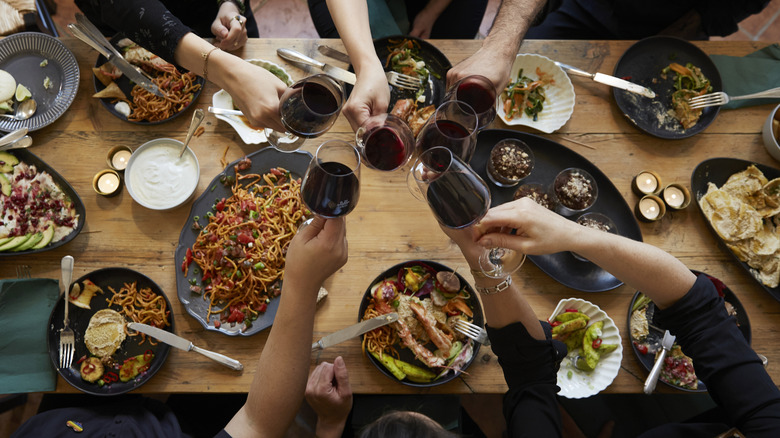
The antipasti course is comparable to an American appetizer selection and usually includes portions of either cold or hot foods like prosciutto-wrapped melon or bruschetta. These smaller plates are good for sharing a few with friends. The next courses are more substantial and offer enough in just one course without eating to excess.
Primi and secondi courses are where the hot and heavier foods come in. The primi course will typically include various styles of pasta, while secondi offers protein-rich dishes of seafood, beef, poultry, lamb, and more. The contorni and insalata courses are vegetable-forward, including both raw and cooked vegetables. The remaining courses you're likely to see on an Italian menu will include formaggi e fruta, which refers to cheese and fruits, and dolce, which is a selection of desserts. Caffe to follow is a strong, unsweetened espresso, and the digestivo section features an array of alcoholic drinks to help with digesting your food.
Looking at all of these different sections, it's clear why you aren't expected to order four courses or even more than one course, depending on your personal appetite. The portions of the "main" dishes should easily satisfy. As always, when traveling to a new destination, be open to and understanding of different practices wherever you are a guest. And, as always, if you're unsure of something, you can certainly ask politely for clarification.