

Installing Concrete Kitchen Floors Can Create More Issues Than You Might Expect
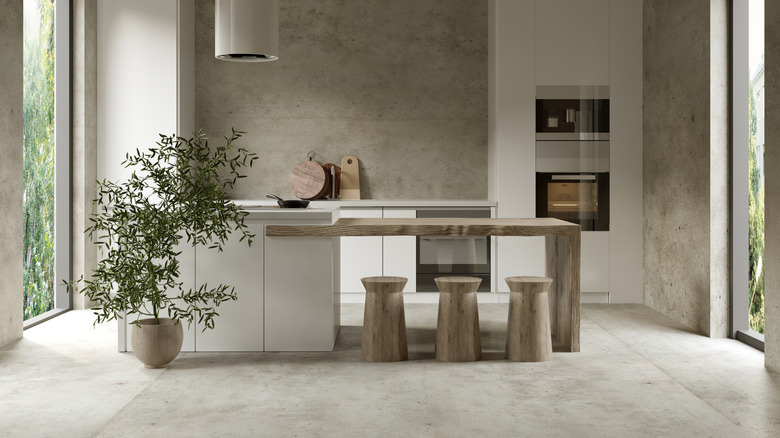
Revamping your kitchen may be one of the biggest home-design decisions you make, and quite possibly a costly one. Whether you're looking at remodeling your kitchen on a budget or you want to change directions aesthetically, weighing the pros and cons of kitchen flooring materials can be a daunting task. Restaurant kitchens often influence the timeless, functional look of an "industrial-chic" kitchen. It's a minimalist's dream, typically incorporating the use of stainless steel, natural stone, and other raw materials. If you're leaning in that direction, you may be considering installing concrete kitchen floors. While the look is perfect for an industrial kitchen, HGTV's Mike Holmes cautions that the structural considerations of concrete could be a deal breaker.
In his blog, Make it Right, Holmes addresses using concrete flooring, particularly during a renovation. "If you like the industrial look, you may be considering concrete flooring. It's not a practical choice for most renovations because it is very heavy," says the general contractor and television host. The installation of concrete on your existing structural floor could bring more issues than you're prepared to tackle. "This is because of the minimal depth required to pour a solid concrete floor that won't crack or crumble. Also, keep in mind the joist strength required to support this additional weight," he advises. While it's not the best material to use in a renovation, Holmes does make a case for concrete in a new build. "If you are building a new house, you could make the structure strong enough for concrete," he says.
How to incorporate concrete into your dream kitchen reno
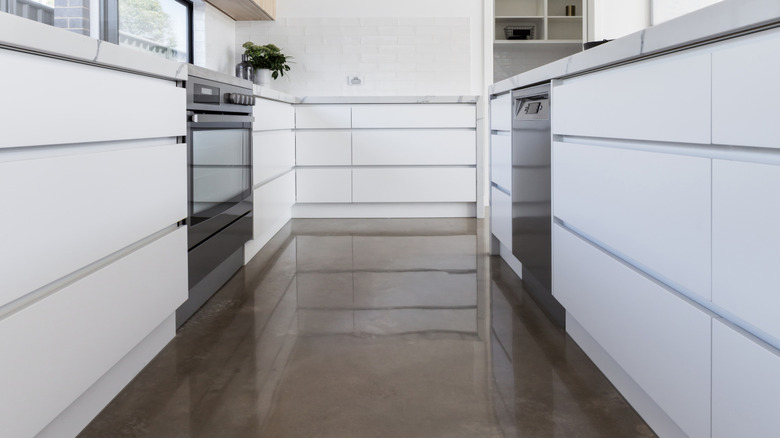
Structural issues aside, concrete as flooring can be a versatile option. According to Holmes, "it can be finished with a variety of stains or acid etchings that can make it look more interesting." Concrete is also easy to care for, a big plus for in-home cooks. Sweeping and mopping are all that's required on a properly sealed concrete floor. Concrete flooring is inexpensive and makes a great starting point for any additional design elements you may want to incorporate, such as stain or paint. In addition, concrete as flooring is durable and long-lasting — a practical benefit that makes any reflooring project worth it.
On the flip side, concrete kitchen floors can sometimes be unwelcoming. They are hard and unforgiving, and because they won't retain any heat, your kitchen floors can get pretty chilly. Concrete floors will also require a proper set and seal. If this isn't done, moisture can seep into the concrete and become a potential catalyst for bacteria and mold.
If you're leaning away from a full concrete kitchen floor, there are other ways to bring this industrial look into your kitchen space. Consider these flooring tiles for an upgraded look: porcelain large-format tiles that mimic concrete. You can also find smaller porcelain tiles that are perfect for use as a backsplash, and if you're brave enough to try it, use concrete as a countertop. Just don't install a concrete kitchen countertop before considering the maintenance costs.