

Testing Honey To See If It's Real? Why The Water Method May Not Be The Way To Go
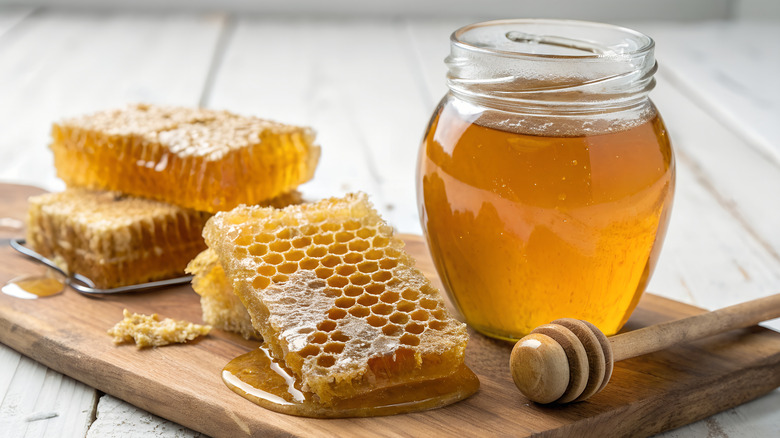
Those viral honey tests floating on the internet these days sure look convincing. You might've seen it on Instagram or TikTok: Someone pours honey into a dish, then adds water on top and swirls gently. All of a sudden, the honey melts into the classic hexagonal shape of a honeycomb, as if by magic. The supposed explanation for this is that the honey somehow remembers being stored in honeycomb cells through some kind of mystical genetic memory, and you can use this to tell if the honey is real or fake.
It's a cool story — except honey doesn't have genes. It also can't remember anything because it's not alive — honey is just a concentrated sugar solution that bees create from flower nectar, and the patterns people see have everything to do with physics and nothing to do with memory or DNA. What's actually happening is that when you agitate two liquids with vastly different viscosity levels and surface tensions, the thicker one (honey) clumps together and can settle into random patterns depending on how you shake things around. In fact, a person on Reddit even tried this trick using dishwashing liquid and got the exact hexagonal shape — and we're quite sure that soap doesn't have genetic memory.
You won't get a consistent hexagon if you try this trick anyway. Change your container shape, and you might get a wavy shape. Or, if you alter the way you shake the plate, the honey might become squares. Verdict? For all intents and purposes, this trick, while a great experiment in viscosity and surface tensions, is useless for telling fake honey from real.
How do you tell if you've got fake honey, then?
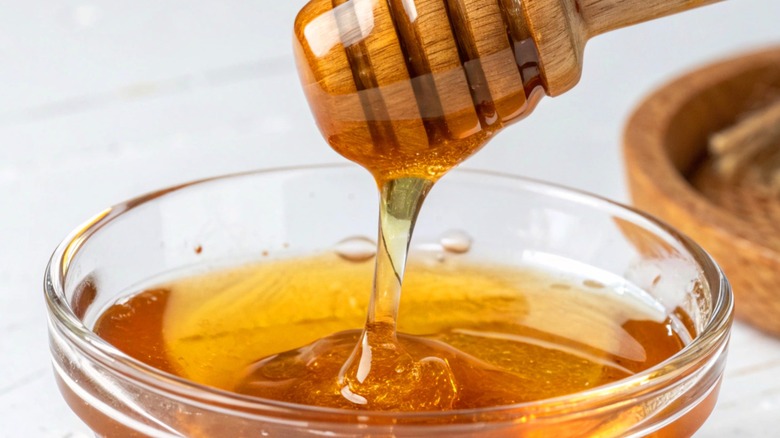
Here's the harsh truth: There's almost no way to tell fake honey apart from real at home. You'll need to zoom into the very molecular structure of the honey with something like nuclear magnetic resonance (NMR) spectroscopy machines to tell artificial from bee-made honey. Even then, counterfeiters have become so sophisticated in their trade that there have been cases of them making synthetic syrups that can fool even this specialized equipment, going as far as adding pollen from specific regions to mask the honey's true origin. That's why all the popular home tests you find online — seeing if the honey crystallizes or whether it burns on a matchstick — are all unreliable.
Rather than focusing on a way to detect fake honey, your effort is better spent on finding reliable sources. Buy from local beekeepers at farmers markets, regional beekeeping associations — people who have actual faces and reputations in your community. Sure, it's not a perfect guarantee, but small producers are usually less willing to destroy their credibility by conning neighbors they'll see at the local store next week.
If you do buy grocery store honey, scrutinize labels carefully like you're studying for a test. Skip anything with added corn syrup or glucose. Imported honey without a producer address? Probably trouble. And here's the uncomfortable truth about pricing — authentic honey production is incredibly labor-intensive, so when you see honey priced absurdly low, someone's definitely compromising quality somewhere. Stick with trusted brands — if you don't know where to start, here's a list of best-reviewed brands for raw honey. They're a couple bucks more than that no-name brand, but every penny will be worth it.