

10 Vintage Potato Dishes Worth Bringing To The Table
Many of the best dishes in the world start with a potato. French fries. Need we say more? We don't, but we will anyway. Creamy mash, tater tots, crispy roast potatoes, dauphinoise, hash browns ... okay, we'll stop.
People have been cooking with potatoes for a very, very long time. In fact, there is evidence to suggest that ancient Incas were growing and eating potatoes as far back as 500 B.C. It wasn't until the 1500s that potatoes started arriving in Europe, and it would be another few centuries until they gained widespread popularity. But when they did, people really went to town in creating delicious dishes with these simple stem tubers.
Below, we've listed some of the best vintage potato dishes that still deserve a place on your dinner table. From humble potato peel pie from the Second World War to sophisticated pommes Anna from the 19th century, there's something for everyone.
1. WW2 potato peel pie
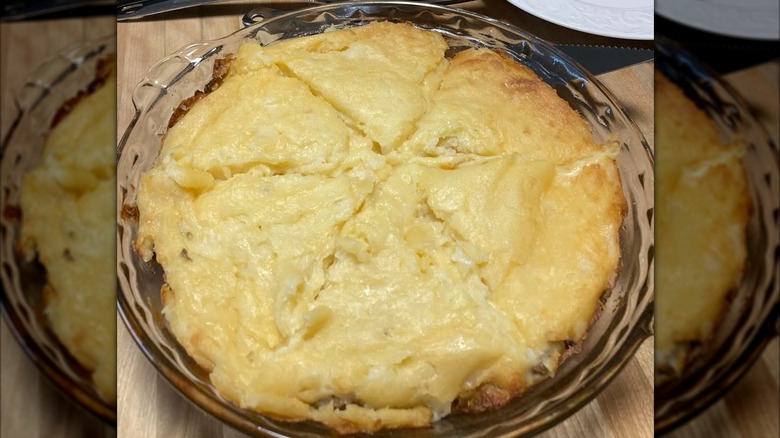
You might already be familiar with potato peel pie, because it was the star of a relatively recent movie. Based on a novel of the same name, 2018's "The Guernsey Literary and Potato Peel Pie Society" is set on the British Channel Island, Guernsey, during the Second World War. Of course, much of the film is fiction, but some events were very real. The German occupation of Guernsey, for example, did actually happen, and people really did eat potato peel pie at the time.
Why potato peel pie? Quite simply, there wasn't much food available on the island, so people had to make do with what they had, which was potatoes — and their peels. The dish is incredibly basic, as it's made with just potatoes (the peels were used to create a crust), milk, beetroot, and salt and pepper. Those who have tried to modernize the recipe say that it's actually quite tasty, especially when you add a few extras like spring onions or leeks.
2. WW1 potato pie
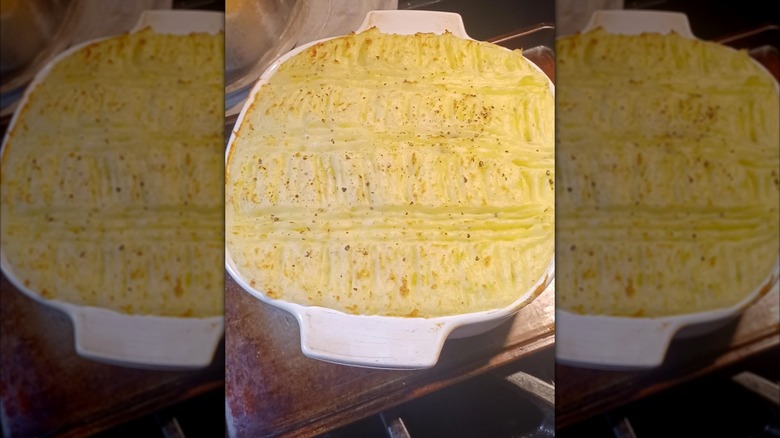
Potatoes kept a lot of people going through wartime. Not just during the Second World War, but throughout the First World War, too. British troops were supplied with potatoes during their journey to the front line, for example, and they would use them to make another type of potato pie, which was very similar to Guernsey's potato peel pie, but with some key differences.
The troops' potato pie was kind of like a shepherd's pie, made with mashed potatoes, canned meat, and onions. The onions would be cooked in liquor, which would then become the gravy over the top of the dish. Everything would be seasoned with a little salt and pepper, of course.
Again, according to some who have made the World War One potato pie today, it actually tastes pretty good. Of course, you can play around with the ingredients. We're not in World War One anymore, and most of us can choose not to eat canned meat, so fresh meat or vegetables and lentils would work just as well, like in a classic shepherd's pie.
3. Red flannel hash
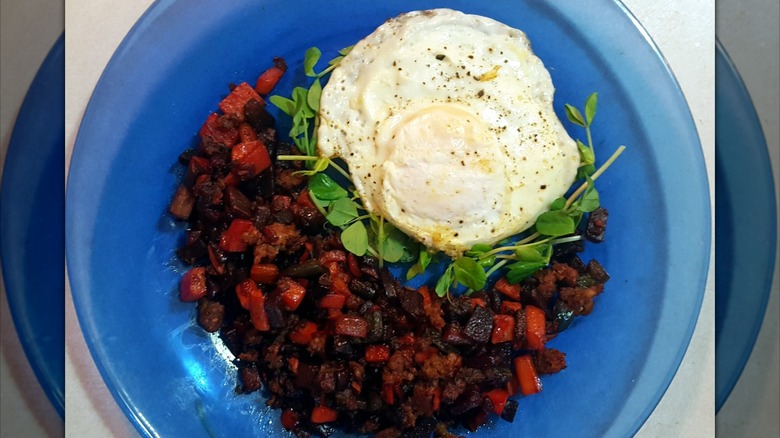
Soldiers weren't the only ones relying on canned meats during the 1910s. In the U.S., people also relied on foods like corned beef to get by. One of the most popular dishes they would make with it was red flannel hash, which, like WW1 potato pie, was made with canned meat, potatoes, and onions. It had a few more ingredients than the troops' dish, though, as it also was made with cooked beets, butter, cream, parsley, and eggs.
Red flannel hash must have tasted pretty good, because it was still being made for decades later. Hollywood film star Bette Davis loved red flannel hash. Known for her movies, like "The Corn Is Green" (1945) and "All About Eve" (1950), it was one of her favorite ways to start the day, and she even wrote out her own recipe for the dish at one point on her own personalized note paper. She would always serve hers with a poached egg on top.
4. Duchess potatoes
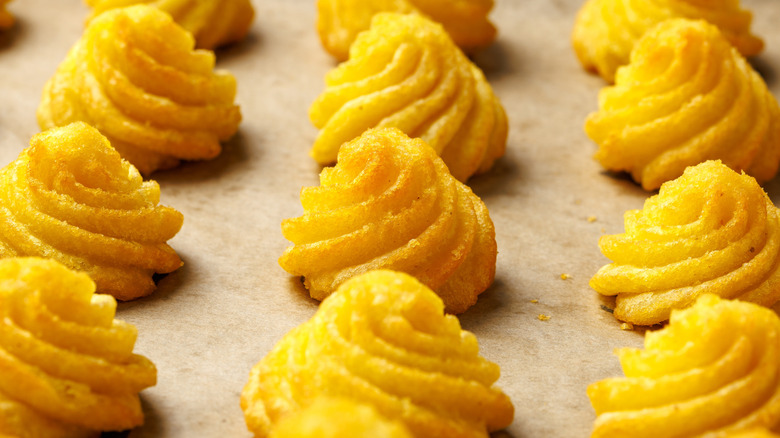
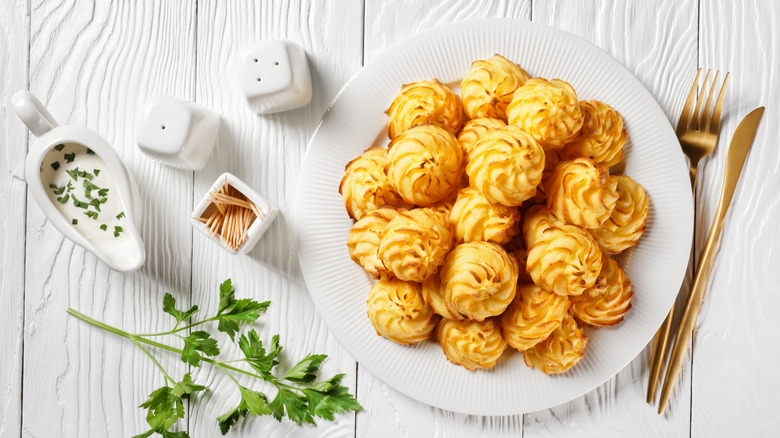
As you might expect from the name, duchess potatoes are delicate, elegant, and golden. They're basically small fluffy swirls of potato with a crispy exterior — what's not to love? The creamy texture comes from ingredients like cream, butter, and eggs (although you can also opt for plant-based versions), while the swirly appearance comes with the help of a piping bag.
Nobody's quite sure who first created duchess potatoes, but the first written record of them appears in an 18th-century French cookbook. They're not listed as duchess potatoes, of course, but "pommes de terre à la duchesse," which makes them sound even more elegant. They were likely first eaten by French aristocrats, which is how they got their royal name.
The beauty of duchess potatoes is not just in the taste and swirly appearance but also in their versatility. You can serve them with pretty much anything you fancy. Some like to eat them with stuffed peppers and sautéed spinach, for example, while others prefer filet beef or fried mushrooms.
5. Lyonnaise potatoes

The French are very good at making potatoes taste delicious. This tracks, because the French are very good at making pretty much anything taste delicious, thanks to their rich culinary history. As well as pommes de terre à la duchesse, the French also created pommes de terre à la Lyonnaise, or, in English, Lyonnaise potatoes.
The very simple, hearty, and flavor-packed dish is basically just crispy potatoes and caramelized onions with black pepper and parsley. As the name suggests, it comes from Lyon, and the first written recipe was in the early 1800s, in a cookbook called "Le Cuisinier Impérial," by Alexandre Viard.
Some believe Lyonnaise potatoes may have actually been around earlier than that, and likely eaten by peasants — although the dish can't be much older, because the French were actually very wary of potatoes. Up until the end of the 1700s, many people thought that consuming them would lead to leprosy. Onions, however, were a firm staple of peasant diets for a long time. French onion soup, for example, was likely created by peasant communities prior to the 18th century.
6. Pennsylvania Dutch potato filling
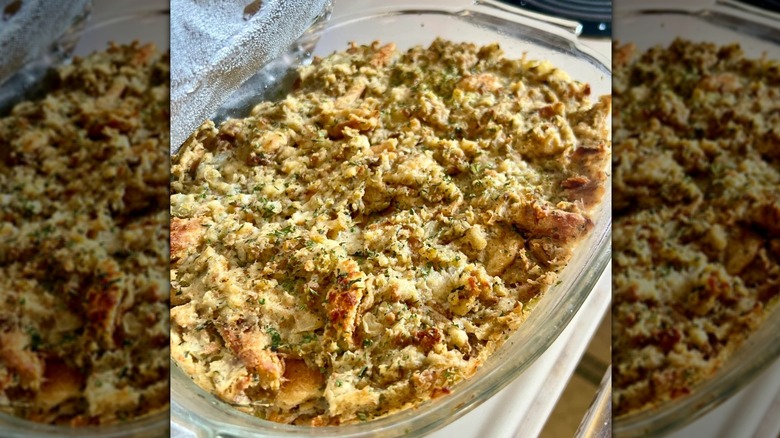
Pennsylvania Dutch potato filling is basically a hybrid dish of mashed potatoes and stuffing. It's been around since the 1700s at least, when German immigrants began to settle in Pennsylvania. It's still widely popular in the state, but arguably it deserves more attention nationwide. And when you hear what it's made of, we think you'll agree: Mashed potatoes and bread. It's carb heaven.
To make it, you'll need to peel, chop, and boil potatoes before mixing them with white bread, onions, celery, and a little bit of salt and pepper. That's basically it, but some choose to add extra ingredients to the dish, to make it more creamy, like eggs and butter. Parsley is also a common addition. Many choose to serve Pennsylvania Dutch potato filling as part of their Thanksgiving meal, but it's not strictly for the holidays. You can enjoy it at any time of the year, with a side of chicken, salad, or anything else that takes your fancy.
7. Potato cakes

Potato cakes (or farls, as they're known in Northern Ireland) have been eaten in Ireland for centuries. It makes sense that the Irish would make a cake out of this humble tuber. After all, it's been a staple crop in the country since the 1700s. The first recipes for potato cakes likely came before the Great Famine in 1845, as prior to the widespread crop failure, around half of the population depended on potatoes to survive.
Potato cakes are very simple to make. All you need is mashed potato, flour, milk, butter (or vegan alternatives), and some spring onions and chives for flavor. Everything gets mixed together, flattened into patties, and then fried in a pan. That's it. You can serve them on their own (maybe with some extra cheese), or as part of a traditional full Irish breakfast. The latter is pretty similar to an English breakfast, and usually comes with bacon, sausage, toast, eggs, mushrooms, and toast.
8. Delmonico potatoes
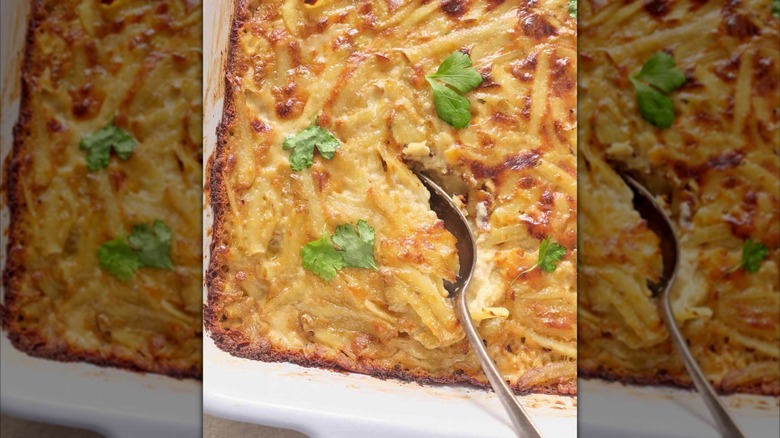
Delmonico's in New York opened in the 1830s, becoming the very first fine-dining restaurant in the U.S. It is widely credited with the invention of many dishes, like baked Alaska and Lobster Newburg. But it also has its own potato dish, aptly named Delmonico potatoes. The dish is pretty old, because it was once enjoyed by Abraham Lincoln, who was, of course, the 16th president of the U.S. from 1861 until 1865.
The recipe for Delmonico potatoes has changed and evolved over the years. Some like to make it with sharp Cheddar cheese and paprika, for example, while others opt to use frozen shredded hashbrowns over shredded potatoes. But the original recipe apparently featured white potatoes, milk, heavy whipping cream, nutmeg, salt, pepper, and Parmesan cheese (not the Cheddar cheese that so many other recipes call for).
However you choose to make it, Delmonico potatoes is a dish that certainly still holds up today. Serve it with a side of fish, chicken, baked tofu, or make your own version of Delmonico steak.
9. Potatoes O' Brien
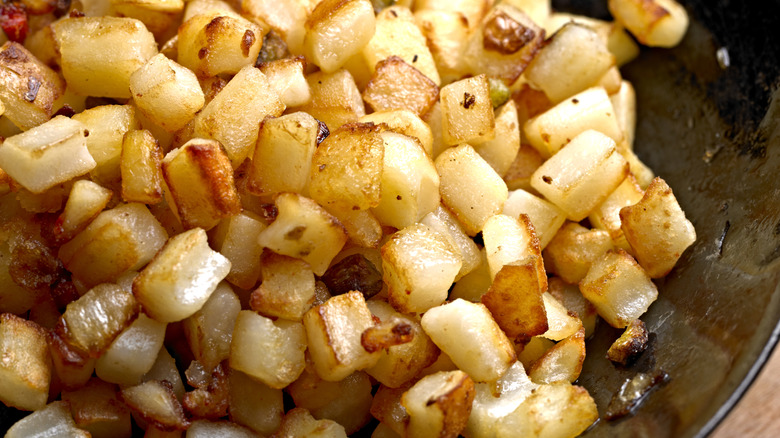
Given the name, you might assume that this dish is another Irish invention, but it was actually invented in the U.S., in the early 1900s. Exactly where it was invented is up for debate. Some say it came from a restaurant called Jerome's in Boston, while others claim it was actually created in New York, in a Manhattan restaurant called Jack's.
Wherever it came from, potatoes O' Brien is a hearty, filling, comforting dish, made with a mix of fried onions, green peppers, and potatoes, seasoned with parsley, salt, and pepper. Some choose to add some bacon into the mix, but this can easily be omitted or swapped for mushrooms or a vegan alternative, if you want to keep the dish meat-free. Potatoes O' Brien is perfect for eating at any time of day. That said, many like to serve it for breakfast with an egg on the side.
10. Pommes Anna
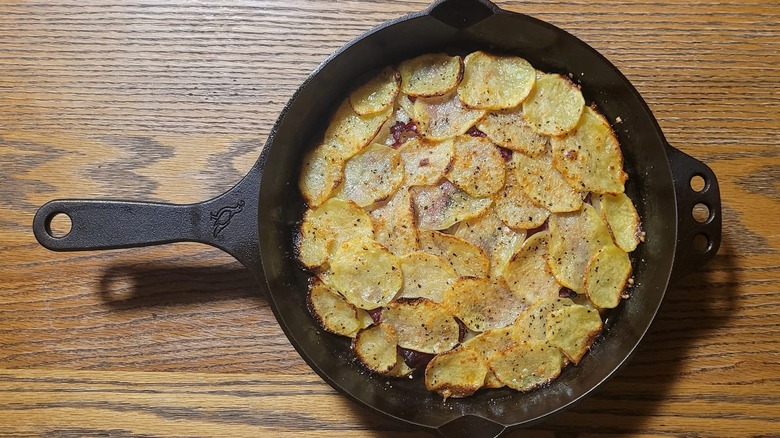
We're not done with the French potato dishes yet. Pommes Anna is another elegant recipe, which tracks, given that it was invented in a Parisian restaurant in the middle of the 1800s. The name may have been inspired by Anna Deslions, a grande cocotte (a high-class courtesan), who used to regularly visit the restaurant, called Café Anglais, with her bourgeoisie clients.
Chef Adolphe Dugléré created pommes Anna with simple ingredients — it's just russet potatoes, butter, and Parmesan cheese. But don't be fooled into thinking this dish is easy. It requires a lot of skill and technique to perfect, so make sure to leave plenty of time if you're planning to make it for your loved ones anytime soon.
To give you an idea of what you'll need to do, making pommes Anna requires stacking very thin, dried potato slices in a skillet in a circular pattern. Then, the whole thing must be flipped so it can cook on the other side. We told you, it's not easy. It is worth it, though. If this all sounds a little too ambitious, you can always make mini bite-sized versions instead.