

Where To Put An Indoor Olive Tree For The Greatest Chance At Fruiting
We may receive a commission on purchases made from links.
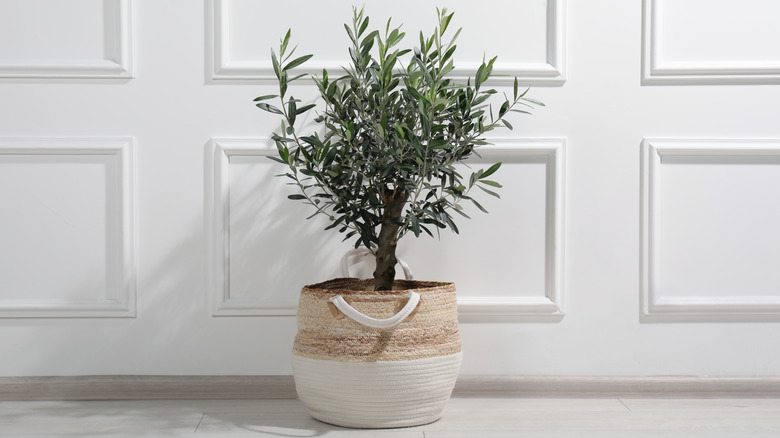
Maybe you've decided to start your very own indoor herb garden or you're thinking of adding an indoor plant that produces food. You may simply want an aesthetic in your kitchen that brings the outside in. One plant that checks all of these the boxes is the olive tree. Small olive trees, like the grafted Arbequina tree, make the best indoor container options. These compact trees grow easily, are self-pollinating, and have lovely, slender, green/silver leaves. Unfortunately, even olive trees like the Arbequina don't guarantee a bounty, and there could be some overlooked reasons your fruit tree isn't producing. To give your olive tree the best chance at fruiting, you'll want to place it in a south- or west-facing window that receives at least six hours of sunlight per day.
Pollination, sunlight, drainage, and proper nutrition are all reasons that fruit trees may not produce indoors, but placement in your home will be the biggest factor toward keeping an olive tree healthy enough to fruit. In addition to sunlight, the temperature of the room should be between 65 and 75 degrees Fahrenheit. If you can't get enough sunlight on your olive tree, you can enlist the help of a grow light, like this Yadoker LED Growing Light. If your home is kept warmer than 75 degrees Fahrenheit, consider housing your olive tree in a cooler area like a basement or lower level of the home, or in an unheated sunroom.
Tips for caring for an indoor olive tree
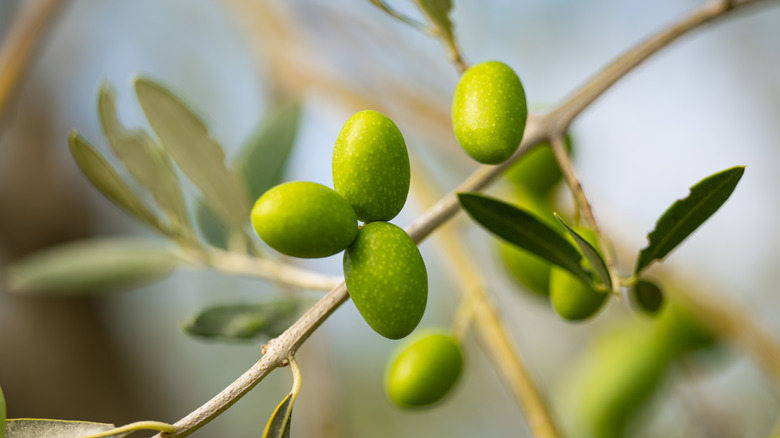
Once you've secured a good space for your olive tree, double-check that it's not getting hit with any drafts. The leaves of an olive tree don't enjoy being next to air vents and will dry out fairly easily. Overwatering, however, is not something the olive tree will tolerate, so make sure to only water once weekly, or when the soil is dry to about an inch down.
You can fertilize your olive tree twice a year during the growing months (spring and summer), using a balanced fertilizer like this Miracle-Gro Fruit & Citrus plant food. Make sure the food you're giving your tree has the right amount of phosphorus, nitrogen, and other nutrients needed for optimum health. Fertilizer that's specifically formulated for fruit trees will give your olive tree the best shot at fruit production. It is also important to note that your olive tree is going to require a brief dormant period each year to ensure fruit production. For about two months in the winter, the tree is going to need to be placed in a well-lit area with a temperature between 40 and 50 degrees Fahrenheit. During this time you should not fertilize the tree and it should only be watered sparingly.
Prune your olive tree as needed to keep it accessible to the sunlight, trim dead areas, and promote new growth. This is also an opportunity to check your olive tree for any pests or even dust. It's not necessary to water-mist your olive tree, but you can wipe down the leaves. As your olive tree fills out and blooms, take the opportunity to help it pollinate by gently shaking the branches. Even self-pollinating trees like the grafted Arbequina can use some help, and shaking the branches will help to distribute the pollen. With proper care and a little luck, you may have a fruiting olive tree to add to your indoor space.