

If You Aren't Double-Baking Your Shortbread Cookies, It's Time You Start
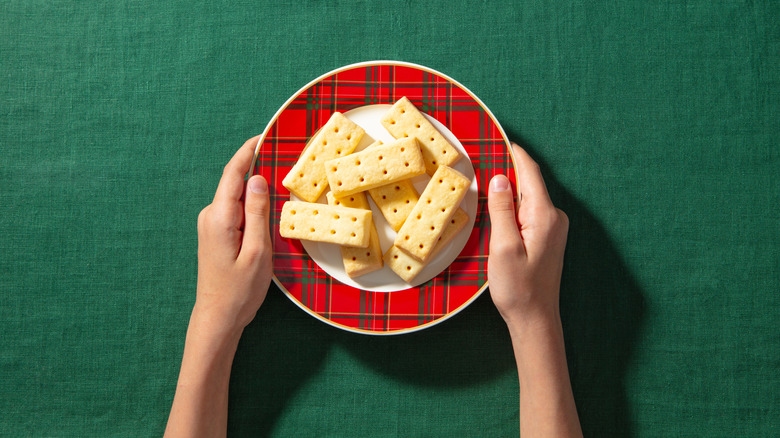
A plate of homemade Christmas shortbread cookies is the perfect dish to share at the holidays. Whether you're gifting it to friends and family or serving it at your holiday dinner party, you might consider trying an unexpected trick for making it perfectly crispy. Double-baking your shortbread gives each cookie nice, golden edges that are perfectly caramelized. This makes the cookies more flavorful, and enhances their texture and crumb.
This trick comes from a recipe developed by Alice Medrich and published in her cookbook "Pure Dessert." According to Medrich, the second baking adds "extra flavor and crunch" (via Smitten Kitchen). While the real reason shortbread tastes bitter is overbaking the dough, splitting the baking time in two with a brief rest period in between will prevent the butter from burning but still achieve the ideal brown butter flavor.
Shortbread cookies rely on that rich buttery flavor to set them apart from other classic holiday cookie recipes. When you use the double-baking method, you don't have to buy expensive butter in order to achieve that luxurious flavor. Instead, by toasting the cookies after baking, you can create a deep, nutty browned butter flavor without having to go through the effort of actually making brown butter.
Tips for success when double-baking shortbread for the ideal toasted flavor
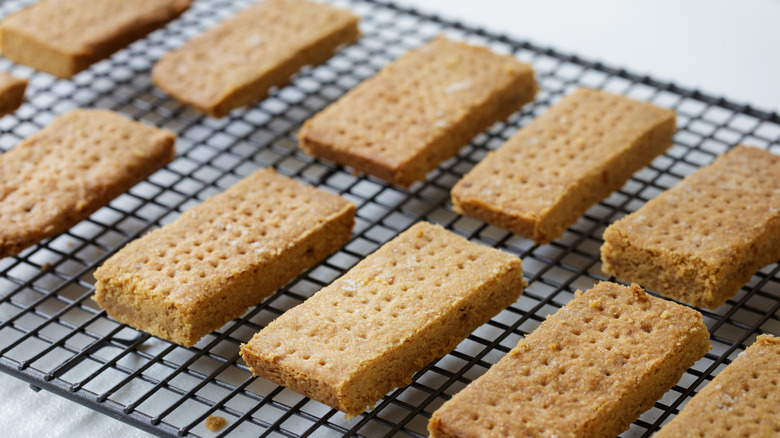
Following Medrich's tips for making high-quality shortbread guarantees that your cookies won't end up soggy, bitter, or too crumbly. Medrich recommends that you wait at least two hours, but ideally 24, before baking your shortbread. Keep it in the pan and let the dough rest on the counter. You'll then bake it until it has just started to get slightly brown around the edges.
Remove it from the oven and sprinkle it with powdered or white sugar or festive colored sanding sugar, then let it cool completely. This ensures any excess moisture is released so that the second baking, or toasting process, is more effective. If any moisture is remaining, your cookies may end up getting limp or chewy rather than crispy. Then remove your shortbread from the pan and cut it to your preferred size.
Cover your baking sheet with parchment paper to protect the shortbread from burning during its second bake. Place the cut shortbread back on the pan, leaving enough space between each piece that the edges have room to brown. You may need to use a second pan if you don't have room to spread the pieces out on just one. Then put the shortbread back in the oven for about 15 minutes, or just long enough for the edges and tops to get perfectly golden and crispy.