

The Lettuce Mistake That Will Ruin Your Salad
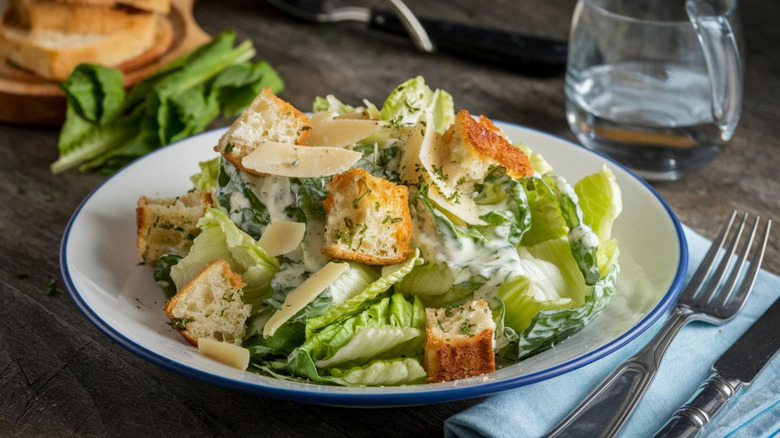
We've all experienced mistakes at the grocery store before, when you accidentally pick up nonfat milk instead of whole milk or realize you've mistakenly bought seasoned breadcrumbs instead of the plain ones you needed for your dinner recipe. These kinds of blunders are common and bound to happen and are usually not the end of the world. But even the most diligent and experienced grocery shoppers can be susceptible to a vegetable-related mix-up, and one of the gravest errors might be mistaking escarole for a mild, green lettuce.
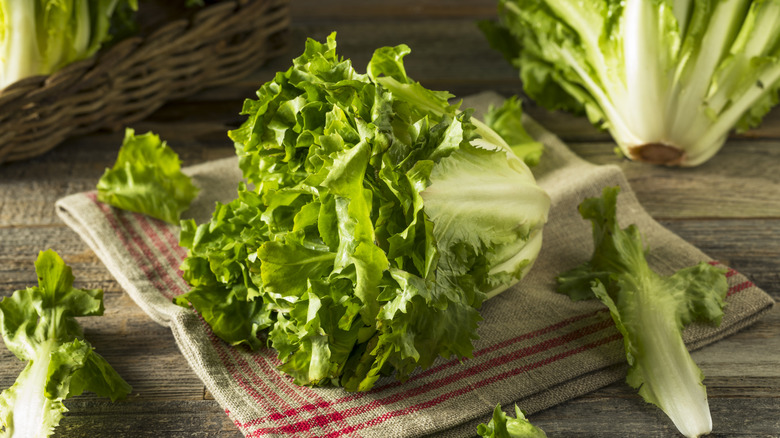
It may look almost identical to green leaf lettuce, but escarole is part of the chicory family of more bitter-tasting leaves. A head of escarole's outer leaves are a medium green, about the same color as romaine or green leaf lettuce. Unfortunately, that makes it easy to pluck off the shelves by mistake if you're not paying close enough attention to the labels at the grocery store. The core of a head of escarole, however, differs, as the inner leaves at the center are a pale yellowish color, which is an easy way to identify the bitter green.
If you're unsure what type of greens you have in your hand, gently push aside the outer layers to reveal the center of the head of mystery greens. From there, you can easily search for that telltale yellow center. If the insides are more of a pale green or whitish hue, you likely have a loose-leaf lettuce, not a bitter escarole.
Chicories can be wonderful when paired correctly
While bitter lettuces make for amazing salads, if you're expecting a mild, tender leafy green but instead bite into a bitter chicory, you might not be thrilled by the astringent surprise. Similar to how radicchio resembles red cabbage, it's easy to confuse certain items lining the produce wall of a grocery store, especially if you're distracted or in a hurry. Other bitter greens to look out for include arugula, endive, treviso, frisée, puntarelle, and mustard greens. This is not to say that you should avoid them. In fact, we encourage you to try as many as you can find, but it's important to be aware of the different types of bitter chicories and how they differ from softer, sweeter lettuces like green or red leaf, butter, or romaine.
Winter is generally the peak season for most chicories and other bitter greens, so if you're going to experiment, that is the ideal time to do so. Chicories pair well with other winter produce like blood oranges and grapefruits, along with salty or creamy cheeses to balance out the strong flavors of the bitter leaves, and even roasted beets for some earthy notes. If you find the bitterness of raw chicories a bit too much for your palate, grilling or sautéing them lends a sweetness that can be quite delicious. Learn all about leafy greens you should be cooking with (and how to use them).