

Not Sure How Much Pot Roast You Can Fit In Your Slow Cooker? Here's How To Figure It Out
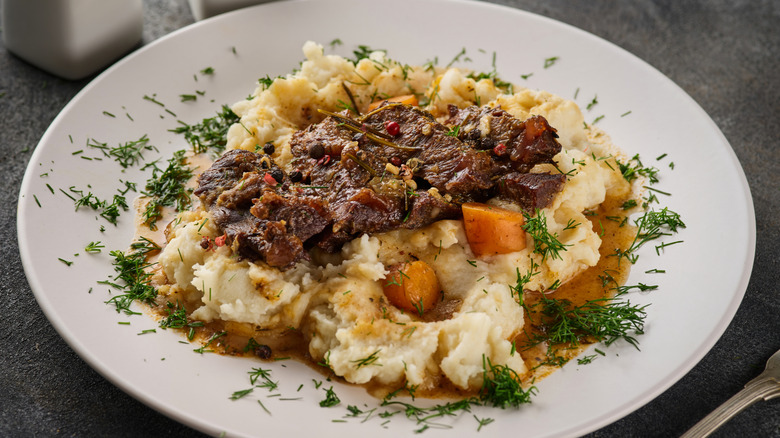
Making a pot roast is a hands-on task. Big hunks of raw meat can be intimidating, but you'll get better results if you assess your ingredients and equipment as you go. Slow cookers perform best when they're filled somewhere between halfway and ¾ full, a range that gives the heat enough room to circulate while still providing the thermal mass needed for that low, steady simmer. Most cookers have a max-fill line, but you don't have to reach this limit. This is why a 6-quart cooker is generally a good size for most home kitchens, and it's the one for which most recipes are designed (like these slow cooker recipes that only take 10 minutes to prep). A 3- to 4-pound chuck roast settles in comfortably, leaving enough space for veggies, bouquet garni (a small bundle of fresh herbs), and braising liquid.
Smaller slow cookers can fit smaller roasts and require a lighter hand with the vegetables — potatoes and carrots occupy more space than you expect once combined in the pot. Larger, 8-quart cookers are made for wide, heavy cuts that are ideal for feeding a large group. That said, observing how the roast sits in the cooker is actually more important than the exact weight. If the meat perches above the rim or leans awkwardly, the lid won't rest properly, so heat will leak, and the top part of the roast will dry before the submerged connective tissue loosens. Too-small roasts have less volume, so the cooker heats up faster, which can toughen the leaner parts. Then, there's the shape of the cooker, which influences the fit of the meat; oval models allow long cuts to lay down better than round ones, which funnel everything toward the center.
Finding the right fit for your slow cooker
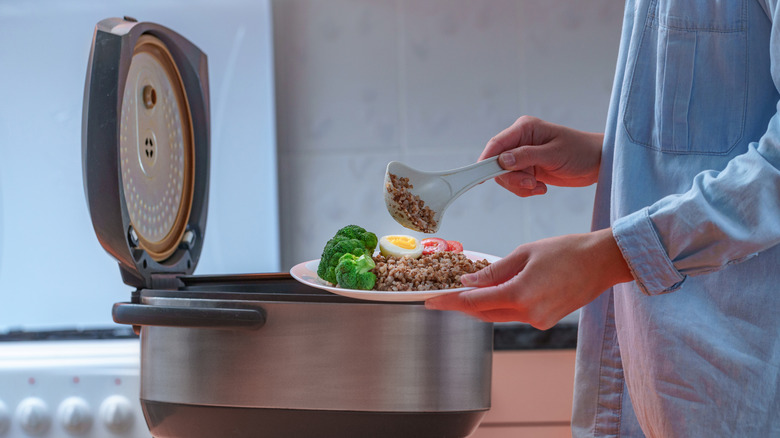
A quick test run will prevent most slow-cooker fitting problems. Place the raw roast in the empty crock along with the vegetables you plan to use, then settle the lid on top. The lid should rest evenly without needing pressure. If it rocks or sits at an asymmetric angle, that's a sign that your roast is too large for the vessel, or that the vegetables need adjusting.
When breaking down a too-big piece of meat, trim along its natural seams to preserve its structure and keeps the cut even, which is crucial for long cooks. It's also wise to trim the excess fat, but don't go overboard. It will just melt into the jus, where you can skim it off later. Once the roast fits neatly, take note of how much room remains. The liquid should rise only halfway to ⅔ up the sides of the meat. Overfilling will mess with the braise ratio, leading to bland, watery cooking juices.
If one end of your meat is noticeably thinner, tuck it underneath so it won't encounter too much dry heat. Position the fattier side toward the perimeter of the crock, where the heat tends to be stronger, allowing the fat to melt and render. Veggies should always be submerged in the liquid so they can impart flavor to the broth (it's okay if the meat sits on top of them). Once everything is arranged, place the lid back on and check again for a clean seal. Remember, the cooker does its best work when nothing inside forces the lid upward.