

Why Buying Whole Fish Isn't Always The Most Affordable Option
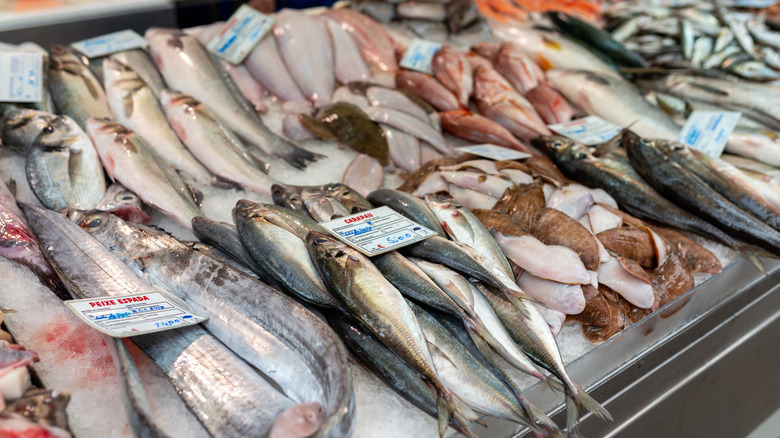
If you live near a seaport, the fresh catch of the day could be a real bargain because you're buying directly from the fisher. But we're not all so fortunate, and fish at fish markets and grocery stores can be pricy, even at Costco, where you can pick the freshest fish in bulk packages. You've probably heard that, cents-wise, it makes sense to purchase a whole fish, but it's not always the case, according to Daniel Le, chef at Essex Pearl in New York City. We spoke with Le at the Food Network NYC Wine & Food Festival about whether buying a whole fish was a more affordable option pound-for-pound than buying fish filets. "Well, it depends on what you're using it for," Le told us. "If you're just going to fancy your fish, and you eat it with rice or vegetables or pasta, filet ... is a lot cheaper."
A whole fish can be less expensive by the pound than a filet, but you're paying for a lot of waste. When a whole fish is cleaned, skinned, and boned, as much as half of the fish's weight can be discarded. Smaller fish, however, like trout, are more meaty, and buying them whole is more affordable. But bigger fish have a larger and heavier bone structure, and in the end, you'll be getting less meat for the price. As Le explained, "you're getting charged for the bones, the head, the flesh; If you buy filet, you're just getting the filet."
A whole fish can be cheaper for soups and stews
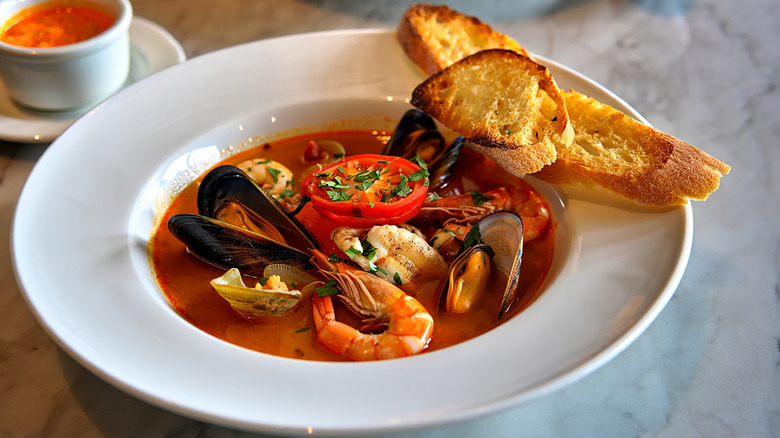
The nose-to-tail eating (or cooking) trend began in the 1990s, and it's still employed by many restaurants that practice sustainability and waste control. But the nose-to-tail philosophy doesn't just apply to livestock. If you want to stretch out your dollar (and who doesn't?), then buying a whole fish makes budgetary sense, since you'll get several meals from one fish. "If you're buying a whole fish," Daniel Le said, "and you want to either make a stock out of it or make a hot soup out of it, you want the whole fish because you want the collagen in the bone." As fish bones and, yes, the head, simmer in a pot of water and aromatics, their natural collagen is released, which then adds body to the stock or soup.
Fish stock is an essential ingredient for French bouillabaisse, the beloved fish stew of Marseilles, New England clam chowder and its tomato-based cousin, Manhattan clam chowder, and many other popular fish soups from around the world. Not all fish, however, can be used for stock. White fish, like halibut and cod, are best, while salmon, tuna, and mackerel are too oily and fishy-tasting. Since oily fishes aren't recommended for stocks, it's more cost-efficient to purchase them, as Le suggests, only as filets. Lastly, although fish bones add flavor to soup, Le also told us that, unlike a rib-eye, they add no extra flavor to fish meat.