

The Best Lobster Roll Meat Surprisingly Doesn't Come From The Tail
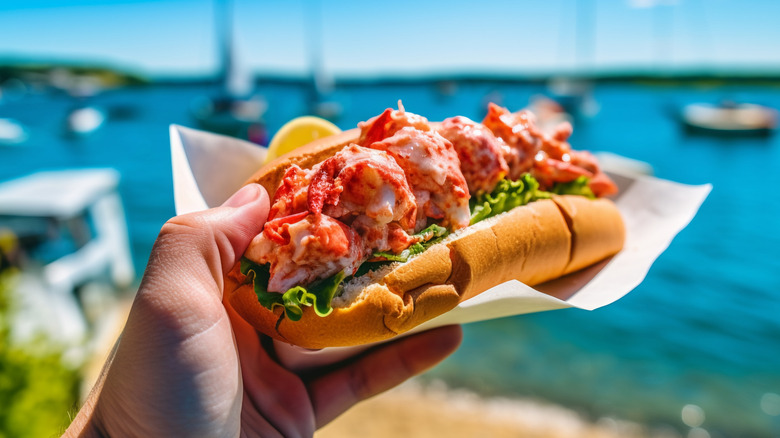
Making lobster rolls at home can be a labor of love. After you've decided that buying whole lobsters is worth the price, you then need to cook them gently to keep the meat tender, and afterward comes the tedious process of extracting all the meat from the hard-shelled exteriors. Once you've gotten every last precious bit of lobster meat from the shells, you need to determine which part of the meat is best for the rolls and what should be used for other dishes and preparations. We spoke with chef Daniel Le of Essex Pearl during the NY Wine & Food Fest at the Seaport concerning the ideal meat to use for the most tender lobster rolls.
You might assume that a lobster's meaty tail is the best part of the crustacean to use for a lobster roll, but it's actually not the most tender part of the animal, according to Le. He reveals that they "use a big majority of claws and knuckles just because [they're] more tender and sweet" at his restaurant. "If you think about it, it's a less moving part of the lobster," he adds. "The tails are flopping around, but the knuckles and the elbows [themselves], they're not really moving."
Similar to why a filet mignon is so tender, the lobster's claw and knuckles don't get as much of a workout on a daily basis compared to its tail. The tail, of course, is used much more frequently and therefore works the muscles more regularly, resulting in a less tender meat.
Dressing a lobster roll is up to personal preference
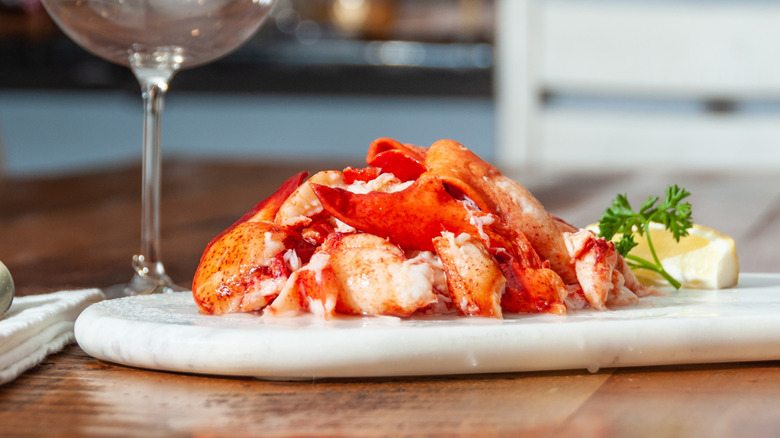
The difference between Connecticut vs. Maine lobster rolls has to do with both condiment and temperature. One is warm and drenched in butter, while the other is served chilled and lightly enveloped in mayo. When asked if butter or mayo better complements knuckle meat, Le explains that he doesn't have a personal preference for one style or the other. "If you do them right, they taste identical to each other," the chef notes. If making a warm, Connecticut-style lobster roll, Le says that as long as "you don't overcook it in the butter, it's still going to be tender and sweet," making for a delicious experience.
One tip for making sure that the tender lobster meat doesn't get overcooked is to ensure that the lobster meat only gets a brief bath in warm clarified butter. "I think the misconception behind that is because [with] a lot of the butter rolls, the lobster sits in the butter, and it's a continuous cook, so it gets rubbery and dry," Le warns. Instead, he suggests making sure that the meat doesn't spend a long time in the hot butter. If you're feeling particularly wild, you could opt for a combination of both butter and mayo, as long as you don't overdo it and lose the taste of that precious lobster meat you worked so hard to extract.