

How To Choose The Best Sweet Potatoes At The Grocery Store
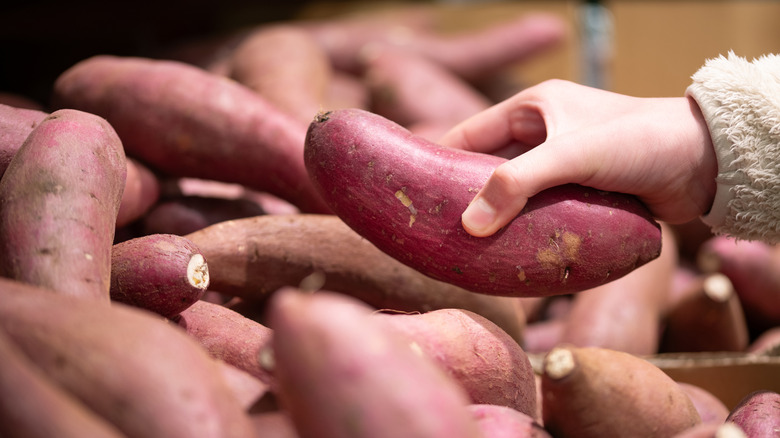
All those sweet potato recipes we adore so much have one thing in common: they require the very best sweet potatoes to reach their full potential. This comes down to a crucial first step that happens before the sweet potatoes even enter your home. Right at the grocery store, you've got to choose the very best ones, and it's not always the easiest thing in the world. You need to know exactly what to look for, and just as important, what to avoid.
The one big mistake people tend to make with sweet potatoes is thinking they are all the same. The truth is, good sweet potatoes have very distinguishable telltale signs. Search for smooth, tight skin with a light sheen that indicates freshness. Even with rough transport and handling, they should still have little to no cracks, bruises, wrinkles, or sproutings. Moreover, they should also be firm, with no mushy, soft spots.
Size-wise, the sweet potatoes should not be too big, but rather small to medium and a bit hefty, as this would mean they have a decent amount of moisture. The shape also matters. Oblong sweet potatoes are generally a better pick than round ones since they cook more evenly. Although not often acknowledged, sweet potatoes do have a scent. Anything too pungent, sour, or tangy is an immediate reject since it could be on its way to spoiling. Instead, find subtly earthy sweet potatoes to ensure freshness.
Choose the variety that suits your cooking purposes
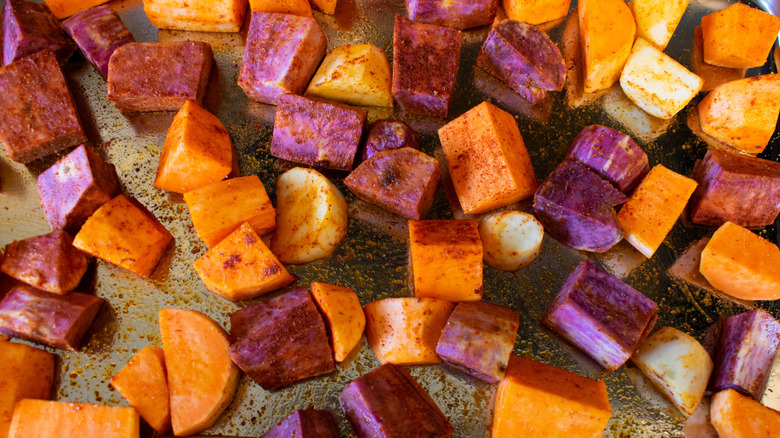
Another crucial part of the selection process is choosing the most suitable sweet potato varieties for your needs. Some fare better in baked dishes while others shine in a deep-fry. Most commonly, you will see Jewel and Red Garnet sweet potatoes, both of which belong in the orange-flesh category. However, whereas Jewel is a pure orange, Red Garnet leans towards a more intense red tone. These varieties, along with Beauregard, are known for their juicy, creamy soft texture and prominent sweetness. This makes them the perfect contenders for mashed dishes, as well as casseroles, pies, and other baked goods.
White-fleshed sweet potatoes are also a thing. Hannah sweet potatoes, unlike their orange counterparts, are firm and dense, with a much lower moisture content and lighter sweet tone. Though you can use them for baked dishes, they do fit splendidly in roast dishes and fries, where crispy bites are key to greatness. Another member of the white-flesh family is Boniato, which has pinkish-purple skin and relatively starchy flesh. Its nutty, chestnut-like undertone is quite adaptable, but you might like it most in Caribbean dishes.
Purple sweet potatoes, such as Okinawan and Stokes, are appreciated for more than just their unique-colored flesh. Although let's be real, they do make for an absolutely eye-catching, vibrant dish. That, however, does not really translate into the flavors as they are just mildly sweet, coupled with a floral undertone. You can use them in similar manners as white sweet potatoes, as well as for Asian desserts such as mochi, glutinous cakes, and sago sweet soups.