

Why You Might Want To Avoid This One Type Of Crab When Dining At Seafood Restaurants
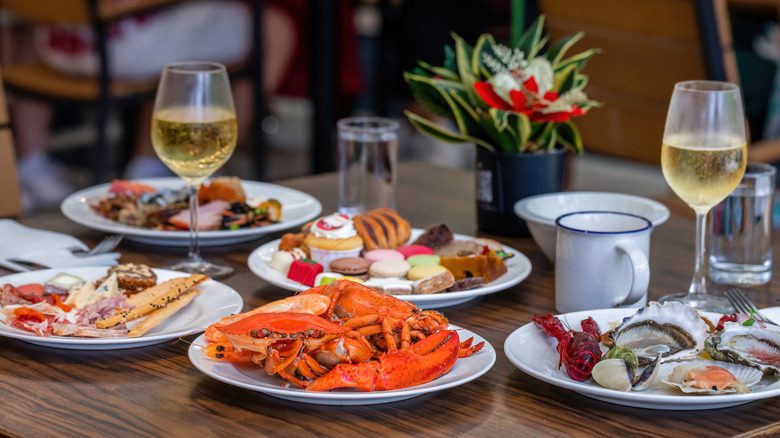
Ordering a meal at a seafood restaurant often requires a bit more culinary expertise than at other eateries. Pop into most restaurants, and you can expect that the proteins will come from one of just a few sources: beef, pork, chicken. But with seafood, the options are so vast that choosing well can require lots of knowledge. You might find many species of fish and shellfish on a menu, each with its own habitats, nutritional value, and, of course, flavor. And that's before we even touch on the most sustainable seafood options, another vital characteristic to keep in mind. When it comes to stone crabs in particular, this all gets a bit muddy.
When you encounter stone crabs on a menu, it's always just the claws, beacause of how they're harvested. Most crabs are taken whole, even if you only see the crab's legs on the menu, but with stone crabs it's only the claws that are harvested. These crabs can regrow their claws, so when they're pulled up, if the claws are of legal size, they are popped off and the crab is returned to its native waters. At first glance, this sounds like it would be an incredibly sustainable source of seafood, and you'll find many voices saying that. However, the situation is much more complicated than it sounds, and there are enough problems with overfishing, mortality, and bycatch to land stone crabs on the list of dishes you should never order at a seafood restaurant.
Can you really just pull the claws off a stone crab?
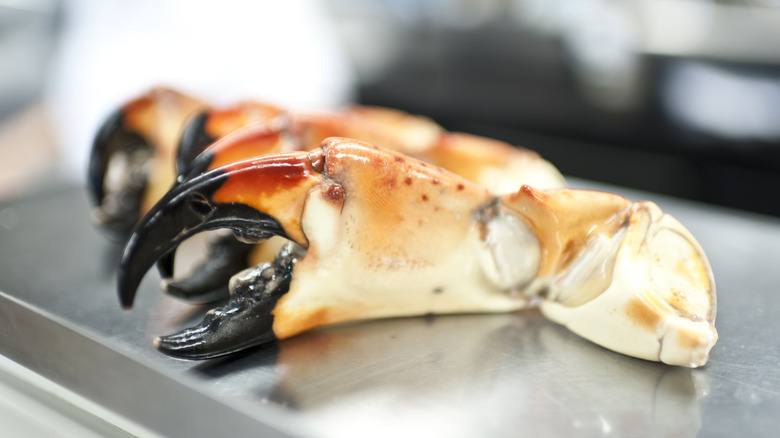
In Florida, where 99% of the stone crab harvest takes place, any claw of legal size — 2¾ inches or larger — can be taken, even if that means stripping the crab of both pincers. While the regulations note that stone crabs left with one claw have a higher rate of survival, no regulation prevents stripping them of all their defenses. One would like to imagine that the fishers making their living from these crustaceans would respect that this depends on the population staying strong and healthy, but it is a concerning regulatory absence — and the problems don't end there. The data regarding stone crabs' mortality rates crabs doesn't look great.
Studies show that stone crabs often die after being trapped in all scenarios, but the rates increase tremendously based on the circumstances. Close to 13% of trapped stone crabs die after being handled even if they don't have their claws removed. When one claw is taken, that number jumps up to around 40% mortality. With both claws removed, around 60% of stone crabs will die before the claws regenerate. When you facotr in that it takes around two years for a stone crab to regenerate a legal-sized claw, and they only live for about six to eight years, it is clear that they're not the endlessly sustainable claw farms they've so often been made out to be.
What to order instead of stone crab claws
While a 40% survival rate with both claws removed is certainly better than the 0% survival rate for crabs taken from the water entirely, clearly this fishery is made out to be more sustainable than it truly is. Seafood Watch, from California's Monterey Bay Aquarium, says, "Take a pass on this red-rated seafood for now because it poses a high risk to the environment." The organization's suggestion is based on not just the high mortality rates, but also a lack of controls for overfishing, as well as indications that stone crab fishing can inadvertently lead to entangling and injuring bottlenose dolphins. Additionally, stone crab fishing damages the seafloor, and there simply isn't enough research around these crabs' ecological role.
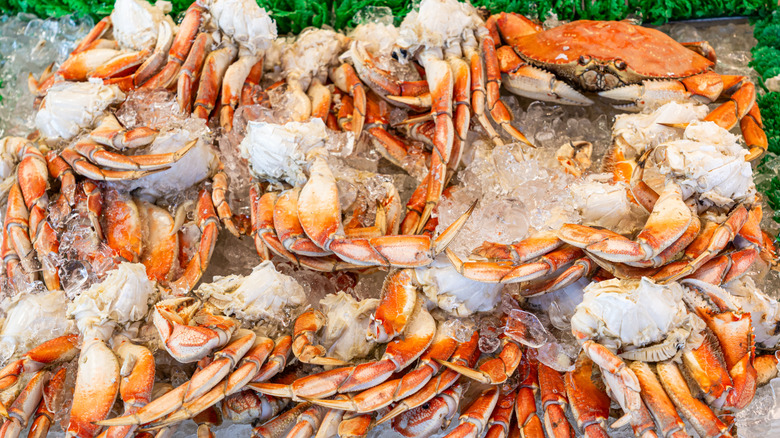
Fortunately, there are a number of crab fisheries in the U.S. that get high marks from Seafood Watch. Instead of stone crab claws from Florida, try king crab legs from Alaska, or Dungeness crab from Canada. Blue crabs are a bit more complicated, but Alabama, Delaware, New Jersey, and Maryland's blue crab fisheries are all good choices as well. They might not be exactly the same as stone crab claws, but there are plenty of excellent crab recipes you can whip up from these other, more sustainable species.