

This Is The Best Type Of Potato For Your Homemade Clam Chowder
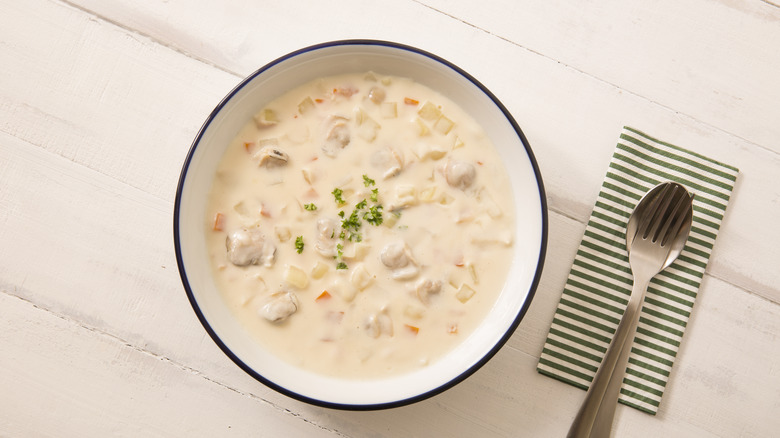
Clam chowder is the ultimate coastal comfort food. Rich, creamy, and loaded with fresh flavor, a good one can transport you right to the beach – and it's an easy feat to achieve at home. All you need are a few essentials, like canned clams and cream. Because there are so few ingredients involved, though, it's really important to get them right. This is especially true for the potatoes. Potatoes not only add texture to chowder, but they also act as a natural thickening agent; however, potato varieties can vary greatly. Some break down faster than others, so if you want your creamy clam chowder to have a little bite, you need to look for a specific type of potato.
We spoke to Daniel Le, executive chef at Essex Pearl, during the New York City Food & Wine Festival in New York about the topic, and he says that the best ones to use are waxy, gold-fleshed potatoes. More specifically, baby potatoes. Le says, "I personally love using the little mini peewee gold potatoes, they just hold the texture very well. I don't know if you have a lot of clam chowder or not, but sometimes it gets grainy. So the peewees, you actually don't have to cook as long, so you just throw them in last minute."
When to add potatoes to chowder
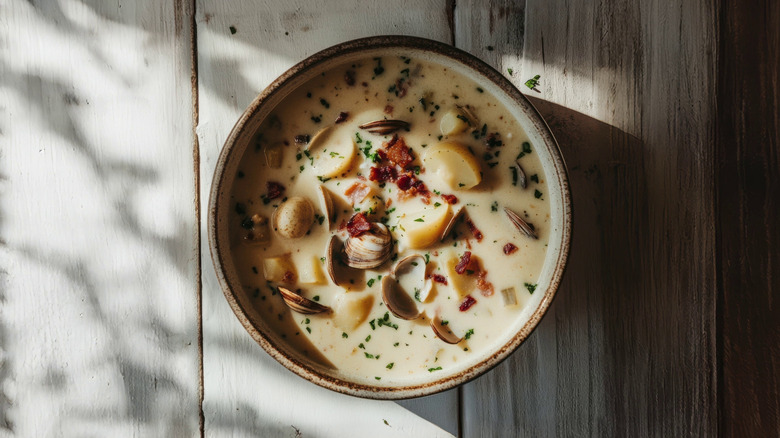
While waxy potatoes will hold up best during the cooking process, red and russet potatoes will also work fine. In fact, if you want your chowder to be on the thicker side, russets may actually work better for you, as they soften up more. As Le says, the potatoes should be added toward the end of the cooking process.
If the chunks are bigger, toss them in after the base has come together, right before you start to simmer the chowder. Take it off the heat once the potatoes are tender enough to pierce with a fork. This should take about 15 minutes for bigger chunks of gold potatoes or 10 minutes for red potatoes. Russets and baby potatoes will take even less time.
If your chowder ends up particularly thick, there's one more thing you might want to think about: whether or not you should serve it with oyster crackers. Those tiny little crackers that are always served alongside chowder are a classic, but Le says they're not always necessary. In fact, they may end up taking away from the dish. He says, "I always get those crackers, but I don't like eating them with the clam chowder. I think it makes it too thick. Sometimes people make clam chowder already thick as it is, so then the little crackers become like a non-existent bypass product." A solid suggestion would be to save the crackers for a thinner Long Island chowder instead.