

What To Look Out For On The Label When Buying Rice Vinegar
We may receive a commission on purchases made from links.
Rice vinegar may not be a staple ingredient, but it is a vital one for many recipes and you need to make sure you buy the right type. When you are standing in your grocery store, staring at the various bottles, making that correct choice can feel a bit intimidating, which is why we asked for some expert advice from Chef David Utterback of Yoshitomo, Ota, and Koji. As he explains it, you can find all of your answers on the label.
"Anything with sugar or salt is 'seasoned' vinegar," Utterback says, "and is pre-made for use in specific recipes." This is the most common differentiation that you will see among rice vinegars. The same brand will often have two bottles side by side, one labeled as just "rice vinegar" or "brewed rice vinegar" and the other as "seasoned rice vinegar." The difference between seasoned and unseasoned rice vinegar is exactly as Utterback put it, the seasoned vinegar has sugar and salt added to it so that it doesn't need any additions before use in things like sushi rice. But, beyond the seasoning, there are a few more factors that separate different types of rice vinegars.
Most rice vinegar is made with just simple ingredients, Utterback explains, generally just rice and water. But, as is often the case with simple foods, the quality of the production makes all the difference. "The quality and cost of rice vinegar is determined by what kind of rice is used (brown, variety, etc) and how much product and time it takes to produce," he says. "Cheaper vinegar uses less rice and time and the flavor is a bit different, weaker, subtle, or too sharp. More expensive [vinegar] often uses more rice and more time."
Is it worth splurging on an expensive bottle of rice vinegar?
A plain old bottle of rice vinegar will do just fine for most recipes. "A lot of the subtle notes disappear when making dressings or cooking with recipes," Utterback explains, "and a simple good quality bottle of rice vinegar has a lot of value already in the bottle without having to spend more." As for what that actually means in practice, Utterback suggests looking for Mizkan Rice Vinegar as it is pretty good, reasonably priced, and readily available at most Asian markets.
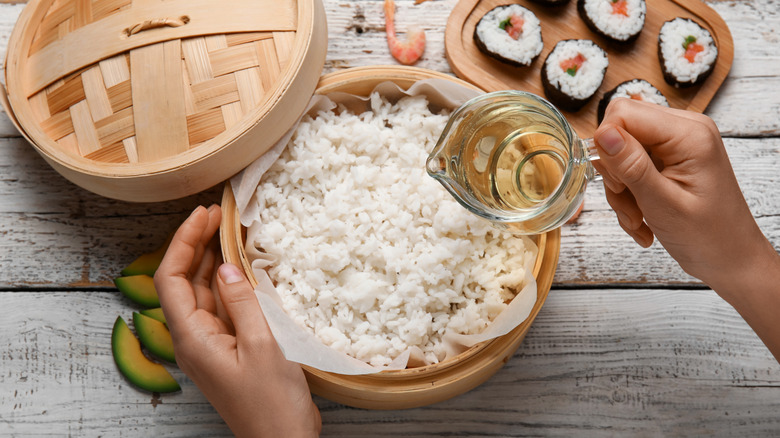
There may be some occasions when you want to shell out a little more money for a really high quality rice vinegar, however. "I only find it's worth spending the extra for our sushi vinegar blends," Utterback says. "The vinegar is the main component there and so important to the flavor of the rice we can't go cheap." Even as a chef who regularly spends upwards of $40 on a bottle of vinegar, Utterback only uses premium vinegar when it's the star of the show. Well-seasoned vinegar is the key to perfect sushi rice, as you can see in this simple sushi rice recipe, so starting off with a high-quality seasoned vinegar is essential.
In general, though, there is no need to spend a lot of money on rice vinegar. Find a brand that you like, something high in quality and low in price, and you won't have to think about much else. Just be sure to grab the unseasoned stuff for the majority of your recipes.