

Why You Will Want To Cook Spinach Before Adding It To Lasagna
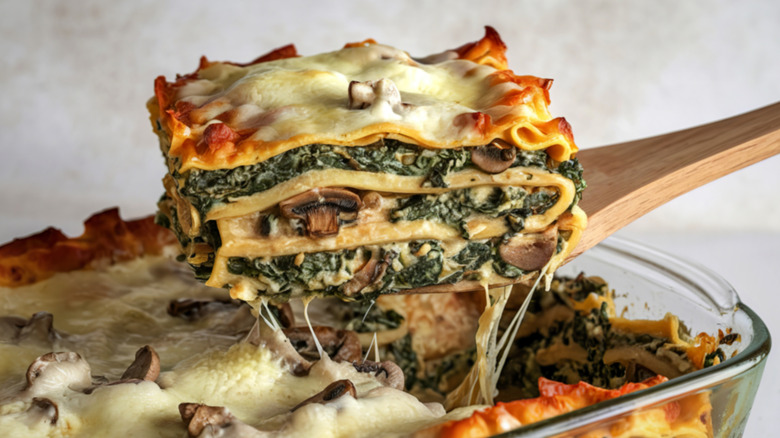
Lasagna is one of the homiest Sunday suppers out there. The layers of noodles, cheese, sauce, and other flavorful ingredients are just what the doctor ordered when you're craving something filling and warm. There are many lasagna variations out there, including ones filled to the brim with meat and vegetarian ones. No matter what you're putting in your lasagna, though, if you're not adding spinach, you're missing out.
Besides adding an extra boost of nutrients, spinach can add a really grounding, earthy flavor to a ricotta mixture or veggie layer. The one step that you can't miss when adding spinach to your lasagna, though, is to cook it first. The types of spinach commonly used for lasagna, including curly or flat-leaf, contain a lot of water. If you fail to cook out that water beforehand, the residual moisture may permeate the other layers, leading to a watery, heavy, and soggy pasta dish.
The best method for preparing your spinach is sauteing. While you could fill a bowl with the leaves and nuke it in the microwave, cooking it down on the stove with butter, aromatics like garlic and shallots, and salt and pepper will both enhance that beautiful vegetal flavor and reduce any extra moisture.
The secret to a non-mushy lasagna
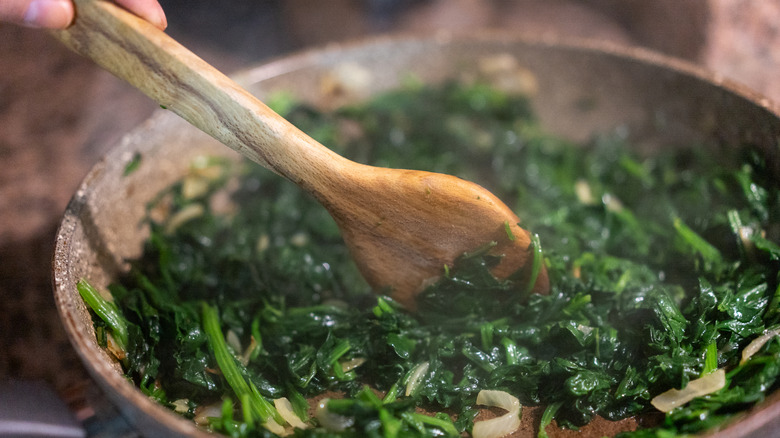
It's hard to completely remove all of the moisture from your spinach, but one of the easiest ways to tell that it's done cooking and ready to put in your lasagna is when the bottom of the pan is dry. From there, you should transfer your cooked spinach to a strainer over the sink and gently press the leaves to drain any remaining water.
Frozen spinach is a more cost-effective alternative to fresh leaves. If you get the frozen option, you'll still need to drain it before adding it to your lasagna filling. To perform this quick prep step, simply ring out the spinach in a clean dishcloth or use the aforementioned strainer method. Never add frozen spinach directly to your lasagna; otherwise, you could end up with lasagna soup.