

The Street Food City Exhibit Showcases New York's Historic Curbside Dining Culture
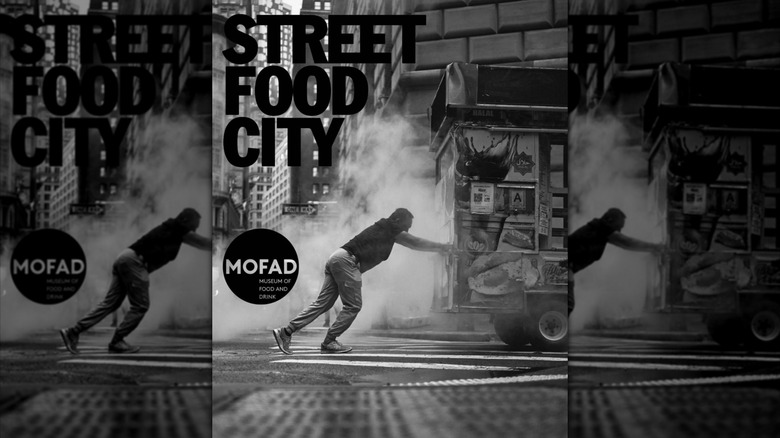
Unless you're looking at a really good still life, it's not too common that museum exhibits make you hungry — but most museums are not the New York Museum of Food and Drink. Located in the Dumbo neighborhood of Brooklyn, the Museum of Food and Drink (MOFAD) treats food as culture, with exhibits covering a wide range of food stories and illuminating the people and communities that are often forgotten in food media. Starting Saturday, December 6, MOFAD is celebrating one of the most historically maligned areas of cooking, street food, through an exploration of its home city's street food scene throughout the years.
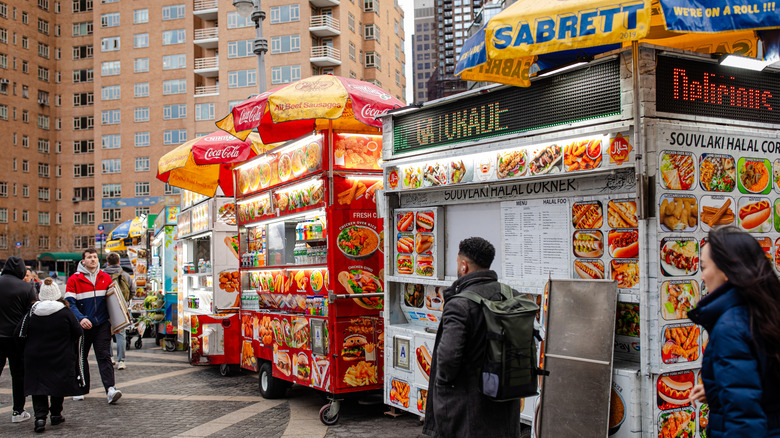
Called "Street Food City," MOFAD says the new exhibit "celebrates the city's smallest food businesses, revealing the hidden world behind the iconic NYC food cart." The story of street food in New York is primarily an immigrant story. A story of people who came from all over the world to make a living selling items that became iconic parts of New York City's food culture – from halal carts to hot dogs.
MOFAD will show how these street food businesses influenced the city's larger food culture, and explore the challenges street vendors faced in the past and today. In addition to the main exhibit, MOFAD will also be displaying photography of street food vending from around the world. Done in partnership with the World Food Photography Awards, the photos of street food from other parts of the planet is on display through Empire Stores, the shopping and dining destination that shares a building with MOFAD.
The New York Museum of Food and Drink's Street Food City exhibit explores the world of New York's beloved street carts
While hot dogs and pretzels are famous New York street foods almost everybody knows, the concept of cheap eats being sold streetside dates back to the very beginnings of the city. New York's first popular street food was actually oysters, which were cheap because of the abundance with which they grew in the oyster beds throughout the bays of the region.
As the oyster beds were depleted, and as new immigrant groups arrived, new kinds of food became popular with New York's ever growing army of street carts. Jewish vendors at the end of the 19th century would make knishes a New York staple, Italian immigrants sold peanuts, and later Greek immigrants popularized pita sandwiches and skewered meat like souvlaki. Today there are halal carts, taco stands, and Thai noodles on New York's streets, among a bevy of other international foods.
Street food has become celebrated in modern culture, but it wasn't always seen that way. New York's vendors were attacked as unsanitary for years, and shop owners hated competitions from cheap stands. New York mayor Fiorello La Guardia even led an effort to ban street vending in the '30s. While street food has endured and exploded again in recent decades, efforts like MOFAD's exhibit help remind people that a vibrant street food scene is something that lots of people have to work and fight for.