

What Holiday Dinners Looked Like Through The Decades
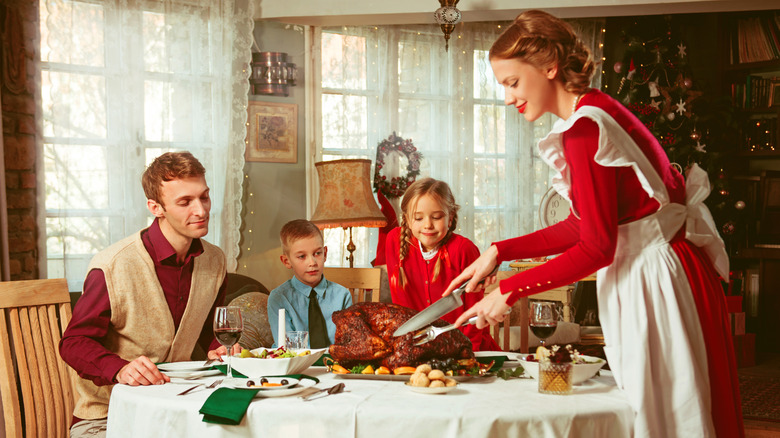
The holiday season is upon us, and that usually means it's time to start preparing, serving, and eating a heck of a lot of food. This time of year is about family, friends, and gift-giving, sure, but it's the food that many of us look forward to the most, let's be honest. And it's been that way for decades. We know this because we have scoured the internet to find out what people were eating during the holidays in each decade throughout the 20th century.
The truth is, holiday spreads vary widely from family to family, and they always have. There is no single dish that unites everyone, or sums up an entire decade. However, we did gain a sense of which types of foods people seemed to be reaching for or aspiring to the most over the years.
Roast meats were a given, of course, but what kind and what they were served with changed considerably. In the 1900s? It might have been oyster patties. In the 1970s? Molded Brussels sprouts might have been your go-to. Intrigued? Let's jump in.
1900s: Roast goose, applesauce, oyster patties, popovers, sweet potatoes
In many ways, the 1900s set the tone for how many of us celebrate the holidays today. In 1905, for example, magazines reported worries about the enormous rush on Christmas trees in New York and the impact this would have on North American forests. Journalists and writers were starting to express concern about how commercialized the holidays were becoming, and silent movie theaters were streaming the festive classic "The Night Before Christmas" for the very first time.
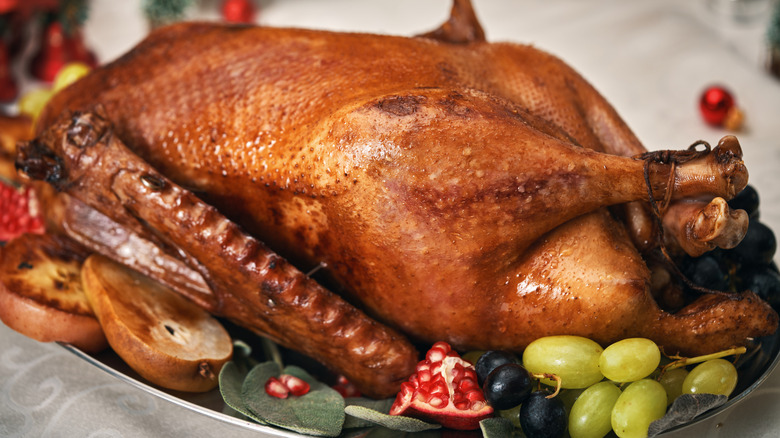
As for holiday food, restaurant menus and written accounts from the decade confirm that, for many, this was seen as a time to feast, just as it is now. Options and preferences varied, but one common dish seems to have been roast goose. Some cooks would stuff it and serve it with baked apples, while others would opt to pair it with dishes like applesauce, boiled potatoes, turnips, parsnips, stewed onions, and sweet potatoes. Inevitably, there would be some leftovers, so some families would choose to serve the goose again in the evening, cold, with sides like oyster patties, slaw, and popovers.
1910s: Roast turkey, plum pudding, cranberry jelly, sardine cocktails, Spanish mackerel
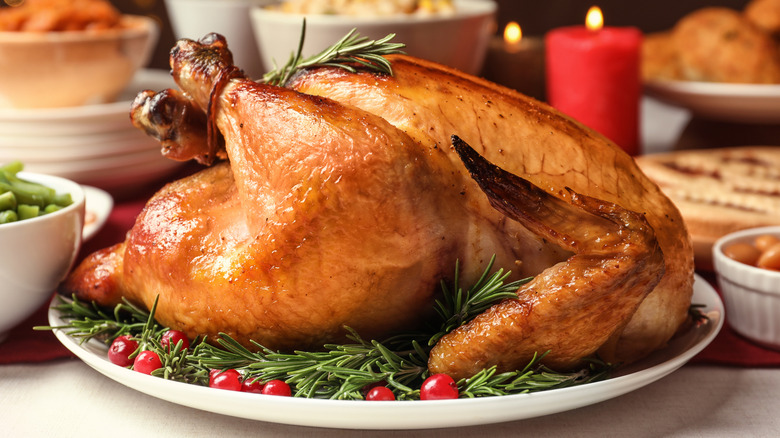
In the U.S., turkey is usually reserved for Thanksgiving, while ham is often seen as a dish reserved for Christmas and the December festive period. But in the 1910s, alongside roast goose (which hadn't fallen out of favor), roast turkey seemed to be a common sight on the Christmas table, too.
In fact, some written records suggest that, just like on Thanksgiving, it would be served with cranberry jelly and Brussels sprouts, for example, or maybe hashed cream potatoes and romaine salad. For dessert, plum pudding seemed to be a popular holiday choice, and it would often be served alongside sweets like blanc-mange and fruit, or maybe an ice cream cake and some brandy sauce.
But, of course, your choice of holiday dinner in the 1910s depended on who you were, where you were dining, and what resources you had available to you. If you had flicked through Fannie Merritt Farmer's 1911 book "Catering for Special Occasions With Menus & Recipes," for example, you might have been inspired to feed your family a feast of dishes like sardine cocktails, olives, sweet potatoes with sherry, potato stuffing, and Spanish mackerel.
1920s: Oysters, roast suckling pig, browned potatoes, cranberry jelly, diced turnips
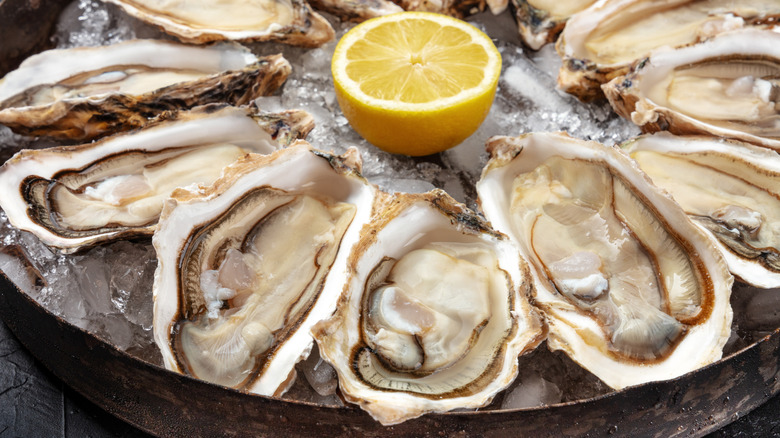
In the 1900s and 1910s, alongside roast goose, turkey, and plum pudding, another common food on holiday tables was oysters. They didn't have their luxury reputation back then, and were a common food for many families. In the 1920s, many reports stated that oysters were starting to fall out of favor (largely due to major public health scares), but Christmas dinner menus suggest that many people were still clinging to the once-popular shellfish.
"Good Housekeeping's Book of Menus, Recipes, and Household Discoveries," published in 1922, for example, recommends serving oyster soup as a Christmas dinner starter. The 1924 book "The New Butterick Cook Book," written by Cornell University home economics teacher and co-director Flora Rose, also recommends serving oyster cocktails at Christmas.
Roast goose and turkey were still common sights on holiday tables in the 1920s, but there is also evidence to suggest that roast pig was a popular festive dish during this decade, too. That same 1922 Good Housekeeping book, for example, recommends following up the oyster soup with roast suckling pig, alongside side dishes like browned potatoes and diced turnips. Another menu, this time from the Pass-a-Grille Hotel in Florida in 1920, lists dishes like roast native turkey, cranberry jelly, and roast milk-fed young pig. On the side? Oyster stuffing, of course.
1930s: Roast chicken, potatoes, cabbage, pie, stuffed goose, fried pineapple
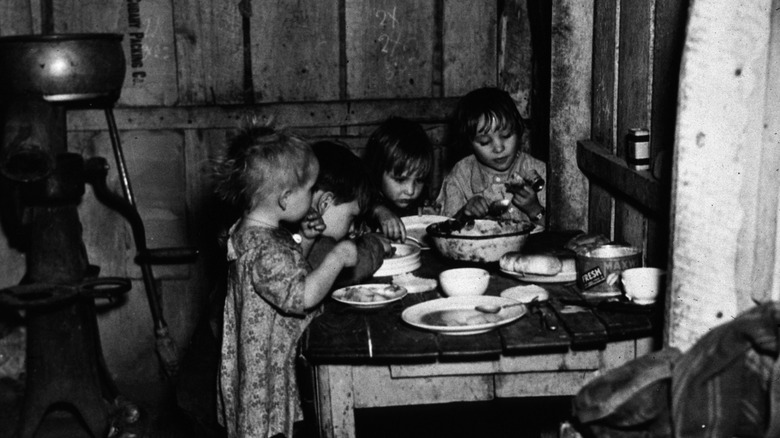
During the 1930s, the holiday season looked very different for many people. The U.S. was, of course, in the grip of the Great Depression during this decade, and millions were unemployed and living with food insecurity. One famous photo, taken by photographer Russell Lee in 1936, for example, demonstrates how hard things were for many families at this time. Four young children are seen gathered around a small wooden table in a rural home in Iowa, as they eat a simple Christmas Day meal of potatoes, cabbage, and pie.
Magazines and papers adapted to changing circumstances. In 1932, for example, Good Housekeeping laid out several different menus for different budgets. The first could feed eight people for $3.25, and included dishes like a cranberry cocktail and a crown roast of pork. Interestingly, while chicken was not a particularly cheap meat at the time, in 1938, the Washington Post listed a poor man's Christmas dinner menu as roast stuffed chicken with giblet gravy, while it noted that a rich man's menu would consist of roast stuffed goose or Virginia Tom turkey.
The 1931 book "Aunt Sammy's Radio Recipes Revised," by the U.S. Department of Agriculture, aimed to showcase some of the most popular recipes of the time, and it also features a Christmas menu with chicken. The simple dinner menu printed in the book suggests serving roast chicken with browned potatoes, vegetables, and fried pineapple.
1940s: Duck, mock duck, Creole rice stuffing, buttered squash, plum pudding, foamy sauce
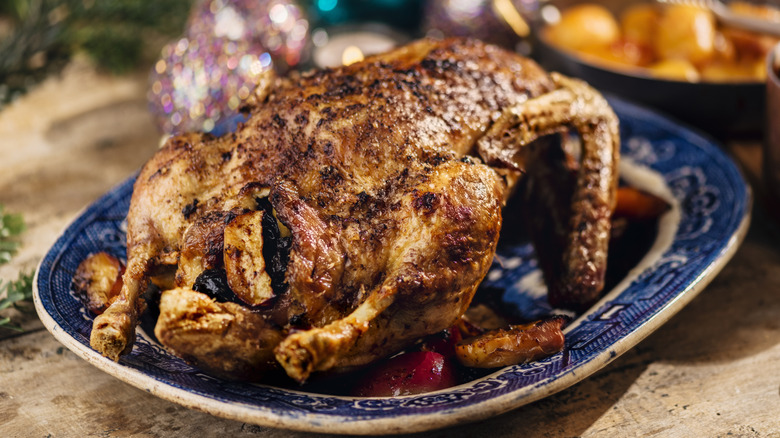
Just like in previous decades, holiday tables in the 1940s were often adorned with roast goose or turkey, but some families opted for duck. "The Good Housekeeping Cookbook," published in 1944, for example, lays out one sample Christmas dinner menu with roast duck alongside dishes like Creole rice stuffing, buttered squash, and Brussels sprouts.
Whether you had access to duck during the 1940s, though, depended on where you were in the country. If you were somewhere rural, like in Arkansas, for example, you might have been able to hunt the animal and then serve it for your holiday meal. If you were in Long Island, you might have also opted for duck, as the region's duck farming industry started to boom in the 1940s. Some might have opted for mock duck, which was basically not duck at all, but sausagemeat with onions, apples, and sage, or flank steak with breadcrumb stuffing.
As in the 1910s, plum pudding was also a favorite holiday dessert during the 1940s. This classic festive dessert was even served in the White House in 1942, alongside hard sauce and coffee. Another example menu published in "The Good Housekeeping Cookbook" recommends serving Christmas plum pudding for dessert with foamy sauce and coffee.
1950s: Oven-fried chicken, duckling, scalloped potatoes, roast beef, French-fried onion rings, pear salad
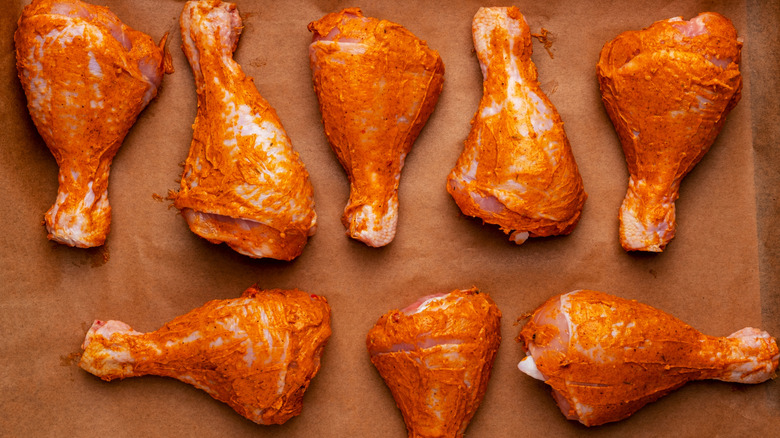
In the 1950s, records show that most of the same foods we've already covered were still appearing on holiday tables. Things like roast turkey, roast duck, oyster stuffing, and plum puddings, for example, were far from unusual. But some records suggest that fried foods were also starting to creep onto some menus.
One Christmas dinner meal plan from a magazine in the 1950s, for example, features dishes like oven-fried chicken, scalloped potatoes, green beans, cranberry sauce, and 24-hour salad. Another from the "Better Homes & Gardens Holiday Cook Book: Special Occasion," published in 1959, lists a menu with roast beef, roast potatoes, and French-fried onion rings.
Other examples of dishes you might find on a holiday table in the 1950s include Spam (sometimes wrapped in bacon), as well as pear salads and cheese balls. Some even chose to eat duckling during this time of year — at least, that's what "Better Homes & Gardens Holiday Cook Book: Special Occasion" suggests. The book recommended serving the duckling with orange stuffing, cranberry sauce, mushroom wild rice, and almond green beans.
1960s: Canned ham, roast red snapper steak, roast leg of lamb, caviar roulade, potatoes-in-the-shell souffle
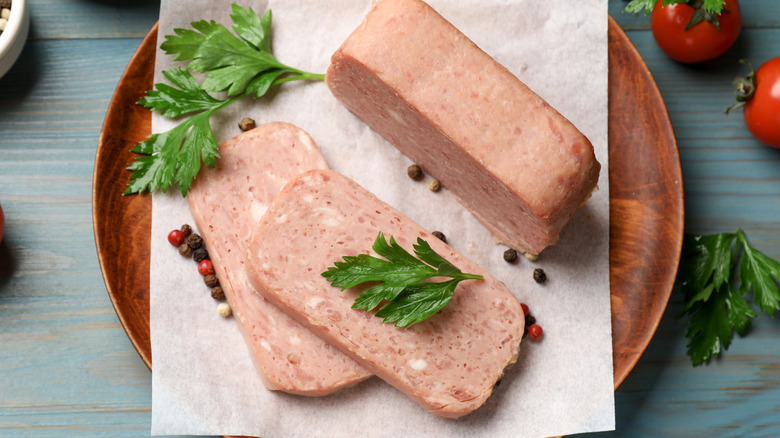
Ham had appeared on quite a few holiday tables over the first half of the 20th century, but in the 1960s, many people chose to serve one specific kind of ham — canned ham — for their holiday dinner. One image posted on Reddit, for example, shows a 1960s family Christmas, and on the table there appears to be a canned ham, alongside saltines, olives, rolls, and cream cheese. It seems it was a relatively common experience, as several commenters on the post recall eating canned ham for their holiday meal in the 1960s.
If you wanted something a little fancier in this decade? The Skirvin Hotel in Oklahoma seemed like a good bet. One 1960s holiday menu from the hotel, for example, lists roast turkey, baked sugar-cured ham, roast leg of spring lamb, roast duckling, and roast red snapper steak. Alternatively, you could let "The New York Times Menu Cook Book," published in 1966, guide your holiday menu, with options like caviar roulade, standing rib roast, and potatoes-in-the-shell souffle.
1970s: Turkey aspic, blue cheese mousse, molded salads, Christmas pickles, cinnamon candy jelly
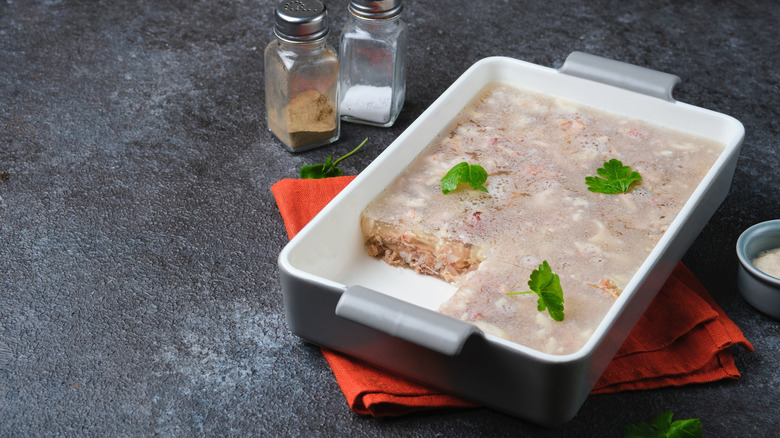
From the 1920s onwards, it was quite common to serve fish, vegetables, or meat in a Jell-O salad or suspended in aspic, which, in a nutshell, is basically a jelly made with meat broth. So it tracks that in the 1970s, turkey in aspic was recommended in recipe books at the time as a crowd-pleasing holiday centerpiece. This might be served alongside dishes like molded Brussels sprouts (that basically means serving them in more jelly) and blue cheese mousse.
Another 1970s recipe book, named "Holiday Cookbook: Favorite Recipes of Home Economics Teachers," offers up recipes like Christmas pickles (made with sugar, apple vinegar, candied red cherries, and dill pickles), uncooked date rolls, and cinnamon candy jelly. Another, "The Doubleday Cookbook: Complete Contemporary Cooking," published in 1975, suggests serving up dishes like shrimp cocktail, roast goose, and braised chestnuts with, you guessed it, cranberry-pecan salad — in a mold.
1980s: Pâté aspic, crab strudel, sticky buns, raspberry soup, holiday party loaf
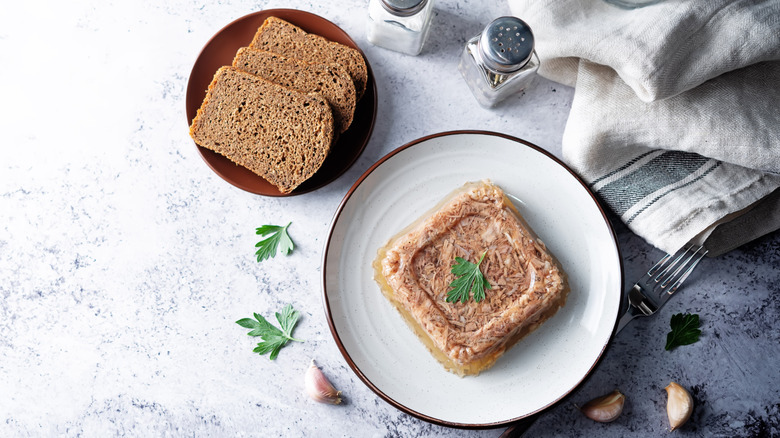
People were still serving up aspic in the 1980s. In fact, one issue of Good Housekeeping magazine from December 1981 included 43 pages of holiday food ideas, and among them was pâté in aspic. Yes, that's paste, inside a meat jelly. Other suggestions in the magazine included the classic roast goose with glazed oranges, as well as slightly less conventional ideas, like crab strudel and lemon mushrooms.
Many people who grew up during the 1980s remember buffets being served during the evening of Christmas Day. Often, the table spread would include dishes like flan, cold meats, and tinned fruits, for example. Sometimes, a special holiday brunch was on offer during the festive season, and might include dishes like sticky buns, ham and broccoli roll-ups, and chilled raspberry soup.
Another option you might find on a 1980s holiday table? A holiday party loaf, of course. This is basically a frosted, multi-layered sandwich. In 1981, Kraft advertised a recipe for a holiday loaf using its Miracle Whip mayonnaise-style spread and canned ham as the key ingredients.
1990s: Roast pork, cheesy potatoes, wild rice pilaf, Cornish hen, ice cream sundaes
Many people remember the holidays in the 1990s with a lot of nostalgia. After all, it is the decade that gave us some of the most iconic festive movies, like "Home Alone" (1990), "The Nightmare Before Christmas" (1993), and "The Santa Clause" (1994). It was also a time to gorge on lots of Christmas cookies and ice cream sundaes (just like Kevin McCallister in 1992's "Home Alone 2," of course).
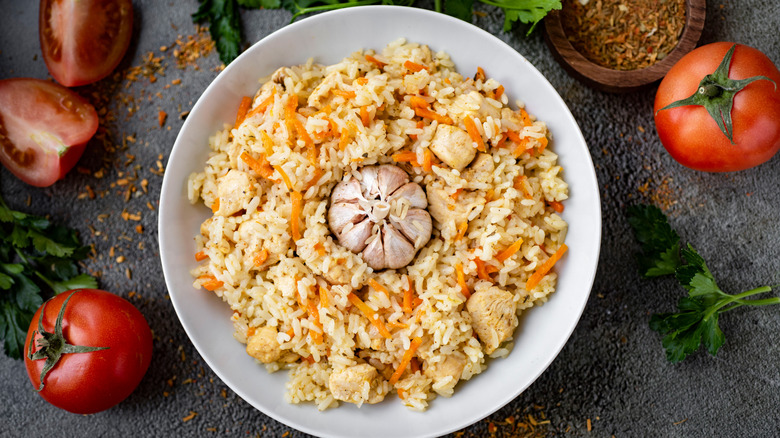
For the big main meal over the holidays, many families would opt for roast meat, just as they had done in the decades before. Records of magazines from the time suggest that people were sitting down to dishes like roast pork loin, Christmas goose, and Cornish hen. This often would be accompanied by hearty sides like cheesy potatoes, oven-roasted vegetables, and maybe a wild rice pilaf with dried cranberries.
In fact, rice pilaf seems to pop up a few times as a recommended side dish. In the December 1996 issue of Good Housekeeping, for example, it's suggested for Christmas dinner, alongside dishes like winter salad and spinach-mushroom stuffed tenderloin. In 1999, Martha Stewart Living's December issue recommended serving it with options like caramelized onion tartlets and roast poussin.