

How Long An Opened Can Of Tuna Really Lasts In The Fridge

Peeling back the metal lid, you suspiciously poke the tuna flakes — are these leftovers beyond their best? Before opening, the sealed tin of fish is almost invincible, remaining edible for up to five years. Once opened, though, the countdown begins. This is why you should consume refrigerated cans of leftover tuna within three to four days.
Cracking that lid, the tuna is instantly exposed to air, and spoilage begins. Because of this, four days is the best possible scenario, but it's not a guarantee. Learning how you should really be storing tuna is a must. For instance, failing to transfer leftovers to an airtight container is a cardinal sin. Half-peeled lids are a nightmare for contamination, premature spoilage, and exposure to odors that sabotage your tuna's flavor. Instead, find a plastic or glass container, add a label, and refrigerate immediately to avoid any bacterial growth. Be mindful that quality deteriorates even when consumption is technically still safe, too. Aim to use leftover tuna sooner, rather than later.
Not everyone plans back-to-back meals using the same ingredients. If that four-day window seems a little tight, why not play the long game? Swap the refrigerator for the freezer, and drained tuna will last for three months. Just be prepared for potential textural sacrifices as freezing and thawing takes its toll.
How to revamp leftover tuna
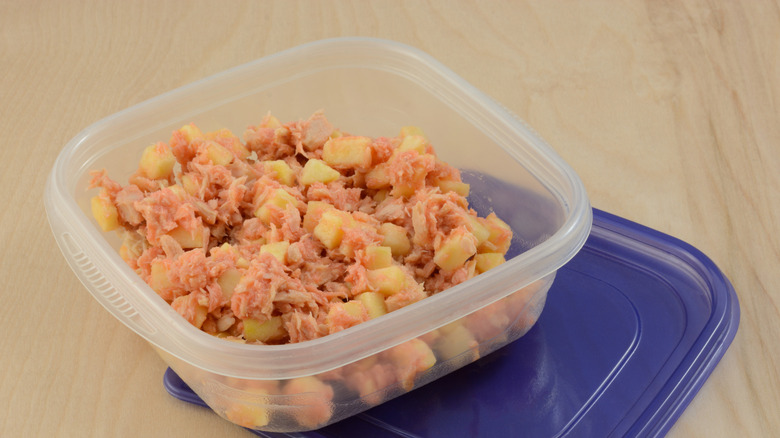
That countdown isn't just ticking towards expiration, but flavor and textural degradation. Facing a mediocre can of tuna, it's hard to imagine recipes capable of breathing life into this now-lackluster ingredient. Luckily, there are a few tricks to try.
Tuna is notorious for drying out, which is why airtight containers are vital for preventing excessive moisture loss. However, sauce-based dishes can loosen things up, adding a much-needed dash of liquid to dry-feeling flakes. Cheesy melts and creamy casseroles are great examples of meals that revitalize the ingredient. Plus, refrigerated leftovers have a beautifully chilled temperature; hence why recipes reliant on cold ingredients, like croquettes, are one of the absolute best way to use a can of tuna. Frozen tuna yields less positive results, so expect a mushier consistency that performs better as a cooked component in stuffed vegetables or fish cakes. So forget crumbling thawed tuna into salads; refrigerated fish (softened with mayo) works better as firmer flakes will make-or-break the dish.
Get creative as there are plenty of other ways to transform canned tuna into a gourmet meal. Still, don't be afraid to admit defeat, and learn the obvious signs you should throw out canned tuna. Tuna that's slimy, discolored, or has visible mold is a no-go. Fortunately, a quick whiff also usually reveals all you need to know.