

The 4-Ingredient Cabbage Dish That Doubles As A Main Or Side
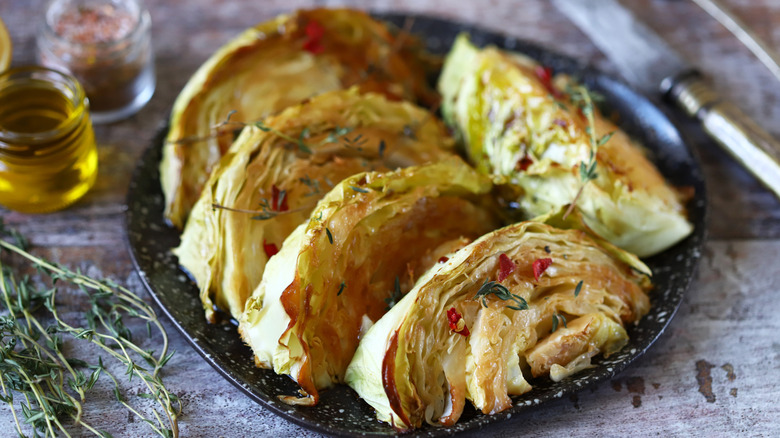
Cabbage is an unsung hero of the vegetable kingdom. It's inexpensive and easy to store, and it adapts to almost any cuisine or flavor profile. You can slice into ribbons for slaws, simmer it in soups, ferment it into something lively, or, as in this four-ingredient recipe, turn it into a charred, deeply flavored "steak" that plates as nicely on Tuesday's dinner as it does next to a Sunday's roast. It stores well raw and cooked, so it makes great leftovers. Cabbage may be humble, but it's also surprisingly luxurious when browned properly.
For our grilled cabbage steaks with furikake recipe, the method is as simple as the tiny ingredient list suggests. Just take a firm head of green cabbage and carefully cut it into thick, even slabs, about an inch thick. Brush each side with a neutral cooking oil and season with salt and pepper. Then, sear the "steaks" on a grill or cast iron, or roast them on a sheet pan at high heat. The outer layers will blister in the heat, caramelizing deliciously, while the cores steam and soften, sweet and slightly buttery. When they're done, finish them with a generous shake of furikake and a handful of chopped green onions.
Furikake is a classic Japanese seasoning that brings sesame, nori, and salt to the party. It also comes in a variety of iterations, featuring strongly flavored elements like shiso or bonito flakes, which would be similarly delicious on cabbage. The high heat of the grill, and the simple but strategic seasoning in this method coax out an unexpected depth from a low key vegetable that usually hides in the crisper drawer, and the furikake adds the kind of umami that will make you crave it.
Cabbage has character
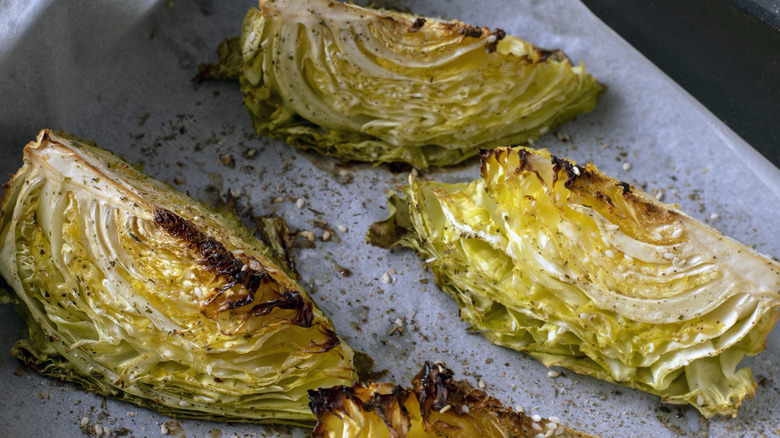
Cabbage is truly one of the most dependable vegetables in the kitchen, and has been throughout history. Before refrigeration, people relied on root cellars and crocks to keep food edible through long winters, and cabbage was a central part of that survival strategy. Because it grows easily and stores so well, it appears in dishes nearly every food culture. From kimchi, sauerkraut, atakilt wat, curtido, okonomiyaki, Irish boiled cabbage, spiced-meat stuffed Holubtsi, the list really goes on.
A cabbage steak is a slightly more modern, minimalist technique and presentation that makes good use of the veg without much fussy technique. It calls for simple ingredients and high heat, and doesn't need a lot of time or extra pantry items. Leftovers are almost better the next day. Cold cabbage steaks can be sliced into ribbons and tossed with noodles, or you can chop them into fried rice, or lay one over broth with a soft egg for a quick, healthy lunch.
Nutritionally, it punches above its price point. High in fiber, vitamin C, and vitamin K, it's filling but low-carb, which makes it useful for meals where you want something hearty and satisfying that's also easy on blood sugar. Any seasoning added is a counterpoint to the mellow composure of the vegetable. Cabbage steaks are an easy base for improvisation. Using the same grilling technique, trade the furikake for coconut and chili crisp, miso butter, za'atar, or a drizzle of lemony-tahini dressing. Brushing the slabs with a bit of soy sauce or Worcestershire before searing or roasting creates a deeper, meaty element. Honey mustard's sugars will bring out even more caramelization. Cabbage is a vegetable that favors the bold, so have fun with it.