

It's All Too Common To Make This Little Mistake When Tasting Bourbon
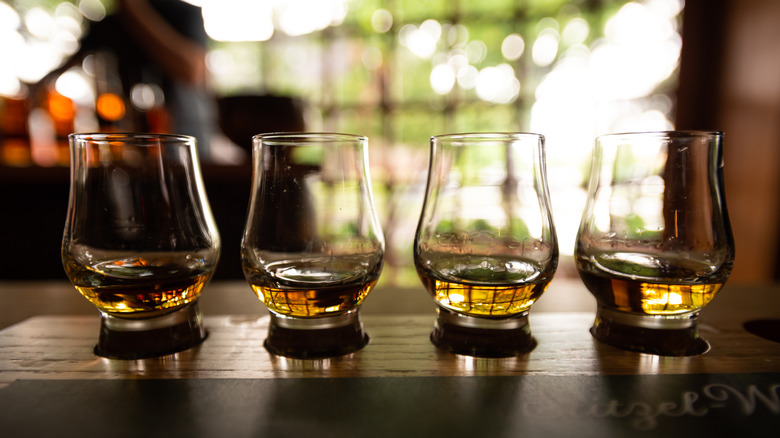
Bourbon tasting is far different than enjoying bourbon-based cocktails or knocking back a straight shot. It's a subtler way of experiencing the nuances of well-crafted bourbons, whether they're Kentucky straight, blended, bottled-in-bond, single barrel, sour mash, rye, or otherwise. Each has its own character, giving rise to the art of bourbon tasting, similar to wine tasting. While there aren't strict rules or obvious faux pas, there are some mistakes that could detract from truly getting a feel for the bourbon at hand. One of those is the simple act of gulping, rather than sipping.
It's one of the 14 common bourbon tasting mistakes that are easy to make, identified by our own Tasting Table whiskey connoisseur, Kenny Jarvis. He explains that tasting a mouthful is a classic mistake made with any high-proof spirit, but it's definitely not the right way to enjoy bourbon for several reasons. "A large gulp floods the palate," he explains, "and you're more likely to get a harsh, burning sensation." It can be overpowering and cause you to cough and sputter. But it's not because the bourbon is bad — you're just drinking it the wrong way.
If there's too much bourbon in your mouth, it becomes difficult to notice or appreciate the multi-layered flavors and aromas. The goal of a tasting isn't to become intoxicated, rather to fully enjoy the bourbon, which only comes with taking your time. In other words, a bourbon's profile unfolds by sipping slowly and intentionally.
Small sips and bourbon aromas
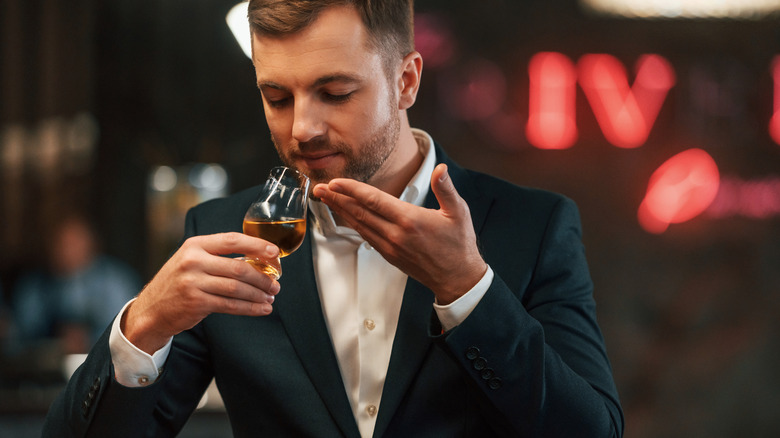
Once your palate acclimates during small-sip bourbon tasting, you stand a much better chance of noticing more subtle aromas and flavor notes, such as vanilla, caramel, oak, spice, or even floral or fruity undertones. A good tasting sip should linger: Roll it around your tongue and let it coat different parts of your mouth before swallowing. That way, you experience not only the "front-of-mouth" flavors, but also how the bourbon develops across your palate, all the way to the final "finish."
To encourage small sips and slow tasting, it helps to sample new-to-you bourbons in actual tasting glasses, often known as Glencairn glasses. Failing to do this also appeared on our list of bourbon tasting mistakes, largely due to the shape of these glasses. As Jarvis explains, the glass tapers upward toward the mouth, which directs the bourbon aroma to your nose, allowing you to distinguish each scent. That smaller opening also affects the actual taste, he says, since it "reduces oxidation and helps to keep the bourbon true to the bottle."
In fact, smelling bourbon during the tasting experience has a term all its own: "nosing the bourbon." It involves gently inhaling aromas from the glass (with lips slightly parted) before you sip, allowing you to pick up compounds that define the bourbon's character. Small, slow sips enable this, activating your sense of smell and, in turn, affecting taste. This tango between taste and aroma is largely annihilated when you gulp.