

Avoid Clumps In Your Homemade Mac And Cheese With This Advice From Tillamook
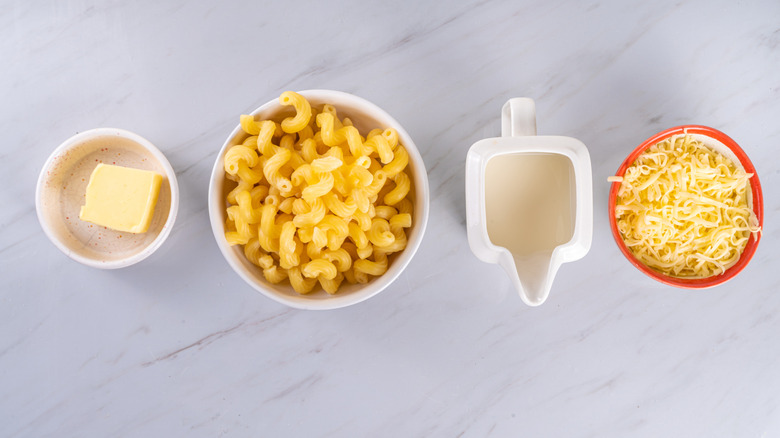
Have you ever cooked homemade mac and cheese and end up with clumps and lumps of cheese sauce? It's happened to us before so we consulted chef Josh Archibald, the executive chef of culinary development at the Tillamook County Creamery Association, for his tips on how to avoid clumpy mac and cheese. First, Archibald cooks the cheese, and it's a little fancy. "I start by building a roux (butter and flour) and then add milk to create a béchamel sauce," he explains. "The trick is temperature control: Flour reaches its maximum thickening power around 190 degrees Fahrenheit, so I monitor the sauce closely. Once it hits that point, I turn off the heat and slowly whisk in the shredded cheese."
The key is to gradually add shredded cheese, rather than larger cubes or chunks, which won't melt as easily as shreds. "The residual heat is enough to melt [shredded cheese] smoothly without causing it to break or clump," the chef explains. Once the sauce is creamy, Archibald would toss in cooked pasta. Once the pasta has been mixed into the sauce, Archibald adds a few more touches before throwing it in the oven. "[I] top it with more cheese and a crunchy topping," he says, "and bake just long enough to heat it through and achieve a golden, crispy finish.
Shred your own cheese for the best results when making mac and cheese
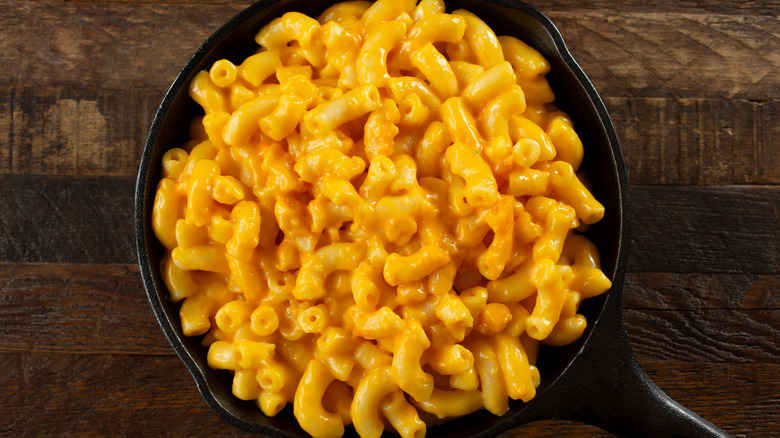
Another tip to note is that Archibald does not use store-bought pre-shredded cheese, which have caking agents that people like to wash off. He will instead buy a block of cheese, grate it, and leave the cheese sitting out for 30 to 40 minutes prior to cooking. "Cheese straight from a 36 degree Fahrenheit fridge is firm and doesn't want to melt as easily," he explains, "but once it warms slightly, it relaxes and melts more smoothly, helping prevent your sauce from seizing or separating."
While Archibald prefers to keep his recipe more traditional, he will often take advantage of the blank canvas a smooth and creamy homemade mac and cheese provides for different creative additions. "I toss in corn, cauliflower, mushrooms, [or] whatever I have on hand," he notes. "It's a sneaky way to get my kids to eat more veggies, too."
This week, if you're making mac and cheese, be sure to take Archibald's tips to heart. Additionally, check out our amazing mac and cheese recipes to use his tips on, such as our delicious and heat-packed kimchi mac and cheese recipe.