

It's A Major Mistake To Store Cooking Oil Above The Stove — Here's Why
We may receive a commission on purchases made from links.
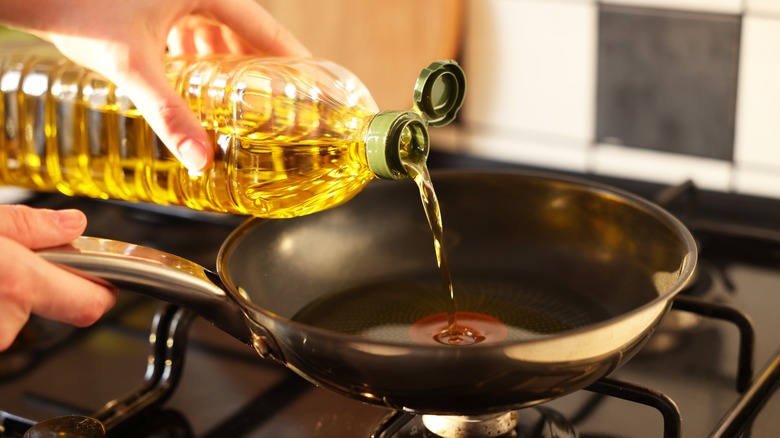
It makes perfect sense that you would want to have your cooking oil within easy reach of the cooktop. Unlike other ingredients that might be measured out first, oil is something to be added with a flourish at any time throughout the cooking process. It turns out, however, that cooking oil is one of the items you should never store above the stove. It's a bad idea for both the oil and for you. Heat is one of the key factors in the oxidation of oils, a process in which the molecular structure breaks down, and causes the oil to taste bad and be detrimental to your health.
You might notice that your oil has a strange smell, or has taken on a sticky texture, particularly around the opening to the bottle — these are the signs of oxidation. While oxidised oils won't make you sick immediately, as with food poisoning, the compounds released during oxidation have been linked to long term issues. Free radicals can lead to inflammation, potential damage to brain cells, and an increased risk of heart disease, while toxic aldehydes have been linked to an increased risk of cancer.
This is an important tip not just for storage, but also for how you use your cooking oils. While it might make economic sense to reuse oil for deep frying, heating it repeatedly will have the same consequences in terms of breaking down fats.
The best way to store cooking oil
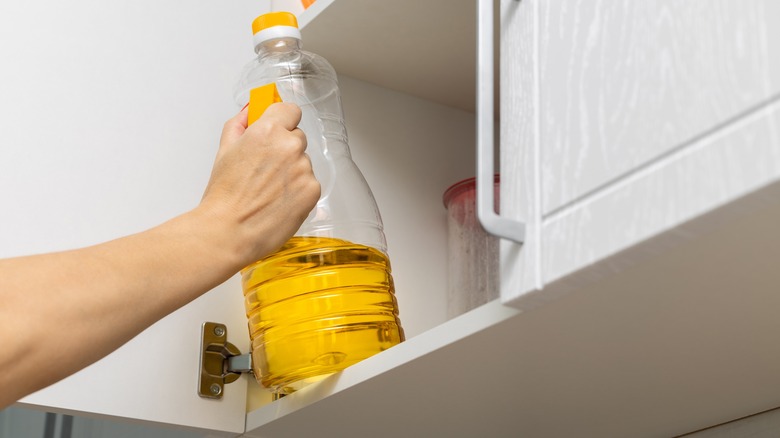
The best way to store cooking oil is to protect it from the forces that lead to oxidation, namely heat, light, and oxygen. As inconvenient as it might sound, this means putting it in a cool dark place such as your pantry or kitchen cabinets.
If you want to have oil at the ready, consider transferring small amounts into a bottle to keep by the stove, which will be used before the heat has time to degrade it. This oil dispenser from Yarramate is made from light-blocking glass, which will go an extra step towards preventing oxidation.
Some oils are more vulnerable to oxidative damage. Polyunsaturated fats like safflower, corn, and soybean oil break down more easily. The good news is that polyunsaturated fats remain liquid even at cold temperatures, so can be stored in the fridge without affecting the texture. Seed and nut oils such as walnut, flax seed, and hemp seed oil are highly unstable and should always be stored in the fridge and used within six months.
Time is another factor in the breakdown of fats, and while you can't stop the days from passing, you can attempt to use cooking oil before it goes bad. This means being realistic about how much oil you'll use in a given time period, and possibly buying smaller amounts, no matter how tempting that bulk buy oil might be.