

10 Cocktails That Aren't Made The Way They Used To Be
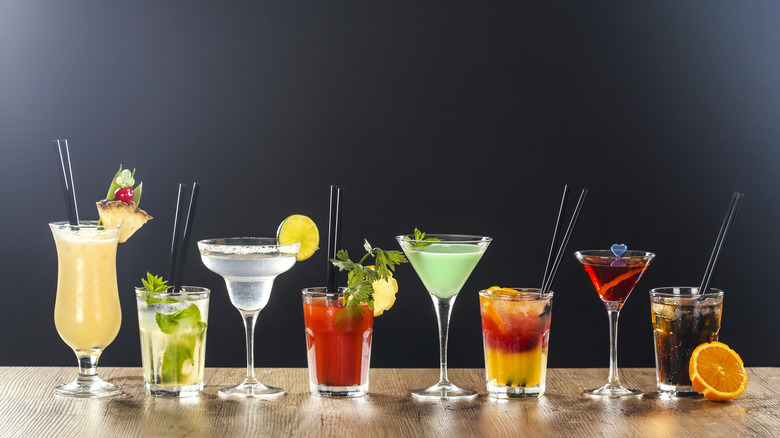
If there's one thing humans have been consistently doing for thousands of years, it's drinking. Whether it was medicinal, religious, or just social, people found reasons to consume alcohol and make mixed beverages. As time passed, trends changed, and technology evolved, so too did our palates and, naturally, our cocktails. We've come a long way from the days of the Ancient Greeks mixing wine and honey or the colonial-era Americans making punches.
Nowadays, mixology has bloomed into a major culinary movement. Bartenders experiment with house-made syrups, fat-washed liquors, and unique garnishes. Cocktail bars often have seasonal menus and drinks unique to their establishment. If you're a traditionalist, you may find safety in the classic cocktails section of these menus, but some of those drinks may not actually be as classic as you would think. Many of the household drinks we know and love today aren't made the way they used to be.
Paper Plane
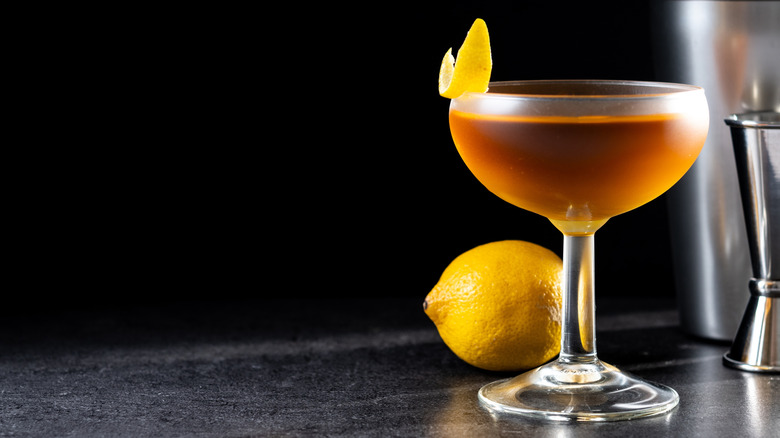
Although this drink was first created in 2007, the Paper Plane has solidified itself as a modern classic. Created by award-winning bartender Sam Ross at the Violet Hour Bar in Chicago, the drink emerged as a riff on the Prohibition-era cocktail known as the Last Word. While the ingredients of the Last Word – gin, lime juice, green chartreuse, and maraschino liqueur — are completely different than those of the Paper Plane, both cocktails have the same core framework and use equal portions of each ingredient.
The Paper Plane, whose name was inspired by M.I.A.'s 2007 hit song of the same title, began as equal parts bourbon, lemon juice, Campari, and Amaro Nonino Quintessentia. When Ross brought the drink to the New York City bar Milk & Honey (later renamed Attaboy), the final recipe was solidified, and he replaced Campari with the lighter, sweeter Italian aperitivo Aperol. When making a Paper Plane, it is recommended to use bourbon between 43% and 46% ABV range, and to avoid over-shaking the drink, as this could end up melting too much ice and diluting the cocktail. Luckily, this vibrant drink is hard to mess up. If you are an amateur mixologist or just want to impress your friends, the Paper Plane is a simple yet sophisticated drink. Not only is it visually stunning, but it has the perfect balance of sweet, bitter, and tart for those craving a layered, complex flavor profile.
Zombie
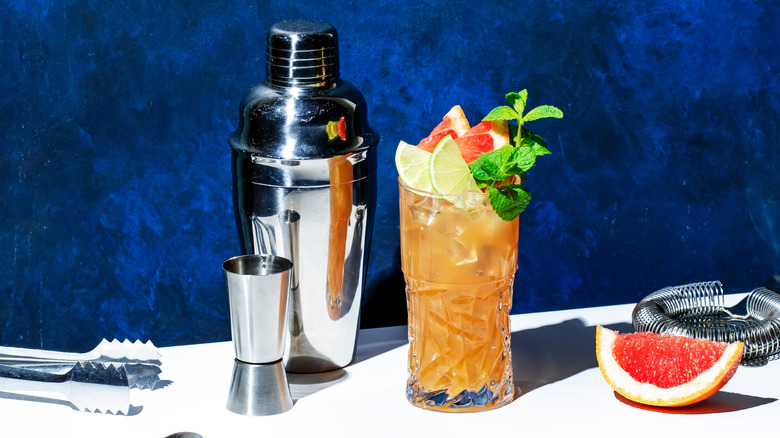
If you've ever seen the Zombie on a cocktail menu, there's a chance it'll have a two-drink limit attached. This classic, and very strong tiki cocktail, was created at the first tiki bar and still holds up today. Mid-century America saw a tiki craze, with tiki bars, tiki torches, and tropical cocktails in kitschy glasses. This tiki culture can largely be attributed to a single bar and restaurant, Don the Beachcomber. Opened by Donn Beach and inspired by his travels throughout the Caribbean and South Pacific, the restaurant showcased the flavors and aesthetics Beach experienced over the years.
At Don the Beachcomber, an array of innovative cocktails, from the Mai Tai to the Zombie, became household names and staple summer drinks. The Zombie itself has its own unique backstory. Legend has it, back in the 1930s, a hungover businessman came into the restaurant looking for a drink to revive him before a big meeting. In order to mask the flavor of alcohol, Beach added a mix of fruit juices to the drink. The cocktail ended up having the opposite effect, making the businessman feel even worse and affecting his performance at the meeting. The customer's zombie-like state gave birth to the drink's name, and not long after, Beach implemented a two-drink-per-person limit, adding to the cocktail's mystique.
During the tiki craze, mixologists often kept their recipes close to their chests. Beach originally used a pre-mixed syrup for the Zombie, with ingredients unknown to the bartenders using it. Over the years, Beach changed the recipe, keeping competitors perplexed. In the mid-2000s, drink historian Jeff "Beachbum" Berry unearthed the secret to "New Don's Mix," which was two parts grapefruit juice, one part cinnamon simple syrup. Even still, many bars today make their own variations of the Zombie, often with a mix of whatever fruit juices or syrups are on hand.
Mint Julep
A Kentucky Derby classic, the mint julep actually has history rooted in European medicine. References to medicinal juleps date back as far as the 10th century, and some of the earlier mentions of the julep included sugar mixed with herbs, spices, and typically a spirit of some kind. The julep eventually made its way to the United States, where it gained popularity in the Southern states during the 18th century.
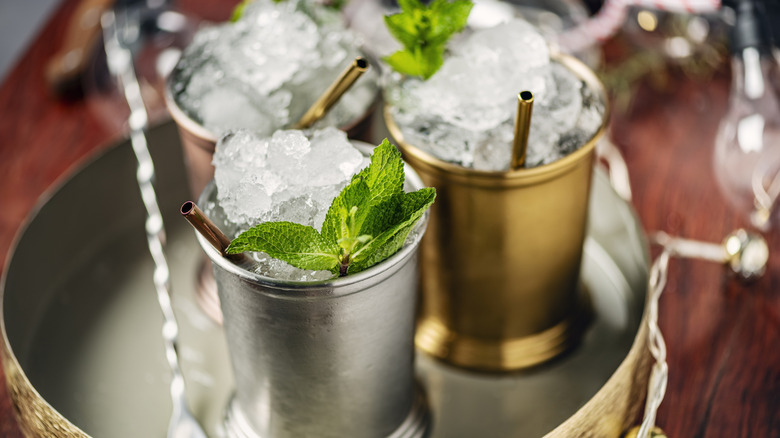
One of the first notable cocktails in the U.S., the julep has seen many variations. The contemporary version of a mint julep uses crushed ice, bourbon, mint leaves, and simple syrup. However, not all early juleps used mint, and different regions of the country tended to use different liquors in their versions of the drink, with brandy, Cognac, and rum being popular options.
Bourbon, which is the liquor of choice in a mint julep, wasn't typically seen in initial recipes. Cognac was the more common choice. When an epidemic of phylloxera infected France's grapevines in the 19th century, the Cognac trade was impacted, allowing bourbon to take the top spot. In the U.S., spirits were often paired with simple syrup and mint to cut through the intensity of the alcohol. Wealthy individuals with access to ice often enjoyed juleps with crushed bits of block ice in metal cups. Popular in the summer months, the mint julep became a fixture at Kentucky horse races, in part due to the state's thriving bourbon scene.
French 75
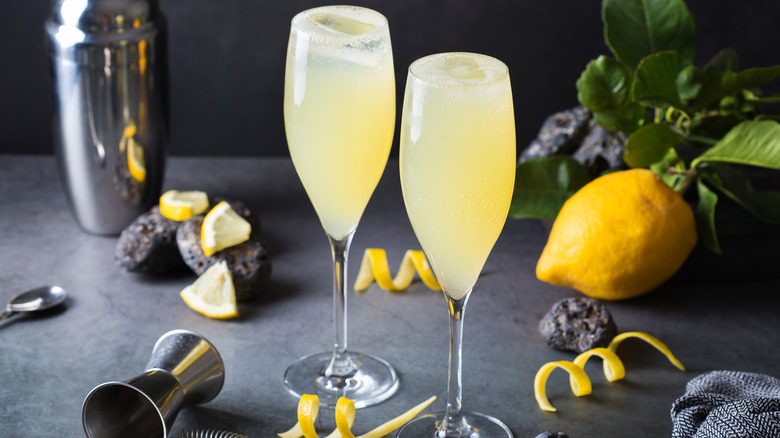
Whether it's hair of the dog at Sunday brunch, a celebratory cheersing beverage, or just your go-to bubbly, the French 75 cocktail is classy, simple, and iconic. This champagne and gin-based cocktail with lemon juice and simple syrup is served in a flute and garnished with a lemon twist. However, it wasn't always the crisp, sophisticated cocktail we know today.
The drink was named after a French 75-millimeter field gun, which was used by France's army during World War I and had a potency often compared to the weapon itself. First known as the Soixante-Quinze, or 75, the exact origins are hard to pinpoint. A reference from 1915 in the Washington Herald implies the drink was created on the war front, but a cocktail book from 1922 by Robert Vermeire describes the drink, which he called the 75 Cocktail, as being created by a French bartender in Paris. The latter seems most plausible, but what is a classic cocktail without a bit of mystique around it?
The earliest printed recipe for the French 75 was served in a coupe glass and had gin and lemon juice, along with grenadine and apple brandy. Eventually, champagne replaced brandy, and recipes added sugar. The glass shifted from a coupe to a Collins, and finally to a flute glass by the late 1980s, resulting in the most familiar iteration of the French 75.
Sazerac
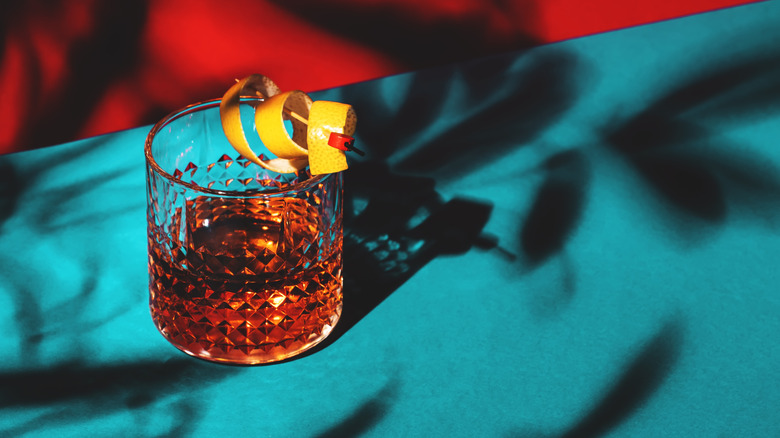
Deemed the official cocktail of New Orleans, the Sazerac has been synonymous with the Crescent City for well over a century. Now considered one of the classic rye whiskey cocktails, some of the earliest versions of the Sazerac happened to have no whiskey at all. Keeping close to the city's French roots, the main spirit of the initial Sazerac was Cognac.
Back in the 1800s, a French company began importing its cognac to bars throughout New Orleans. A pharmacist named Antoine Peychaud had an apothecary in the city. He sold his namesake Peychaud's bitters, which were initially a curative. At the apothecary, he created an elixir using his bitters, along with brandy, sugar, and water. This was the first Sazerac cocktail. Initially meant to support health, the drink became a favorite of tourists and locals alike, regardless of its intended purpose.
During the late 1800s, grapevines in France were decimated by the phylloxera epidemic, and the cognac trade took a massive hit. Luckily, rye whiskey filled the market gap and became the main spirit for the Sazerac. Many early recipes for the drink featured another European spirit, absinthe, which was used to rinse the glass. Absinthe was banned in the U.S. in 1912 and was replaced by Herbsaint. Even though absinthe has been legalized in the U.S. since 2007, Herbsaint is still the preferred liqueur for a New Orleans Sazerac.
Caipirinha
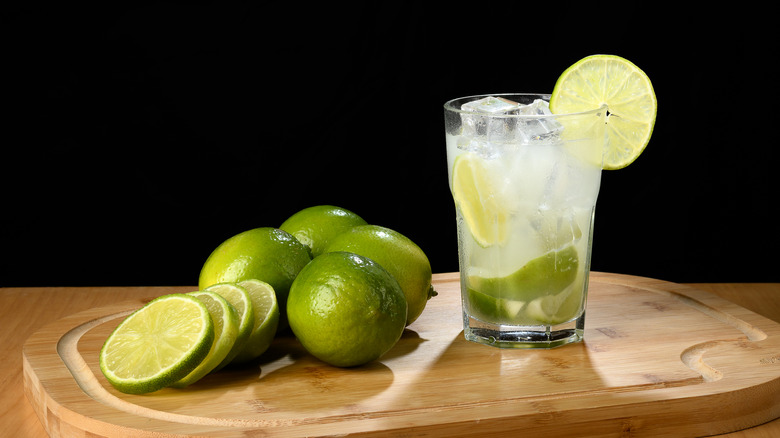
Brazil's national drink, and arguably the most popular cocktail in the country, is the Caipirinha. A citrusy, sweet cocktail perfect for warm weather, the Caipirinha is made with cachaca (a spirit made from fermented sugarcane juice), along with lime, sugar, and ice. Now a beloved, refreshing drink, the Caipirinha, which translates to "country little girl," dates back to the early 20th century and emerged from the countryside of São Paulo.
There are a few theories about the origins of this Brazilian drink. One refers to sailors who drank rum and citrus to prevent scurvy. Upon arriving in Brazil, they swapped out rum for cachaca. Another popular theory is that the drink was created in rural areas for medicinal purposes. It was rumored that to ward off the Spanish flu, people consumed a mixture of cachaca, lime, honey, and garlic. While garlic and honey aren't included in a Caipirinha today, the cocktail still has an herbal, tangy, yet refreshing quality that feels healing until you have a few too many.
Old Fashioned
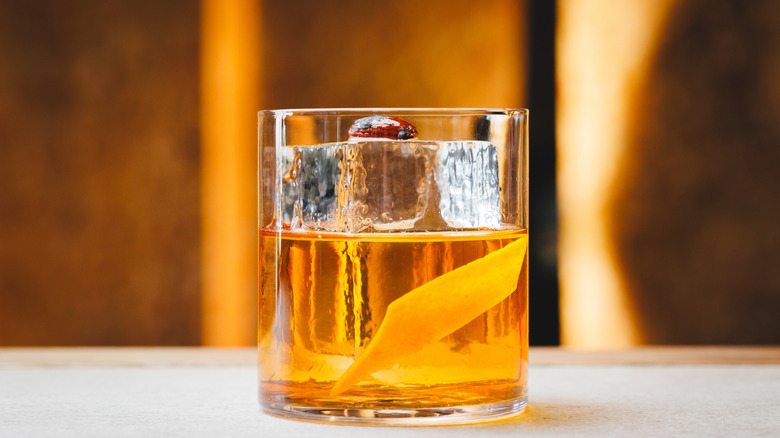
Popularized in the 1880s, the Old Fashioned is often considered the original "cocktail". The first definition of the word "cocktail" described it as a composition of spirits, sugar, water, and bitters. Under that basis, other cocktails were created before the Old Fashioned. Bitters were often mixed with liquors like brandy and gin in England. However, in the U.S. throughout the 1800s, whiskey and bitters became a popular choice. These drinks were made with whiskey, bitters, and a muddled sugar cube.
With such a simple base, bartenders took creative liberties, adding garnishes and other liqueurs. Traditionalists who were averse to these additions started requesting the "old-fashioned" version of the whiskey cocktail, thus leading to its name and distinction. During Prohibition, bartenders often muddled an orange slice, a maraschino cherry, or a pineapple slice along with the sugar cube. This may have been an attempt to mask the taste of cheap, illegal alcohol. Nowadays, the Old Fashioned resembles its original form, but instead of a muddled sugar cube, many bartenders opt to use simple syrup.
Martini
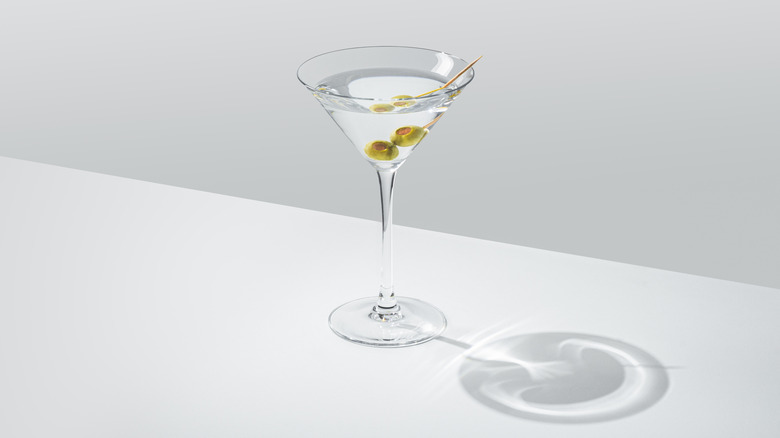
Whether it's in the hands of Marilyn Monroe or ordered, "shaken, not stirred," by James Bond, the martini has solidified itself as a pop culture icon. This cocktail has acted as a basis for hundreds of variations, from the Espresso Martini to the Lemon Drop. However, the classic martini, a combination of gin and dry vermouth, hasn't always been the herbaceous, slightly bitter cocktail of today. In original recipes, the Martini was sweet.
When it comes to classic cocktails, tracing down the direct origins can get hazy. In the martini's case, it is believed to have evolved from a cocktail called the Martinez, which was invented in the late 1800s. The Martinez cocktail differs from a typical Martini in its earliest recipe because it pairs gin with sweet vermouth, curacao, and orange bitters. The earliest depiction of a Martini, however, had a similar profile. It included gin, sweet vermouth, orange curacao, Boker's bitters, gomme syrup, and a lemon twist. Other Martini recipes from the late 1890s feature a 50/50 Martini, which used equal parts gin and sweet vermouth. Only a few years later, recipes emerged for a dry Martini, which used dry vermouth instead of sweet. Nowadays, a classic Martini includes gin, dry vermouth, and in many bars, a dash of orange bitters.
White Lady
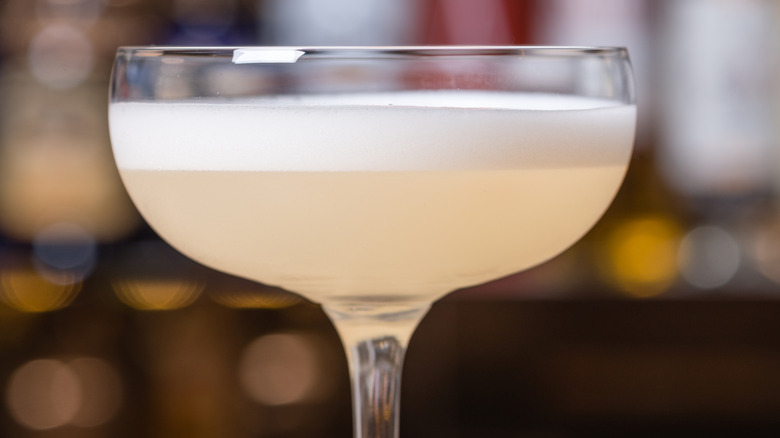
The White Lady is an evocative Prohibition cocktail you may have heard referenced in the works of Agatha Christie or Ernest Hemingway. This gin-sour variation seems to have murky origins, as many of the classics do. The first version of the White Lady was created in 1919 at Ciro's Club in London by a popular bartender named Harry MacElhone. This version had equal parts brandy, creme de menthe, and Cointreau, which were then shaken and strained.
Although called the White Lady, the modern version of this drink is quite different. A typical White Lady cocktail today includes lemon juice, gin, orange liqueur, and an egg white. When it comes to who created this new version of the drink, it stirs up some debate. MacElhone is rumored to have developed this new iteration in 1929 at his bar in Paris.
Some dispute this, like the Savoy Hotel in London, which claims the White Lady was created at its hotel bar. It is rumored that the bar's bartender saw F. Scott Fitzgerald's wife Zelda and was inspired by her platinum blonde hair, thus creating the White Lady. Regardless of who really made it, the newest version had completely replaced the former and solidified itself as a cocktail classic.
Daiquiri
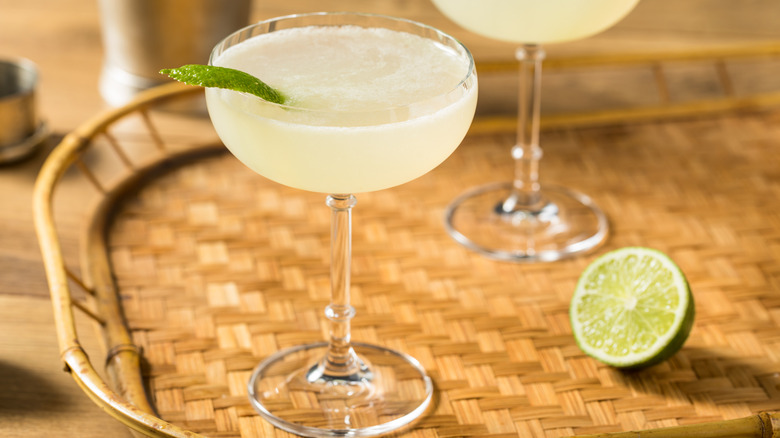
Whether it be the Hemingway daiquiri, a frozen strawberry daiquiri, or just the classic, it's clear that the daiquiri has expanded from a simple drink to an entire category of flavorful cocktails. The original daiquiri is a simple drink made with only three ingredients. The classic is composed of light rum, lime juice, and simple syrup and is shaken over ice and then strained. There are a few stories about the creation of the daiquiri, but it seems to have roots in Cuba.
One story describes Americans working and overseeing mines in Cuba in 1896, near a town called Daiquiri. Legend has it, an American engineer named Jennings Cox ran out of gin and developed the Daiquiri by using what was at hand. A humble drink, the simplicity of it allowed for other mixologists to riff on it, developing their own variations of the daiquiri. The frozen daiquiri was developed in Havana in the early 1900s and has since become one of the most popular versions of the drink. This took off in the U.S. when home blenders became more accessible. By the 1950s, during the height of the Tiki craze, fruity daiquiris such as the strawberry variant became a hit. Although there are hundreds of unique daiquiris out there, you can't go wrong with the refreshing, tangy simplicity of the original.