

The Hidden Spice Jar Feature That Makes Pouring So Much Easier
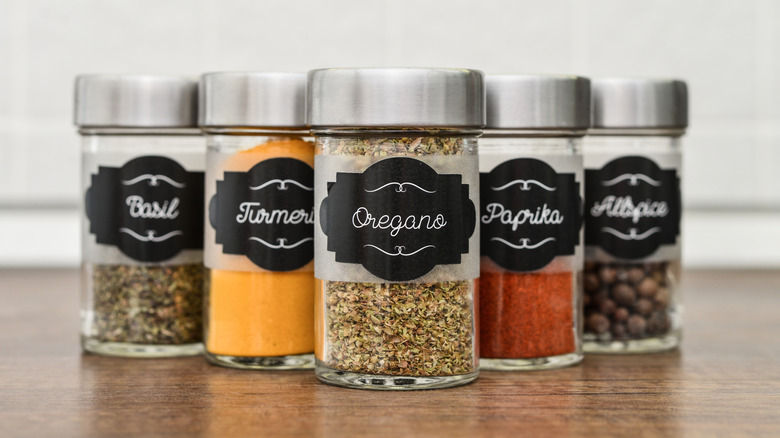
The spice must flow! It's as true in "Dune" as it is in your kitchen. Unfortunately, sometimes a spice jar is not as generous as you might like when it comes to pouring. Clumps or clogs can cause any spice jar to flow slowly, forcing you to pry the lid off and maybe pour out more than you need. Some people have discovered an interesting workaround to make spices pour more easily. Spice jars have textured bumps on the bottom. If you rub the base of one jar against another, the spices seem to flow more easily. But is that a design feature or not?
To answer the question, that is not an intentional design feature. You won't find any evidence online that glass manufacturers design jars to let you rub two together. The bumps are not intended to make the contents flow more freely. But that doesn't mean it doesn't work.
You can find many videos demonstrating this hack. It absolutely works in some situations. Spices tend to get clumpy when they've been exposed to moisture, either because the lid was left off or you just have a lot of humidity in your home. The essential spices in your pantry like garlic powder are especially notorious for this. Rubbing the jars together creates friction that is amplified by those little bumps. Friction vibrates the glass and the mechanical action shakes the spices loose. It's a helpful tip when spices do not flow properly.
What are the bumps on your spice jars?
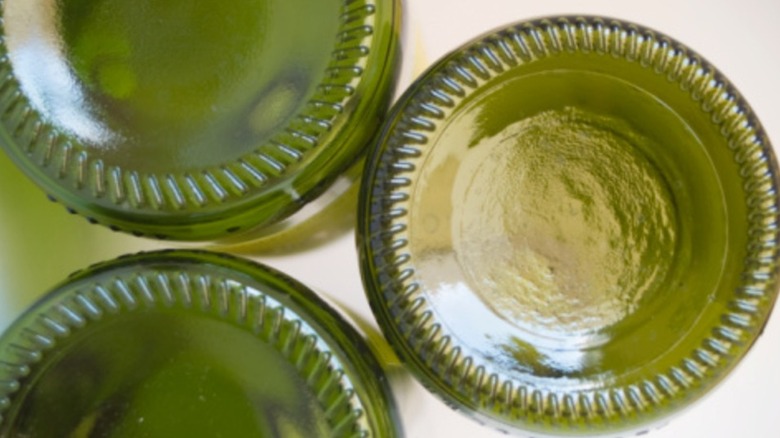
It's not just spice jars that have these bumps on the bottom. It's any glass jar or bottle made in the modern world, even your salt shaker. These bumps are called stippling or knurling, and they're part of the manufacturing process. That texture allows the still-hot glass bottles to move more quickly down the conveyor belt without sticking during manufacturing. Knurls also reduce tensile stress on the glass. In other words, those bumps help prevent the glass from breaking. They're not about spice flow.
Though you may never have thought about it, very few glass containers have flat bottoms. Think about the mark that a glass leaves on a coffee table if you don't leave a coaster. It's not a circle. It's a ring. The center is indented on almost every glass vessel from wine glasses to coffee mugs to Coke bottles. That indent in the bottom gives the glass strength, just like the knurls on a spice jar do. It's all about efficient manufacturing.
If your spices do get stuck, this little hack can help sometimes. You can also try turning a spice jar upside down and twisting the plastic lid as though using a pepper mill. This can help break up clumps in your spice, too. If the lid comes off or has a larger hole for a measuring spoon, you can use a chopstick to stir the contents and loosen them enough to flow again. Don't forget, you can help prevent spices, even salt, from clumping by adding a few grains of rice.