

How This Centuries-Old Scotch Distillery Emerged From Bankruptcy To Carry On Into Modern Times
In 1815, on the southernmost island of the Inner Hebrides, the Ardbeg distillery was founded. On an island as small and sparsely populated as Islay, there was a time when a distillery was its own town, centered around the iconic white faces of the distilleries, painted with the name of the brand in bold black characters to allow the ships bringing supplies to tell them apart from the sea. While Ardbeg is likely a familiar name now for drinkers of smoky Scotch whiskies — Ardbeg 10-Year is a modern Islay Scotch mainstay — the distillery's path has been every bit as rocky as the island's treacherous shoreline, changing hands many times and facing bankruptcy on more than one occasion.
For the majority of the past 210 years, Ardbeg has been producing its brand of peated Scotch whisky, though not always to the same demand that it receives today. The distillery faced bankruptcy in both 1838 and 1932, and endured years of closure during the 1980s and '90s. The reasons for these financial difficulties were varied, but they included broad-scale events such as the Great Depression and the whisky crash of the 1970s. In recent years, however, Ardbeg's trajectory has changed dramatically, as the brand looks to cement a unique foothold in the world of smoky Scotch whisky.
The story of Ardbeg's most recent rebirth began when the distillery was purchased by the Glenmorangie Company in 1997, following a period during the distillery only operated two months of the year. With the weight of another prominent Scotch whisky brand behind it, Ardbeg began a transformation, pushing the boundaries of what Islay Scotch can be, and attracting a fervent band of followers along the way.
Ardbeg is a unique brand with a unique fanbase
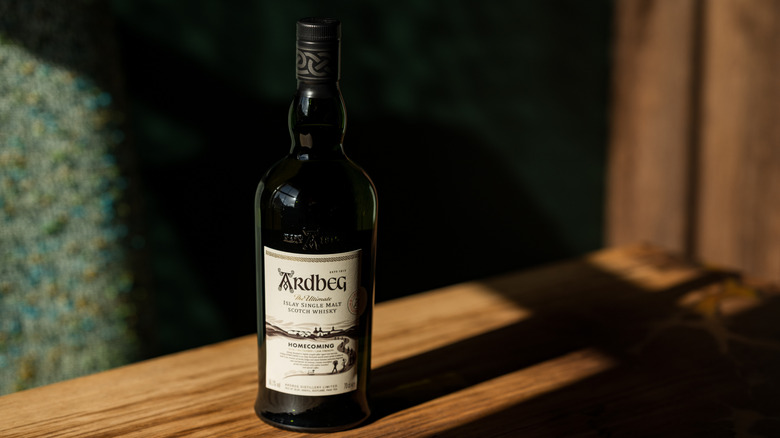
The mantra of Ardbeg, according to Dr. Bill Lumsden, the brand's director of distilling, whisky creation & whisky stocks, is grounded in "how we can push the boundaries of smoke even further than we already have." Heavy smoke is undoubtedly one of the key elements that draws fans to Ardbeg, as its whisky begins with malted barley peated to the highest levels on the island, but Ardbeg is more than just smoke. The brand's distillation process also makes use of a unique purifier during distillation to keep a fruity, floral balance in the whisky, something Ardbeggians refer to fondly as the "peaty paradox." But those are just the baseline techniques that keep Ardbeg winning awards and showing up on lists of the most popular Scotch whiskies. It gets much, much wilder than that.
"We have lots of fun doing more wacky things with Ardbeg," Dr. Lumsden shares, "we've buried casks in peat bogs, sent samples into space, and even created a BBQ-inspired Ardbeg in the past. Its unique, smoky character lends itself well to unusual experiments." On top of these more outlandish offerings, Ardbeg has also challenged the notion that longer-aged whiskies are inherently superior. For example, Wee Beastie, a whisky in the brand's core range, is aged just five years, and recently took home the award for the Best Overall Scotch Whisky at the New York World Spirits Competition.
As you might expect, this unique approach has attracted a crowd. In the year 2000, a committee of fans was formed with the explicit goal of ensuring that Ardbeg never again shuts its doors. These days, that committee boasts over 200,000 members from more than 140 countries, an undeniably impressive fanbase for a whisky brand.
Now there's a home away from home for Ardbeg lovers
Ardbeg committee members receive more than just camaraderie, however, also gaining priority access to new releases and events, and an occasional opportunity to weigh in on whiskies still in the works. "The success of Ardbeg is largely down to this global tribe of fans who are passionate about our whiskies, who share their feedback, and who spread the smoky word," explains Ellie Goss, Corporate Affairs & Hospitality Director for the Glenmorangie Company. And now there is a new venue where smoky Scotch lovers of all stripes can "eat, drink, and sleep Ardbeg," as Goss puts it.
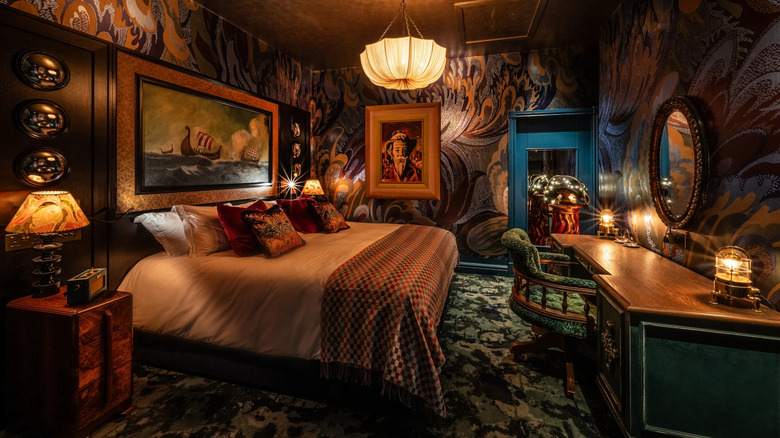
In September 2025, Ardbeg House opened in the town of Port Ellen on Islay, a richly decorated 12-bedroom boutique hotel with two restaurants. The Signature Restaurant is a fine-dining establishment highlighting local ingredients such as the abundant seafood of the island, while the Islay Bar features a full complement of peat-forward cocktails as well as a menu of quality pub fare. The combination of the two restaurants allows Ardbeg House to create an environment of luxury while also keeping its doors open to all comers and maintaining its role in the community.
The rooms of the Ardbeg House also play right along with the unique character of the brand. Each tells a unique Ardbeg-related story, with quirky décor to match. Perhaps best of all, every room also features a scavenger hunt to locate two hidden drams of Ardbeg. For the extreme peat-heads out there — and anyone else planning a visit to Islay, the region of Scotland best known for its peaty whisky — it is a stay like no other. Beyond that, it's a testament to how Ardbeg's unique character has brought this distillery from the brink of failure to modern success.