

Consider This Before Baking With Chicken Fat
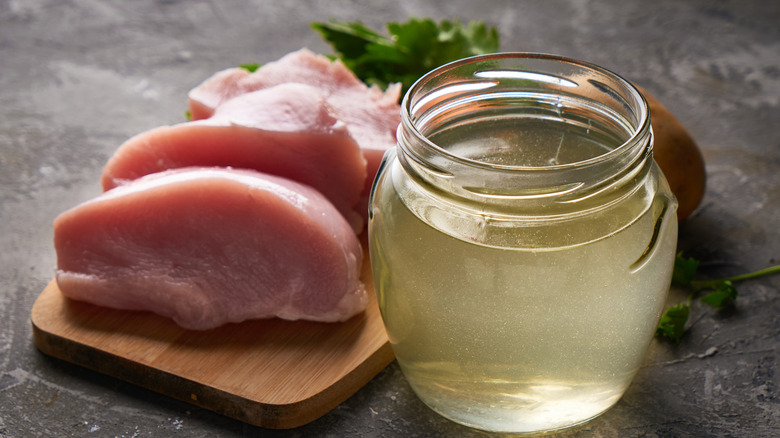
When choosing a fat for baked goods, the usual suspects are typically oil and butter, though some cooks may also consider lard or shortening. All of these are well and good, but can't hold a candle to the flavorful richness of chicken fat, aka schmaltz. According to Walleska Cianfanelli, executive pastry chef at Wilton Sweet Studio, swapping schmaltz into your recipes requires careful consideration, but the results are worth it. "[It] makes an incredibly flavorful, tender, and flaky crust," she notes, but there are still some important things you should be aware of.
We asked Cianfanelli what home bakers should know before baking with chicken fat, and she revealed that she loves to use it for flavorful, tender, flaky pie crust, though it works just as well in biscuits, cornbread, and even tortillas. No matter what you're baking, Cianfanelli advises that the chicken fat "contains less water than butter, so the dough will need more added liquid when mixing." A good recipe will tell you how your dough should look and feel, so if it seems off, add more liquid accordingly.
Cianfanelli adds that "schmaltz melts quicker than butter," so let your dough sit in the freezer before baking. Some pastry recipes call for cold butter because the pieces of solid fat are crucial to forming flaky layers. Softer chicken fat needs extra chilling time to prevent it from melting prematurely. Lastly, Cianfanelli urges bakers to be gentle, as "the softer texture means overworking can happen faster." Kneading or folding the dough too aggressively is a fast way to ruin pie crust, as it promotes gluten development and creates a tough texture. Slow and steady wins the race, especially when working with schmaltz.
Additional tips for making delicious, schmaltzy-baked goods
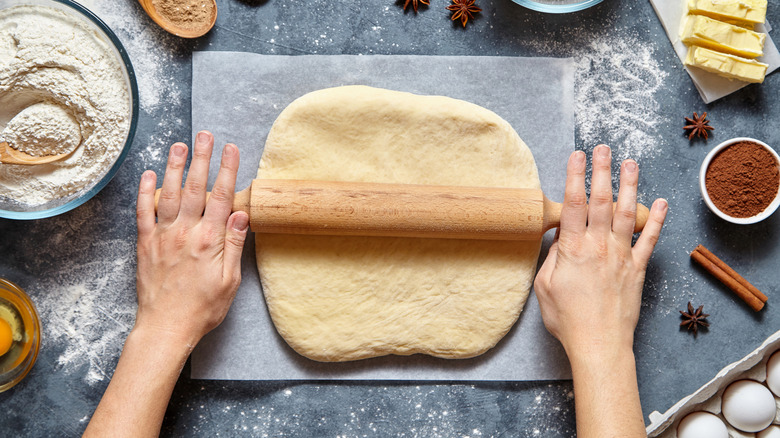
Thinking about flavorful, flaky doughs made with schmaltz might have you running to the microwave to render some chicken fat, but before you dive in, Cianfanelli offers a few more precautions. It turns out that schmaltz alone can't make for the perfect pie crust. "Remember, schmaltz is softer than butter," the pastry chef explains, "so use 50% chicken fat, 50% butter or shortening for structure and texture."
Additionally, while schmaltz can work in sweet and savory pie recipes, its rich, chickeny flavor clashes with some desserts. "Schmaltz works best in savory pies (chicken pot pie, mushroom, [and] root vegetable)," Cianfanelli adds. "In sweet pies, pair it carefully with strong flavors like apples, citrus, and spices." An all-fruit mincemeat pie could probably stand up to schmaltz, but in a turkey pot pie, its meaty flavor can truly shine. Either way, Cianfanelli suggests you reduce the amount of salt added to your recipe in order to accommodate the savory chicken fat.
If you want the most tender, flaky baked goods but prefer more delicate sweets, Cianfanelli has an alternative solution: leaf lard. This high-quality lard (found around the kidneys of a pig) works similarly to schmaltz but "has almost no pork aroma, making it perfect for sweet pies." She adds, "Lard has a high melting point, keeping dough workable and stable even in warm kitchens." You may not be able to render it at home, but these elusive qualities make leaf lard worth hunting down.