

Avoid This Common Mistake When Adding Mix-Ins To Ice Cream
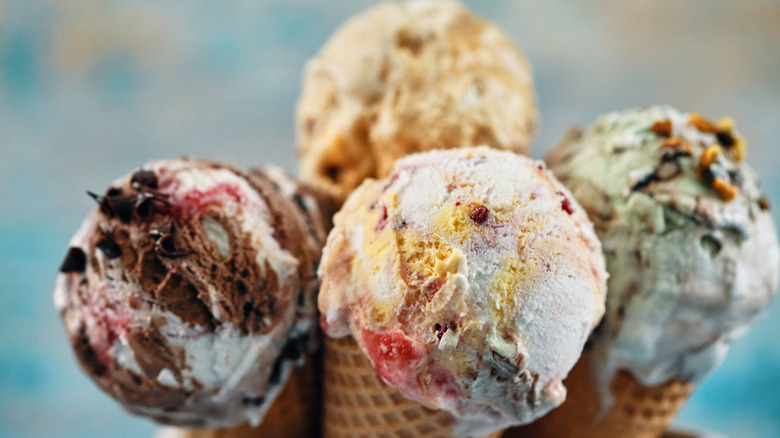
Ice cream is an ubiquitous favorite, with countless brands and ice cream shops to find your favorite scoop. But if you make ice cream at home, you have unlimited creative freedom to combine ice cream flavors with as many mix-ins as you can imagine. We spoke with Sasha Zabar, founder of the whimsical New York City ice cream shop Glace, about ice cream mix-ins. Chef Zabar is all for experimentation and unconventional ice cream mix-ins. But, he says, "the same ingredient can behave totally differently frozen. Crumbly brownies stay soft, but pieces of fruit become rocks, and potato chips can become soggy if you're not careful."
Consequently, you don't want to just blindly add a mix-in you've never used before and hope for the best. A pro-move, according to Chef Zabar, is to "always freeze a piece on its own before committing." With mix-ins, the textural contrast to the soft, smooth ice cream is as important as the flavor combination. A crunchy nut or a chewy brownie is lovely, but, says Zabar, "ice cream might look soft, but it's cold enough to turn anything with too much water or not enough fat into a tooth breaker." Freezing a piece of fruit or high-water content ingredient will help you catch a culinary crime before committing it on your ice cream. Instead of ditching a failed frozen mix-in, Zabar told us, "If it gets too hard, I'll coat it in chocolate or caramel first so it stays pleasant to bite into."
The best and worst mix-ins for ice cream
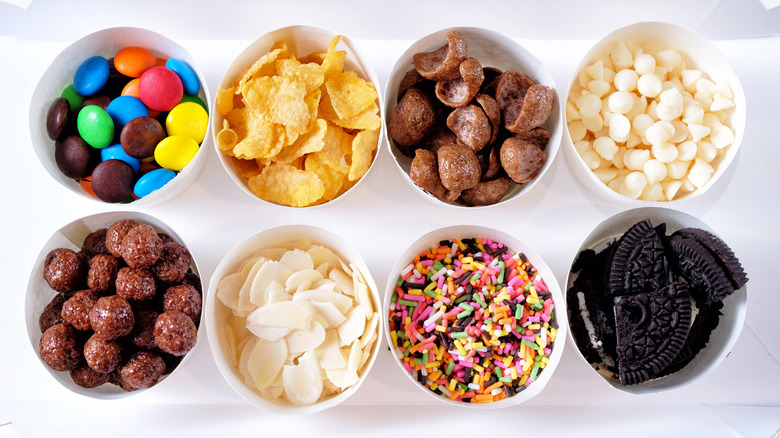
A good rule of thumb for what not to add to ice cream, says Zabar, is "if it brings too much water, acid, or dryness, it's better as a topping, not a mix-in." Watery fruits like melons will turn into rocks, while the acid in citrus fruit or vinegars will curdle the cream or plant-based milk base. As to what will work with ice cream recipes, Chef Zabar told us, "Miso or brown butter is really good. It adds this deep, salty umami note that makes chocolate or caramel way more complex." We use brown butter in this recipe for brown butter and pecan ice cream. He also recommends olive oil to "give a silky finish and almost floral flavor, especially with vanilla or dark chocolate." Try adding extra virgin olive oil to this vegan chocolate ice cream.
Not only are the types of ingredients important, but the size of your mix-ins is also a crucial textural factor. Chef Zabar says the goal is to "create great texture and don't overwhelm it. A little variation actually makes it more interesting – having a few smaller crumbs and a few chewy chunks gives the pint more texture and feels less factory-perfect." That said, you should ensure that harder mix-ins are too big to penetrate with a spoon because, as Chef Zabar puts it, "it's important that everything you add into ice cream doesn't ruin the flow of a scoop."