

How To Turn Whole Cloves Into A Warming Tea
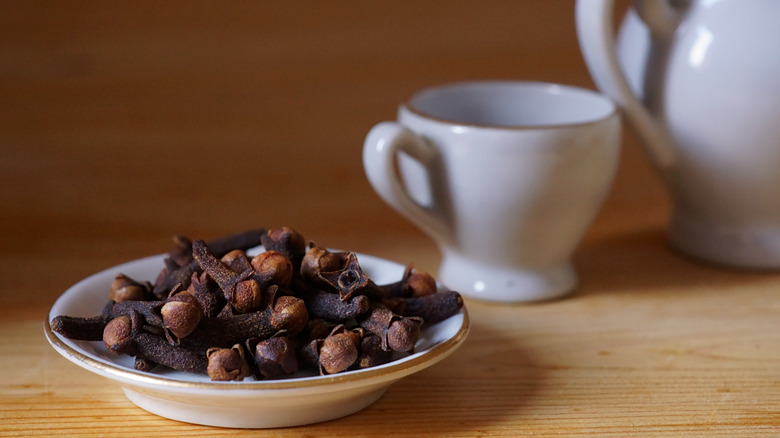
You've probably seen whole cloves stuck into hams or floating around in mulled wine. In those contexts, they are both aesthetic — a jewel-like garnish — and useful, adding that unique spiced taste to festive fare. But when you steep whole cloves by themselves, they impart a spicy, resinous warmth that feels perfectly comforting on cold days. The process is simple, and a little technique helps coax out the best of them.
Start with between three and six whole cloves per cup of water, depending on how spiced you want the tea. If you want a stronger, more roasted flavor, you can toast the spice for a few seconds in a dry pan first, bringing out and maturing the volatile oils in the dark brown dried flower buds. Bring the water to a simmer, not a rolling boil, and add the cloves. Let them cook for 10 to 15 minutes, depending on how strong you like your tea. The flavor will develop as the tea steeps — first sharp, then warm, then slightly numbing from the aromatic compounds that give cloves their signature flavor. Strain out the cloves, and serve.
You can keep the decoction simple, or build on it with ingredients that sit naturally beside clove's warming profile. A thumb of fresh ginger cut into chunks would add some complementary, throat-tickling heat to the tea; cinnamon sticks have a sweet roundness that can balance the sharp oils of the cloves; a strip of lemon or orange peel brightens up the drink; and a spoonful of honey takes the edge off any bitterness. Black tea can also be steeped directly in the same pot for a more robust base and boost of caffeine — although at that point, you're basically making a minimalist chai.
Clove tea as spice medicine
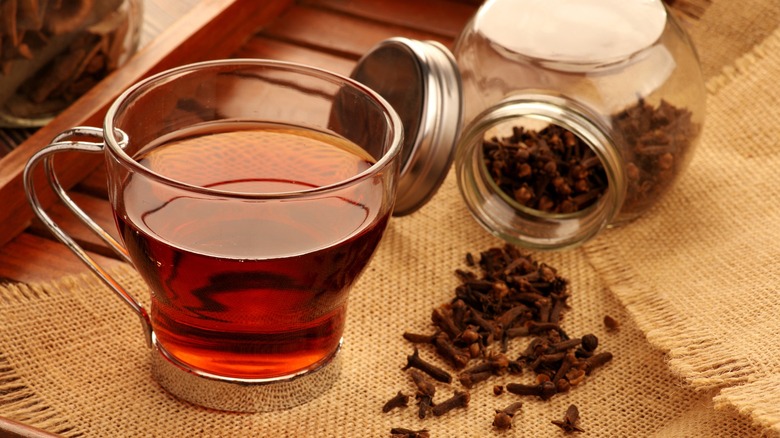
Part of what makes clove tea feel so warming is chemistry. Cloves are rich in eugenol, an aromatic compound with a warming, slightly numbing effect, which is why clove oil has a long history in dentistry and home toothache remedies. They're also high in antioxidants, and may help the liver repair damage. In many traditional medicine systems, clove is used after heavy meals for digestion or bloating, and modern lab work suggests they have antimicrobial activity. A small mug in the evening is more than enough for most people; the flavor is strong, and too much concentrated clove could irritate a sensitive stomach, so check in with your body as you sip so you don't overdo it. If you're pregnant or on blood-thinning medication, it's worth checking with a clinician before making clove tea a daily habit.
In medieval Europe, cloves were incorporated into humoral medicine as a hot and dry spice meant to kindle inner warmth. People stuck them into pomanders and oranges as they were thought to cleanse the air during outbreaks of plague, or stored them in between sweaters to keep moths away (a trick which many folks still swear by), and the wealthy used them as a portable, perfumed talisman. Miasma theory, the suspicion that bad air carries the plague, didn't hold up, but the reasoning is easy to understand from a sensory perspective. Although we have germ theory and bug spray now, it's good to remember and understand the old ways, because they do still have modern applications and utility, like using clove-studded lemons to keep flies away, or using pantry spices to warm the body and soothe the soul. A cup of clove tea today sits somewhere between the old and the new world. It's also simple to make, tasty, and inexpensive.