

The Baking Ingredient That Doubles As A Powerful Cleaning Agent For Burnt Pans
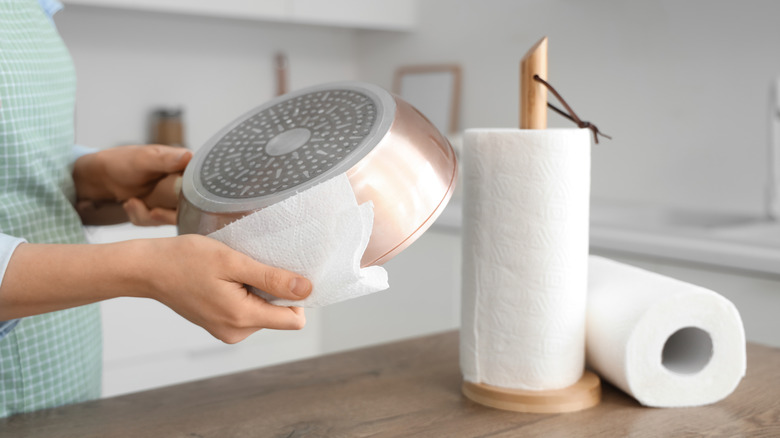
As careful as you might be with cooking, you've likely ended up with crusty, burnt residue at the bottom of a pan at least once. This stuff can be an absolute nightmare to clean; no amount of soaking will loosen it. Often, you're reduced to scrubbing with soap and a sponge until your arm gives out. Some cleaning solutions work better than others, including one that may already be in your pantry — cream of tartar.
While you'd normally use cream of tartar to make deliciously chewy meringue cookies, it is surprisingly effective at cleaning burnt pans thanks to its acid content and abrasive qualities. If you're dealing with a serious mess, clean off as much as you can to start. Once you've scrubbed it thoroughly, it's time to try the cream of tartar. In a small bowl, start with a spoonful of cream of tartar and add just enough warm water to mix it into a thick paste. Apply the mixture to the burned residue, spreading it evenly.
Because cream of tartar is acidic and is actually a byproduct of wine production, you need to let it sit for about 15 or 20 minutes to work its magic. After that, you can start scrubbing with your sponge. By this point, the acid should have broken down the residue. The grit of the powder itself helps scrub away the rest in a way that is gentle enough not to ruin the surface of your pan.
Being smarter with cream of tartar
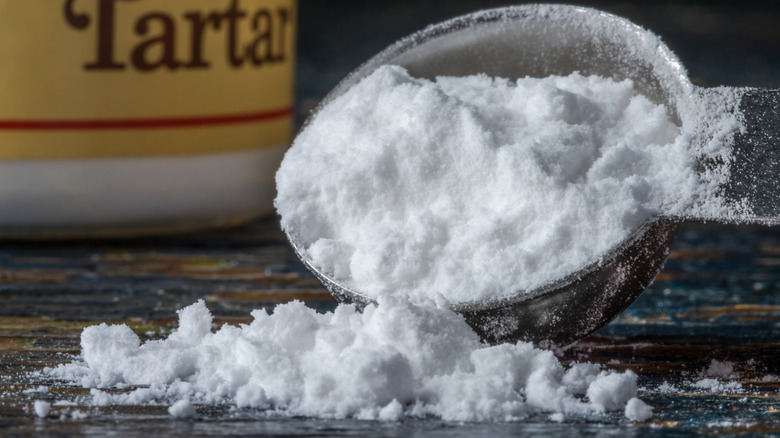
You shouldn't have to give yourself a serious workout when using cream of tartar to clean. If you find yourself needing to scrub harder, reapply the paste and let it sit for a little longer. Another option is to fill your pan with a cup of water and add a tablespoon of cream of tartar. Bring the mixture to a boil, then allow it to cool to room temperature before scrubbing.
Cream of tartar is generally safe to use in stainless steel, enamel, and aluminum pans. The abrasiveness of the mixture — though gentle — could still damage the coating of non-stick pans, so i's best not to use it with them.
Cast iron is another special case. Ideally, a well-seasoned cast iron skillet won't allow much to stick to it. However, tricky residue can still happen. You can use the paste to clean the burnt mess, but wiping it clean afterwards is the best bet. You want to keep cast iron away from soap and water as much as possible. If you absolutely have to use soap and water, make sure you're following the normal routine and thoroughly drying your pan to prevent rusting.
There's no need to clutter your cupboards with expensive cleaning products on the off chance you burn something one day. Just keep cream of tartar on hand and you should have no trouble keeping your pans clean.