

The Best Way To Keep Eggs From Sticking To Stainless Steel Doesn't Require Tons Of Oil
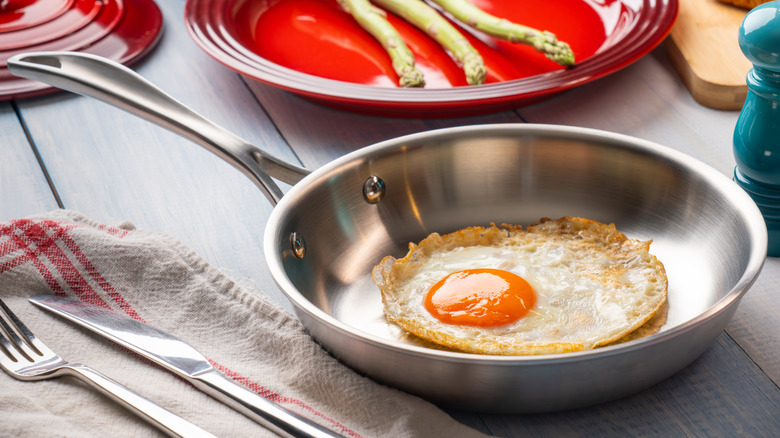
There are two types of people in the world: Those who swear by their stainless steel pans and those who absolutely hate them. The learning curve when it comes to using stainless steel can be surprisingly steep, especially if you're making the switch from non-stick cookware. Whether you are simply frying an egg or making a nice fluffy omelet, you could confidently do it on your Teflon-coated pan knowing the eggs would slide off once cooked. Stainless steel is far less forgiving. Eggs often cling to the surface, and most people try to fix this by reaching for more fat, hoping to create a slick non-stick layer. This is a mistake. The best way to keep your eggs from sticking to stainless steel doesn't require tons of oil; all you need to do is create a temporary non-stick layer using a heat technique.
Preheat your pan for 2-3 minutes on a medium-to-high flame (or until it starts smoking). Use the water droplet trick to test if it's hot enough. Basically, if you add a drop of water to a cold pan, it will spread normally. On a hot pan, it will sizzle. And on a very hot pan (which is what you want) the drop will bead up and bounce around the pan. This is called the Leidenfrost Effect.
Turn off the heat, add a spoonful of oil, and spread it into a really thin layer using a paper towel. Now wait for the pan to come back down to room temperature and what you have is a layer of polymerized oil that mimics the characteristics of a non-stick layer.
Temperature control is crucial with stainless steel pans
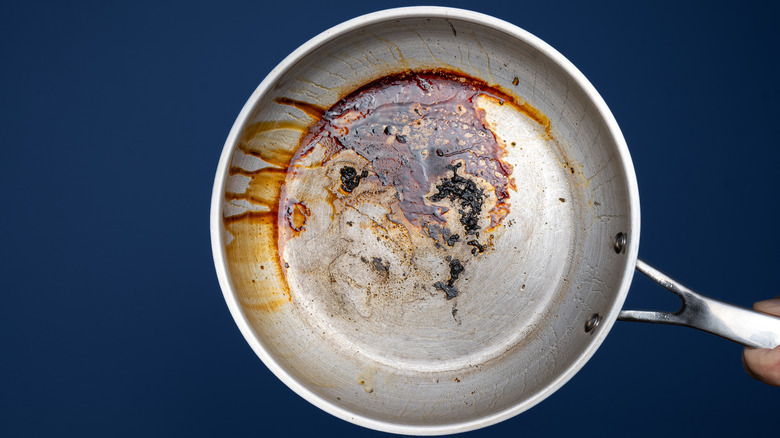
While the step-by-step process is similar to that of seasoning a cast iron pan, the core principles are different. When it comes to cast iron, the layer of seasoning builds up over time. This isn't the case with stainless steel, where the layer is temporary and will only last until the next wash. Stainless steel has microscopic pores on its surface. When you start heating the pan, the steel expands and the pores contract. If your food hits the pan when it's still expanding, the food gets squeezed into these pores and doesn't slide off the pan when cooked. When you season the pan, the hot oil bonds with the surface and creates a thin, shimmering layer on top of it, which prevents food from sticking.
Now it's time to cook your eggs. Once you've got your non-stick layer on, allow the pan to cool for a couple of minutes. You could even use this time to prep your eggs. Put your seasoned pan on medium heat, add a little bit of oil, pour in your eggs and cook them as you normally would (here are some tips to make the absolute best omelets). They are guaranteed not to stick. You can also use this temporary seasoning method before cooking other delicate food — a delicious pan-seared fish, for example.