

The Mistake That's Single-Handedly Ruining Your Prime Rib
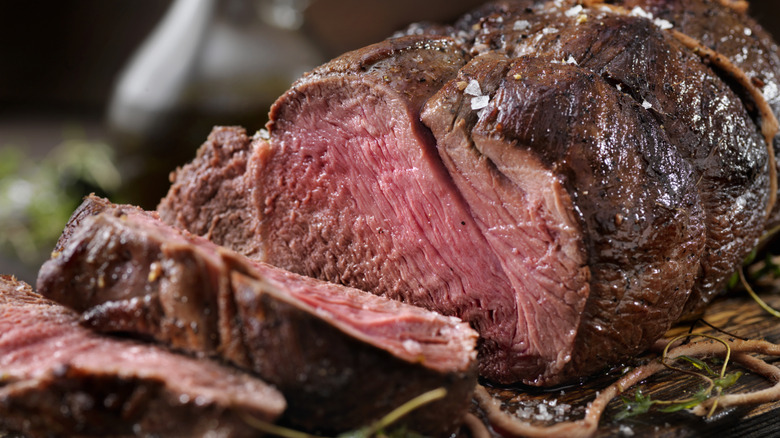
'Tis the season for planning side dishes, prepping desserts, and making sure you don't overcook a very expensive piece of meat. If prime rib's coming up on your menu, then there are a few things to keep in mind, but there is one common mistake that you need to make sure to avoid: cooking it at a high temperature.
Guidance varies on what the ideal roasting temperature for prime rib is, but you don't want to go much higher than 350 degrees Fahrenheit. Otherwise, the meat could cook unevenly, leaving you with a gray exterior. Award-winning professional chef, teacher, and television star Jean-Pierre, who spoke to Tasting Table about the mistakes to avoid when cooking prime rib, says that a high temperature can also "destroy muscle fibers, resulting in a tough, leather-like chew."
"Slow roasting prime rib cooks the meat more evenly and allows muscle fibers and collagen time to break down gently, so your end result is tender, juicy rib meat, rather than dense, dry jerky," he said. "The only way to slow roast something is with low temperature over a long duration."
The right temperature for roasting prime rib
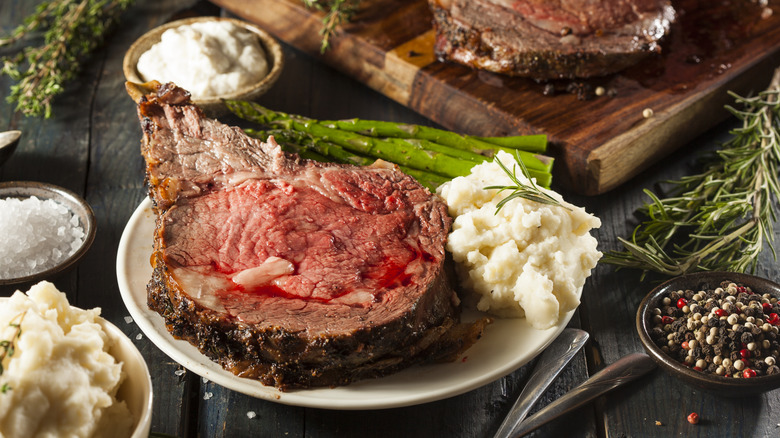
For a slow-roasted rib roast, aim to set the oven to a temperature of about 225 degrees Fahrenheit. You need to do a little math to figure out how long to roast it for, but you're probably looking at about 30 to 35 minutes per pound at that temperature. If your oven is up higher, the meat will cook quicker, so keep checking it with a thermometer. The meat thermometer should read at least 125 degrees Fahrenheit for medium rare.
The only time you want to fire prime rib at a high heat is when you're reverse searing it, or when it's been cut up into steaks. Yep, the ribeye steaks you buy from the store or butcher are essentially just small sections of a rib roast, so if you choose to cut your prime rib, you can cook it accordingly.
Jean-Pierre says, "When you cut prime rib into ribeye steaks, you can take advantage of cooking at a higher temperature, like with pan-searing or on the grill. You don't have as much meat to cook, so you can afford to turn up the flame and enjoy rib meat in a different but equally satiating way."