

Think That Grocery Store Sale Is A Good Deal? Not So Fast
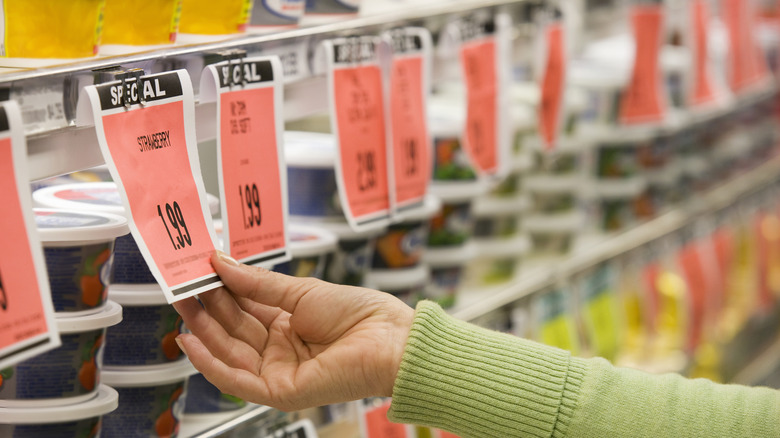
Few things are more exciting when you're out at the grocery store than finding a sale. Maybe you see boneless, skinless chicken breasts priced at $8.17 for two pounds, which is 20% off the normal price. That sounds great. But there's a five-pound tray for $12.85. The first one is over $4 per pound, while the second is just over $2.50. The store is only advertising the two-pound packages as being on sale. And that, in a nutshell, is the math game that almost every grocery store plays when you go shopping. Finding the best deal isn't always as easy as it seems.
Any time you look through your weekly flyer, you need to break things down by the unit price. For meat, that's dollars per pound. The price per package, always printed big and noticeable, doesn't tell the whole story if your chicken is 50 percent more expensive than the package next to it. For something like cereal, you need the price per ounce or gram, which is trickier. Meat will be labeled with a price per pound figure next to the weight on the package. Not every other item in a store will have a price per unit listed.
Lucky for us, in the modern world, we typically have cell phones with us that can handle almost any task. You can use a calculator app to figure out the cost per unit of anything by dividing the price by the package size. Sites like PricePerOz.com let you punch in the numbers and immediately get the cost per unit, taking the guesswork out.
Math at the supermarket
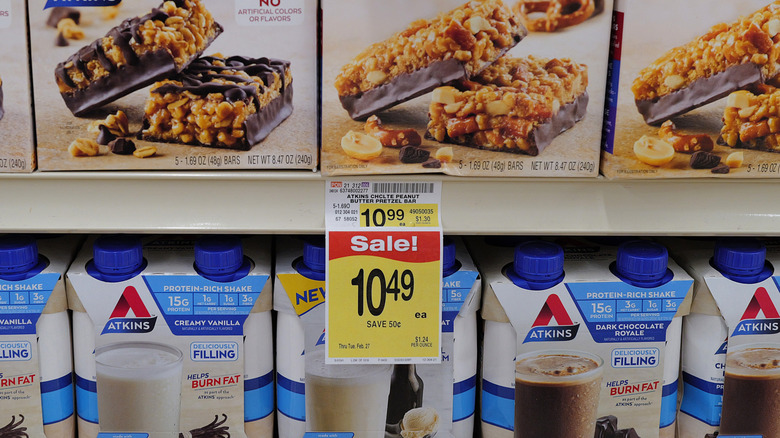
Take something like cookies, for example. A 13-ounce package of cookies at $3.87 is a worse deal than 25 ounces at $4.97. The small package is nearly $0.30 per ounce, and the large is just $0.20. Big packages are often cheaper because you're buying in bulk. The total cost is higher, but you get more product. That's the Costco way, right? But let's say the large is on sale for 10% off, and the small is buy one get one free. Now the effective price of the small is about $0.15 per ounce, while the large is $0.18. So you need to do some math to figure that out.
Many deals are intentionally structured like this to be misleading. Stores are known to use deceptive labels. The sales require several calculations to compare. What looks like a better option may end up costing more. Stores know most of us aren't going to do the math.
It's okay if you don't like doing math. Many people avoid it, and you likely don't want to do it on the fly at the supermarket. That said, it's just a matter of deciding for yourself how you want to spend your money. If your budget allows for it, it doesn't really matter so long as you're getting the groceries you want to get. But if you are trying to save money on groceries, then it's worth your while to do a little figuring as you shop.