

How To Grow A Pistachio Tree From Store-Bought Pistachios
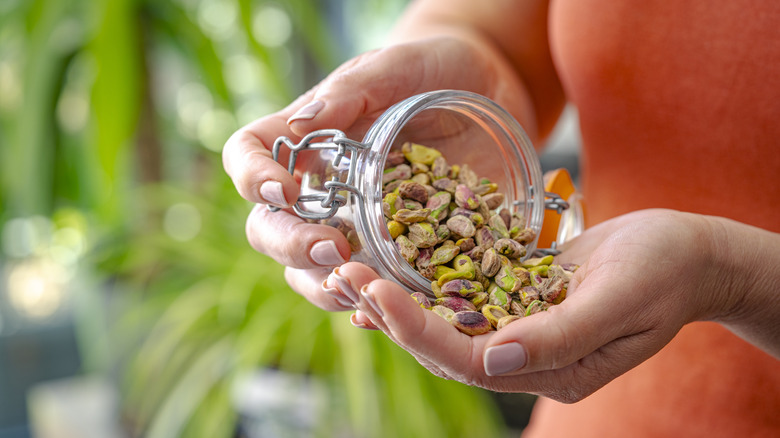
Pistachios have always been a pretty hot commodity. They're satisfying on their own, and you can use them in baked goods, yogurts, salads, smoothies, dessert cocktails, and more. And in the last couple of years, a certain treat has made pistachios more in-demand than ever – it's been rumored that Dubai chocolate has led to a pistachio shortage. In reality, any lack of supply is more likely due to the cyclical way pistachios grow, with higher and lower yield years.
Still, that only highlights how precious these nuts are, and helps explain why pistachios are so pricey. Depending on where you live, though, there could be a solution: Grow your own pistachio tree. This would give you delicious pistachios in your own backyard, for free.
Best of all, it's possible to do this with store-bought pistachios. It may take a few attempts, but the potential of a plentiful pistachio tree from a few nuts is pretty exciting. Only raw, unsalted pistachios will work, as roasting or salting makes germination impossible, and unshelled nuts are ideal, so you don't crack them when de-shelling. Take a handful of pistachios in good shape and soak them for 24 hours, changing the water halfway through. Then, place them on a moistened paper towel in a container, cover with another paper towel and the container's lid, and within a week, you'll see some start to sprout. Plant those nuts in a small pot to get your tree going.
Where pistachio trees can grow
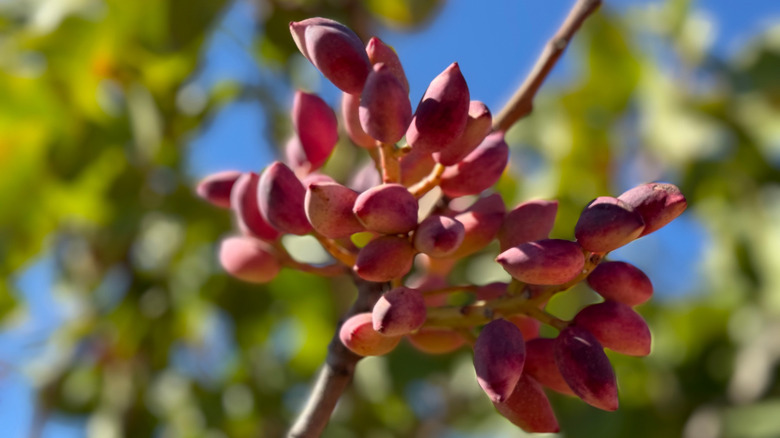
You can only expect results from this endeavor if you live in the right climate. Pistachio trees need long summers with dry heat, and while they do like some colder temperatures in the winter, they won't survive freezes. In fact, these trees don't like much moisture at all — they're drought-tolerant and ideal for drier regions. They're native to places like parts of Central Asia, Iran, and the Mediterranean region; thanks to cultivation, the United States is now a major supplier, and most American-grown pistachios come from California.
If you live in the USDA-defined plant hardiness zones 7 to 11 — primarily stretching across the southern half of the U.S. — growing pistachio trees may be an option. But there are a few other things to keep in mind. Only female trees will bear fruit, and they need pollination from a male tree. Because male trees don't produce flowers that give us nuts, any pistachios you buy are female. So while store-bought pistachios will give you a tree, that tree will only then give you pistachios if you also grow a male tree. Because you can't tell the sex of a tree until it starts to flower — years into its growth — it's best to purchase a male pistachio tree from a nursery to accompany the female tree you grow from nuts.
Once you plant your sprouted pistachios, keep moving them further into direct sunlight as they grow, and water regularly, but let them dry out in between. Transfer to larger pots as needed until you're ready to plant your tree in a sunny, well-draining spot. If you do plant a male tree for pollination — and you should plant these at least 20 feet apart — you can begin seeing pistachios in five to seven years.